
A Smoggy Day on a Young Exoplanet
Transmission spectroscopy shows /
no gases or features, although /
whether sunspots or hazes /
or both (how in blazes?) /
this atmosphere’s spectrum is sloped!

Transmission spectroscopy shows /
no gases or features, although /
whether sunspots or hazes /
or both (how in blazes?) /
this atmosphere’s spectrum is sloped!
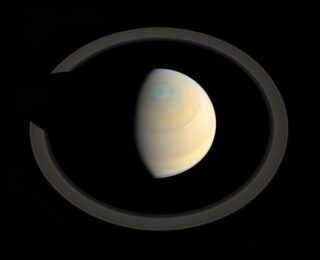
Interpreting observations of an exoplanet’s atmosphere can be tricky, but in today’s astrobite, planetary rings could be the missing piece of the puzzle

The collision –or even a near-miss– of a neutron star and a main sequence star can possibly explain long-lived, bumpy supernovae and hypervelocity stars.
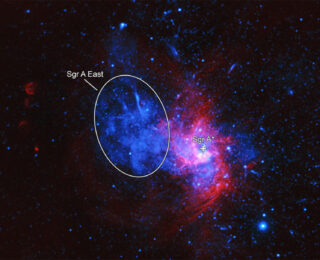
How was the closest supernova remnant to the galactic core created? Sgr A East is young, mysterious and could even tells the story of its origin. Perhaps we’ve already observed the stellar corpse left behind by the explosion which created the remnant.

Today’s authors investigate a young star hosting an exoplanet, and watch as its X-ray flares speed up the planet’s evaporation!