
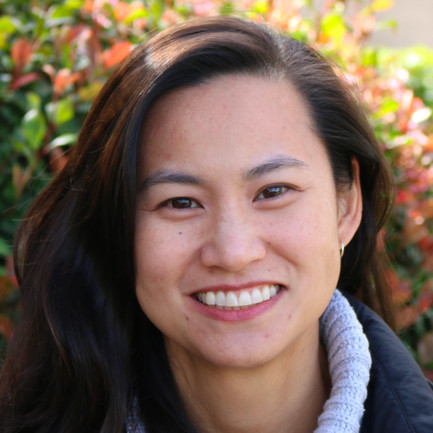
The Path into Astronomy: The Road Less Taken
Even though Dr. Lee had dreamed of being an astronomer ever since she was little, her path to becoming a professional astronomer ended up being anything but straight and direct. She attended a specialized science high school in New York City, and went on to major in Mathematics at Cornell University. However, during college her journey to becoming an astronomer took a small detour. Dr. Lee worked in educational policy in Washington D.C. for then-Secretary of Education, Richard Riley, and then as a math and science teacher to help gain hands-on education experience. “I think I veered off the straight path early on, because after learning about all the issues in the world, I wanted to understand how to make things better, for a lot of us, not just for myself.”
Dr. Lee then decided to once again pursue astronomy, and went back to school. “[After a few years], I attended what is now called a bridge program at Wesleyan, where I essentially completed a physics major.” She went on to complete her PhD in Astronomy at the University of Arizona, where she studied star formation in nearby galaxies. After working as a Hubble and Carnegie postdoctoral fellow at the National Optical Astronomy Observatory (NOAO) and Carnegie Observatories, and as an astronomer at the Space Telescope Science Institute (STScI), she then once again veered off the conventional track. “[I began to work in positions] that people who are researchers don’t usually get involved in, like as the Deputy Lead for Communications at IPAC, and the Chief Scientist at Gemini [Observatory]. Then, I went back to STScI to help push forward on the next astrophysics flagship mission, [NASA’s] Habitable Worlds Observatory.” The Habitable Worlds Observatory (HWO), colloquially called a “Super-Hubble,” is NASA’s next-generation space telescope, as recommended by the Astro2020 Decadal Survey, and the successor to the Hubble, James Webb, and Nancy Grace Roman Space Telescopes. HWO will observe in infrared, optical, and ultraviolet wavelengths. One of its four main science working groups is the “evolution of elements over cosmic time,” which aims to understand how the elements needed for rocky planet formation and life, are created through star formation and death. Currently, Dr. Lee co-chairs the working group overseeing this science theme, which helps inform how HWO will be developed and built!
I asked Dr. Lee how her initial training in educational policy has informed her leadership roles in developing and leading observatories and missions. “I’ve come full circle. A lot of what I do today builds off of things I’ve learned in D.C. Without that policy training, I don’t think I would have had as good of a handle on how to get things done. In that way, I am so grateful to have lived the life I have on this curvy path, because I am such a different person than who I was when I started.”
Studying The Life Cycle of Star Formation
Throughout her career, Dr. Lee has studied the life cycle of star formation. Just like ecosystems on Earth, the evolution of stars is complex and rich, with constant feedback from its environment. Stars form when dense regions within molecular clouds in the interstellar medium (ISM) collapse under the force of gravity. These stars evolve, fusing lighter elements like hydrogen and helium into heavier elements like carbon and oxygen, and then, after dying, return material back into the ISM through stellar winds or supernova explosions. This star-gas-star life cycle, and how it interplays with galaxy evolution, is extremely complex and a hot area of research in astronomy right now.
As a postdoc, Dr. Lee studied star formation in dwarf galaxies, which are smaller galaxies up to a hundred times less massive than the Milky Way. More recently, Dr. Lee has been using space telescopes like HST and JWST to study star formation at high resolution with multiwavelength observations, which are necessary to probe various parts of the star-gas-star life cycle. For example, you need millimeter wavelengths to study the colder molecular gas from which stars form (observed from the ground with ALMA), and UV wavelengths to study the photospheric emission from younger, massive stars (observed with Hubble). More specifically, Dr. Lee is one of the core leaders of PHANGS (Physics at High Angular resolution in Nearby GalaxieS), a collaboration that combines data from multi-wavelength observations from the UV to millimeter wavelengths. PHANGS was also one of the major programs selected as “treasury” programs for both HST and JWST, which are “designed to create datasets of lasting scientific value, with the potential to solve multiple scientific problems with a single, coherent dataset.” Check out this astrobite that was written about the PHANGS collaboration!
JWST, in particular, will fill in the missing puzzle piece for studying star clusters and star formation at IR wavelengths, which will be able to probe star formation in the very dusty parts of galaxies (i.e., “embedded” star formation). “We really want to study star formation and its complete cycle. But we haven’t been able to [previously] study many [of the youngest] star clusters because they were too dusty to be seen,” she told me. So lately, a huge focus of Dr. Lee’s research group at STScI is looking for embedded star formation using the 3.3 micrometer polycyclic aromatic hydrocarbon (PAH) emission feature. PAHs are molecules composed of hydrogen and carbon atoms, and are excellent star formation tracers in dusty environments. “Recently, [our] amazing team used the 3.3 PAH feature to identify clusters that are dusty. This tracer couldn’t really be measured with Spitzer (the precursor infrared space telescope to JWST). With JWST, you can argue that the [NIRCam imaging filter which captures the] 3.3 PAH band has the highest physical resolution while also being dust-emission dominated. And we want to understand how complete our census of young massive clusters is, and whether special conditions are required for massive [star] clusters to form.”
The Importance of Science Communication
I asked Dr. Lee about the awe-inspiring PHANGS galaxy images that have inspired the public recently– specifically their recent feature in The Atlantic’s 2024 Advent Space Telescope Calendar and their images becoming a USPS stamp! “Being able to communicate with the world and being able to capture their imagination and reinstill that sense of wonder, it’s becoming increasingly important, sharing what we do. I myself have put a lot of work and invested a lot of time into making sure we share what we do with [the public].”
Advice for Students:
Dr. Lee’s advice to aspiring young scientists is to never give up. “It’s so much more about perseverance and tenacity, and being able to shut out the noise and find what it is that lights a fire in your heart and what gets you going in the morning. A lot of stock is put into how intrinsically brilliant people are, but tenacity and understanding yourself– that’s far more important.”
Featured photo credit: Caltech/IPAC
Edited by Nathalie Korhonen Cuestas
