
Nathan Sanders was one of the original founders of Astrobites during his time as an astronomy graduate student at Harvard. Since then, he’s worked in a range of disciplines and pioneered a number of initiatives related to science communication, public policy, climate justice, and more. Throughout, he’s continued to write about science, technology, and society, and is now publishing his first book, titled Rewiring Democracy: How AI Will Transform Our Politics, Government, and Citizenship, co-written with Bruce Schneier, which comes out October 21st. For today’s bite, we chatted with Nathan about his journey into and beyond astronomy and the process of writing and publishing a book.
Tell us a little bit about yourself and your pre-grad school journey — how did you first get into astronomy?
I credit my excellent high school physics teacher with getting me interested in astronomy. I can remember the vignettes of astrophysical examples in my high school physics textbook catching my interest and inspiring endless questions and further reading. I became an avid reader of the science writing of astronomer Phil Plait, and was thrilled a few years later when he became one of the first endorsers of Astrobites!
At the same time, I had lots of other interests. I started reading the works of technologists like Bruce Schneier. My first job was as a freelance technology journalist, covering the open source software and hardware movements c. 2005 – 2010. What inspired me about this movement was the potential to distribute the benefits of technology to the broader public: wresting the generational innovations of the digital era from the hands of corporations to make them available to everyone. Most of the websites and magazines I wrote for back then—outlets like Free Software Magazine, Linux.com, and Newsforge—have since gone defunct, but I have collected those works on my website.
I immediately registered as a physics and astrophysics major in college, at Michigan State, and never looked back. I was excited to get involved in both science outreach and research. I first came to Harvard as an REU student and then came back for grad school.
What was graduate school like for you? When did you decide that you weren’t going to follow a ‘conventional’ academic route?
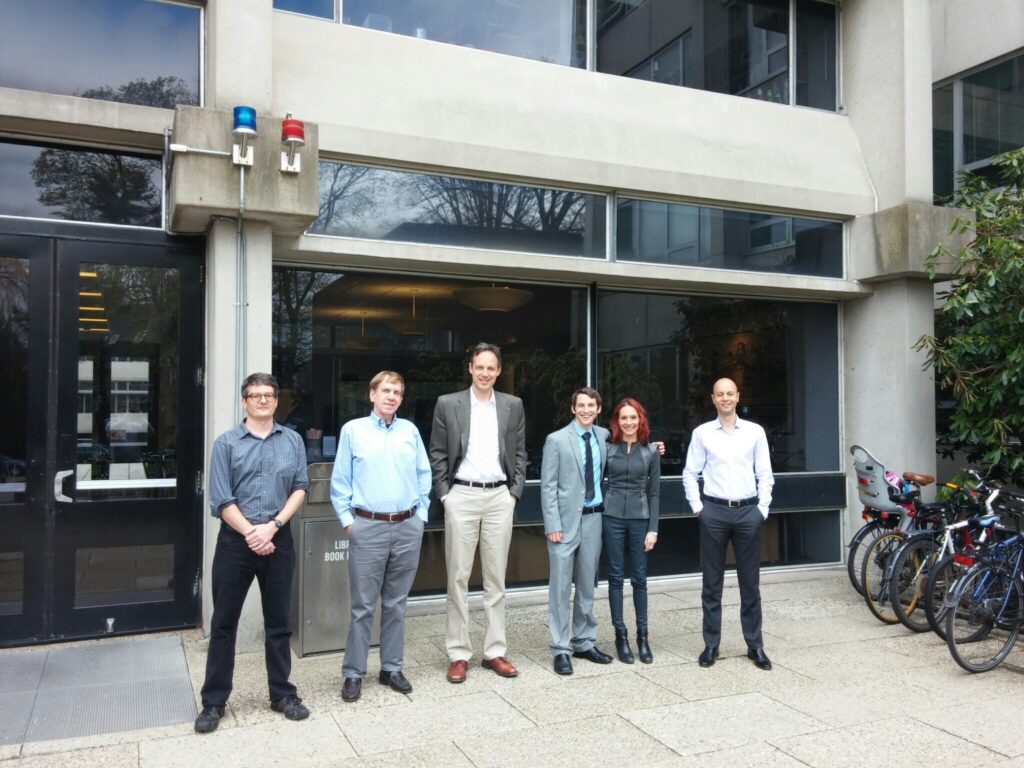
I had a terrific experience in graduate school, to which I am forever grateful to my terrific advisor, Alicia Soderberg. (Alicia was advisor to at least three Astrobiters!) She expertly guided my thesis work on core collapse supernovae and their host galaxies, which was a very productive collaboration. But, equally important, she gave me the space and support to pursue my interests in other topics.
When my thesis research veered towards statistics and machine learning, Alicia supported me in completing a Secondary Field (like a ‘minor’ for the PhD) in computational science. When I wanted to explore career paths in public policy, Alicia approved my taking a summer to serve in a science policy fellowship at the Massachusetts State House. And when I wanted to pursue my interest in science communication and writing, Alicia gave me the space to co-found Astrobites and later—with my Astrobites and Chembites colleagues—to cofound ComSciCon, the Communicating Science Conference Series. I’m so glad that both remain thriving nonprofit projects today.
Astrobites became one of the most important communities I joined as a graduate student and I’m forever grateful for being a part of it. Some of my favorite Astrobites articles I wrote were about open source software in astronomy, like ds9, emcee, and the interactive educational modules we developed at Harvard.
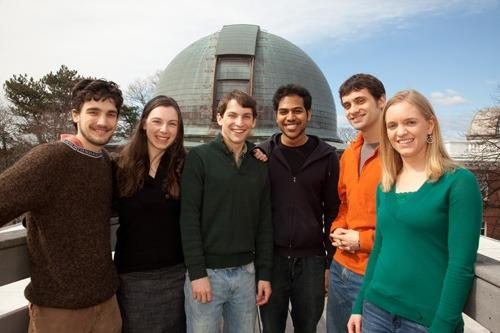
Walk us through the years since you were a PhD student. How do you feel that your astronomy background played into the various roles you’ve worked in after grad school? In retrospect, is there anything you might have done differently during grad school to get yourself where you are now?
Immediately after the Ph.D., I went into a career in data science in industry. I started out in media & entertainment, at a time when Hollywood was just starting to explore the possibilities of “big data” for informing creative decisions and driving targeted marketing. I spent nearly eight years in that industry and then moved to similar roles building a chemical machine learning platform for drug discovery in biotech and, now, applying AI to teaching and learning in higher ed.
I’ve stayed in touch with the physics and astronomy community through my volunteer service as ComSciCon’s Leadership Team Chair and as a Board member for the American Institute of Physics, which is, among many other programs, the parent organization of the Society of Physics Students.
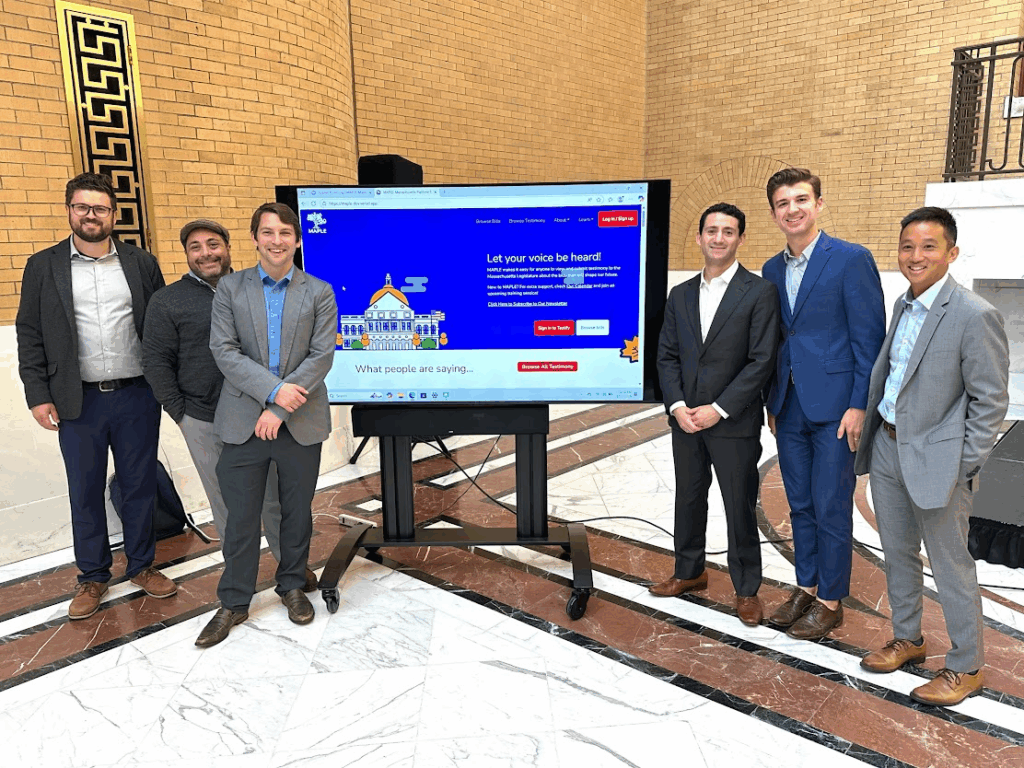
Throughout that time, I’ve also tried to continue practicing research and writing with a goal of creating public benefit. I’ve continued the environmental research and advocacy I started as a MA State House fellow, performed statistical research on the prevalence and trends in mass public shootings, and joined the Harvard Berkman Klein Center for Internet & Society to pursue research on how to use data science and technology to give vulnerable communities a greater voice in public policy. That work has led to projects like the Climate Justice Design Fellowship and MAPLE: The Massachusetts Platform for Legislative Engagement.
If you’re thinking my career path is meandering, you’d be right, but I’m not sure I would have done anything differently in that regard. I pursued a career in data science largely because I enjoy moving between disciplines and learning new domains. I think I would have been happy to devote my career exclusively to astronomy, or environmental justice, or teaching and learning… but I’m even more happy to have had the opportunity to engage in all of them and collaborate with leaders in each.
Now you’re publishing your first book! What inspired you to write this book, and how did you choose what to focus on? What was the experience of writing a book like? You’ve written a lot of shorter form content in the past — what was the transition like moving from that to constructing a book-length text?
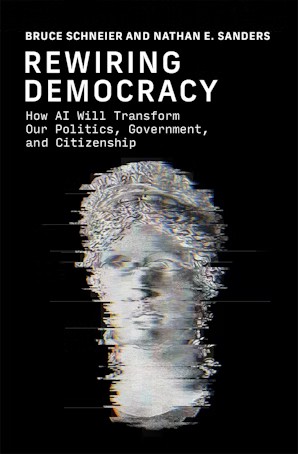
My new book co-authored with Bruce Schneier is Rewiring Democracy: How AI Will Transform Our Politics, Government, and Citizenship. It’s available for preorder now and releases October 21st.
Bruce and I started writing together about the impacts of machine learning and AI on democratic processes when I first joined Berkman Klein back in 2020. Our initial work in this space was more technical and perhaps esoteric, identifying specific ML modeling approaches that could hypothetically be exploited by different actors in political systems: advocates, lobbyists, legislators. As AI technologies grew radically in sophistication in the following years, those esoteric hypotheticals started to feel a lot more real!
We’ve written about how AI could be used to write laws, how the field of AI seemed to be factionalizing, how we might make the same mistakes in failing to regulate AI as we did with social media, how governments could build ‘Public AI’ models for public benefit, and much more. In a few short years, all those things seem to have come to pass: legislators have used AI to write laws, AI is more polarized and factionalized than ever, we—particularly we in the US—have failed to regulate AI, and states like Singapore and Switzerland have launched Public AI projects.
We wrote a couple dozen pieces on topics like these together that seemed to grow increasingly relevant. So we decided to undertake a more systematic accounting of how AI is transforming democracy through our book.
Tell us a bit about the book!
I hope anyone reading this would enjoy it! It’s meant for a general audience and written to be lively and engaging.
We recognize that some readers will pick up our book having strong pre-conceived perceptions about AI and its benefits or harms to society and to democracy, and others will not have thought deeply about the topic. We’ve tried to appeal to that whole range of readers.
If you’re pessimistic about AI because you recognize its very real potential for harm and limitations, we hope you’ll find the book refreshing for painting a vision of how things could be different. We try to separate the inherent capabilities of the technology and its potential beneficial uses from the many inappropriate and irresponsible ways that AI is developed and used today.
We lay out how the scalability of AI can improve the bandwidth between legislators and constituents to help more people have a voice in policymaking, how it can help eliminate language barriers in the operation of multilingual democracies, and how it can help level the playing field for lesser-resourced candidates to compete in elections. We conclude by offering a program of actions for how democracies can shape the AI ecosystem to better benefit society.
On the other hand, if you’re all in on AI’s potential benefits, we try to usefully complicate that view. We call out the immediate harms and risks of AI use today, and also spell out the vulnerabilities within existing sociopolitical systems that AI is likely to exacerbate, like concentrations of power, inequities in political access, and systemic biases.
If this subject is new to you, we hope it will be eye-opening to survey examples from around the world about how AI is already impacting how politics is performed, how government is administered, how laws are made, how law is interpreted by the judiciary, and what it means to be a citizen. We don’t stop at cataloguing that recent history. We try to project forward to the second order effects of those changes, particularly to analyze how AI will shift balances of power between branches of government, parties, and other power structures in democracies.
Your book focuses on the role of AI in politics and society. Do you have any thoughts about the use of AI in astronomy and academia more broadly? What do you think might be productive avenues for incorporating AI into the undergrad and graduate school experience, and in the research world?
My introduction to the field of AI really came from applying Bayesian inference and machine learning models to supernova light curves in my thesis research, so I’m a big believer in how these methods can advance scientific research and astronomy specifically. I also appreciate that many scientists have called out the harms created by AI, like the exploitation of human labor and creativity in training leading “frontier” corporate AI models and their local environmental costs on communities burdened by data centers and mineral mining.
I admire any scientist who looks to exploit technologies for the benefit of humanity through their research while simultaneously fighting to change that technology’s impact on society for the better. Scientists who use large language models in their work can select models whose development practices align with their values and explain why they’ve done so. (Consider using the Public AI models linked above!) They can also call out and criticize model developers whose practices do not meet their standards. And scientists can bring their technical expertise, their lived experience, and their passion to the public debate over the future of AI, its development, and its use in society and governance.
How does AI feature in your day-to-day life? How did you use AI (if at all) in writing this book?
I think the best use of AI is to augment human capabilities: to expand the breadth of your own capabilities and to automate work you do not enjoy. My co-author and I both enjoy writing, so we did not and would not have wanted to use AI in writing the book.
That said, I find lots of rewarding and helpful uses of AI elsewhere. In addition to ML and AI model development being the subject of much of my work, I find AI coding assistants hugely valuable for helping me design, implement, debug, and document the software projects I work on. I use AI search and research tools frequently as a complement to traditional search engines. And I enjoy using AI image generators for artistic expression.
I find AI a terrifically useful communication tool. In our MAPLE project, we’ve used AI to generate accessible summaries of tens of thousands of bills introduced in the Massachusetts legislature, translating legalese into plain English.
Finally, anything more you’d like to share with Astrobites?
If you’re in Boston, DC, Chicago, or Toronto, come say hi! My co-author and I each have a variety of speaking events for the book upcoming (Bruce here, me here, with more to be added).


