
Title: A LOFAR search for coherent radio emission accompanying prompt engine activity in gamma-ray bursts
Authors: A. Hennessy, R. L. C. Starling, A. Rowlinson, I. de Ruiter, A.J. van der Horst, G. E. Anderson, N. R. Tanvir, S. ter Veen, K. Wiersema, R. A. M. J. Wijers
First Author’s Institution: School of Physics and Astronomy, University of Leicester
Status: Published in MNRAS (open access)
Gamma-ray bursts (GRBs), which are the most energetic events in the universe, are like the tornadoes of the cosmos. They both require an uncommon phenomenon to occur: for the tornado, an ominous mixing of hot and cold fronts, and for the GRB, either an exploding massive star or colliding neutron stars. Even when they do occur, we don’t often see them, since GRBs are highly non-isotropic (only point in one direction, which is not usually at us) and tornadoes are more common in tornado alley states like Nebraska1, where cows outnumber people three-to-one. Of course, witnessing either a GRB or a tornado is super exciting, as long as they’re far, far away, lest you end up like an unfortunate alien civilization in the same galaxy as a GRB or my middle school circa 1975.
What are GRBs?
The main feature of a GRB is a relativistic jet, but the details on the structure and main radiation mechanism of this jet are fuzzy. To make matters more complicated, two entirely different scenarios can lead to a GRB. In one case, we have a dying massive star exploding in a supernova, and in the other, a pair of neutron stars merging. Luckily, observationally differentiating between these two cases is relatively straightforward; in the former case, the bursts last longer (more than two seconds), and in the latter, they are shorter than two seconds. Here, our authors focus only on the long GRBs occurring during supernovae.
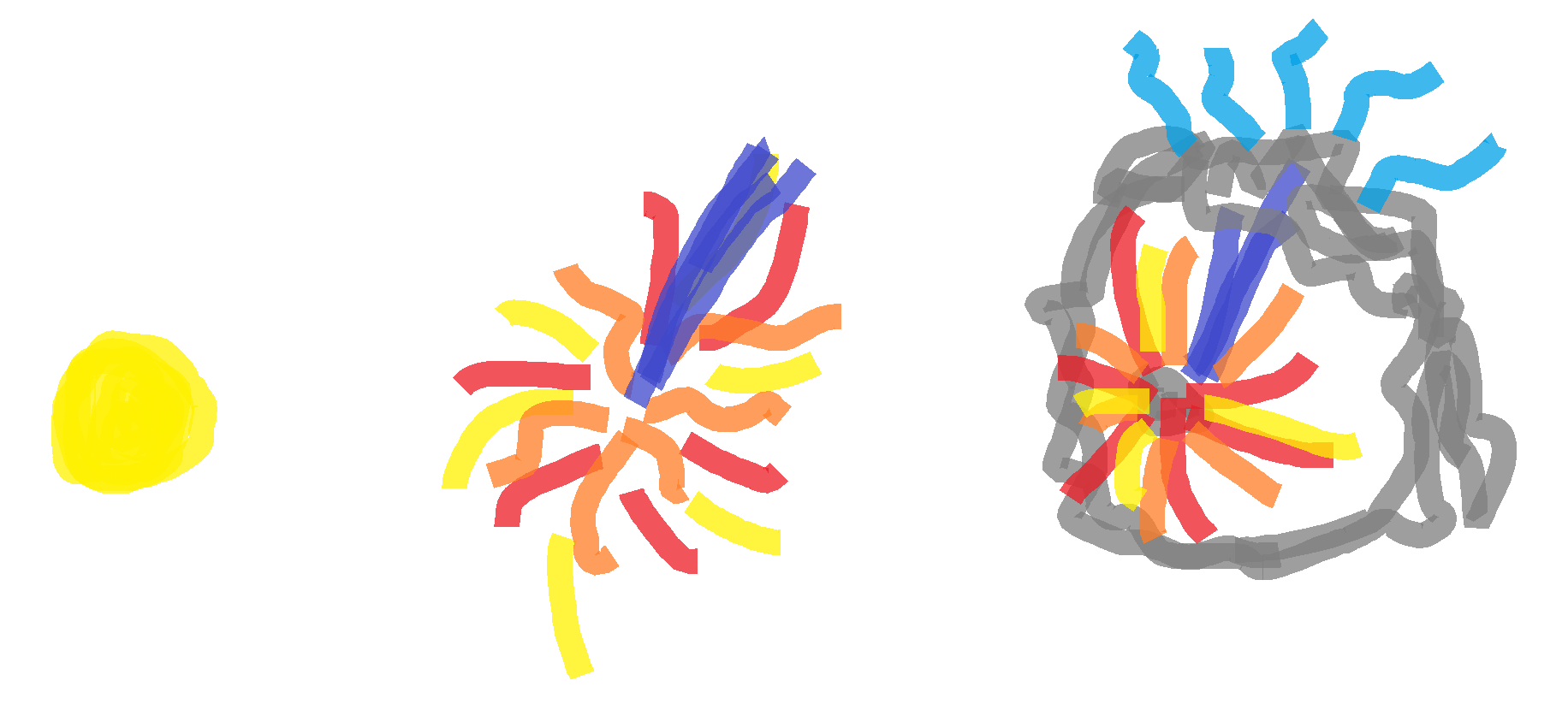
Observationally, long GRBs all seem to follow the same two-step timeline, illustrated in Figure 1. First, we see the initial burst, which manifests as a series of pulses due to shocks in the jet. Later, when the jet outflow starts crashing into the surrounding medium, it produces an afterglow. In most cases, the afterglow is visible in the X-ray, but sometimes we see afterglows in the UV, optical, and radio. While they don’t occur in every GRB, radio afterglows have helped us understand the physics of the second phase, so today’s authors borrow this strategy and use radio to investigate the first phase.
The magnetized relativistic wind theory
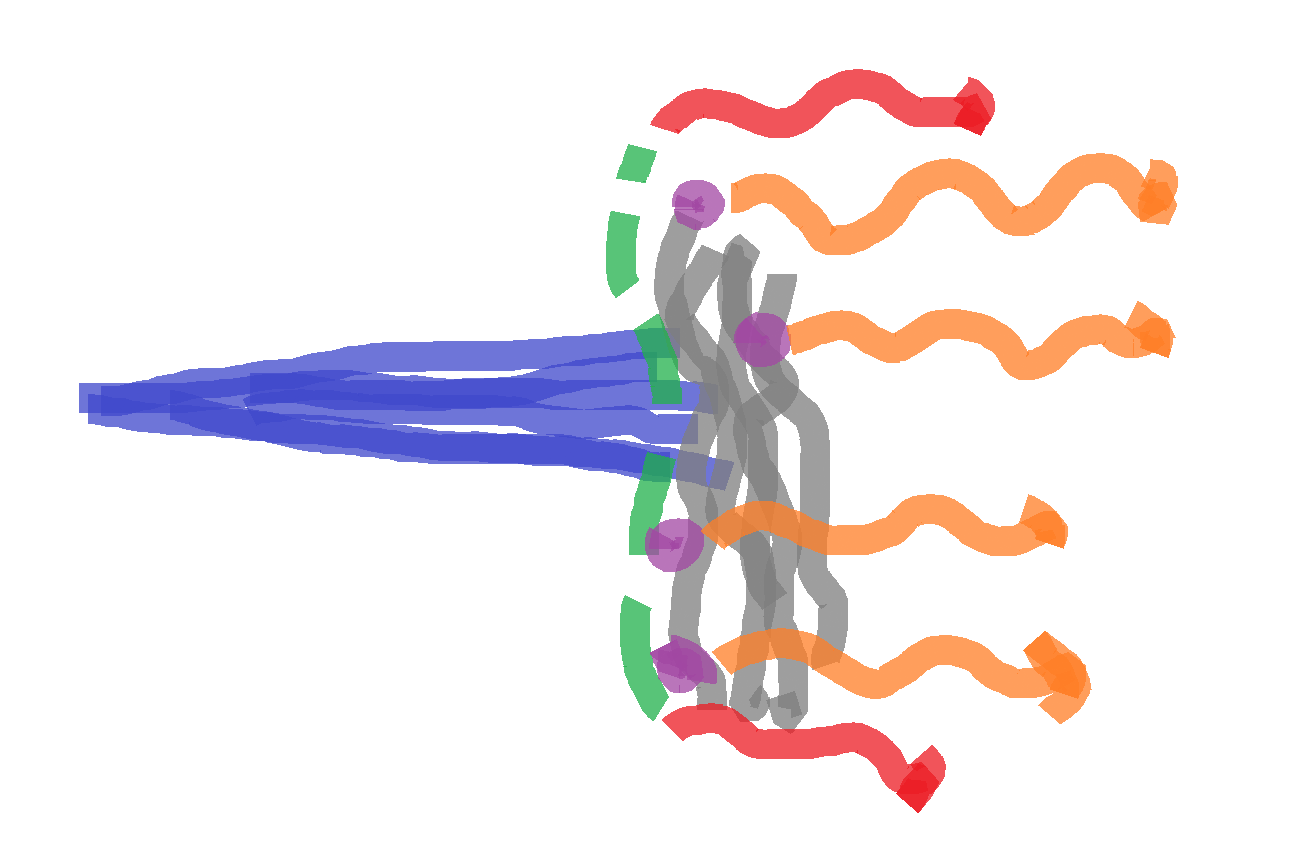
Here, our authors test one promising theory to explain the initial burst phase of a GRB. In this model, illustrated in Figure 2, a magnetized, relativistic wind in the jet collides with the non-(or at best, weakly)-magnetized circumstellar medium, which creates an electric surface current at the collision interface. Where we have an electric current, we get an electric field, and this field sends all the electrons who happen to be in the vicinity flying up to relativistic speeds. As the electrons zoom through the magnetized wind, they radiate, producing the classic GRB gamma-ray and X-ray emission. However, this whole process causes the electric field to vary a bit, which in itself produces very low frequency radio emission. While the radio bursts occur at the same time as the high energy bursts, the radio photons get slowed down by all the ambient plasma in their path, and arrive at Earth a few hundred seconds or so later. So, our authors reason, if we can detect these radio bursts, we can confirm this theory!
Challenges abound
Unfortunately, catching the radio bursts predicted by the magnetized wind theory is quite tricky, and null results do not necessarily rule out this model. For one, the burst should be brightest at a radio frequency of 0.01 MHz, but thanks to Earth’s pesky ionosphere, which reflects all radiation below a few MHz, none of those photons will be making it to our radio telescopes. Instead, the best we can do is catch the high-frequency tail of the burst with our lowest frequency telescopes, like the International LOw Frequency ARray (LOFAR) and the Murchison Widefield Array (MWA). Furthermore, we need our radio telescopes to point at the GRB almost immediately, or we’ll miss the burst. Luckily, we have a little leeway, since the radio burst arrives a bit after the high-energy burst, but the longer this delay is (the more time we have), the fainter the burst will be (the harder it will be to detect). Therefore, we need fast turnaround and high sensitivity. The MWA is extremely quick and can follow up on a GRB within 10 seconds, but it is not very sensitive. LOFAR, on the other hand, is slower, requiring 4-5 minutes to start observing, but can detect much fainter sources.
However, it is not enough to simply be sensitive and fast with our radio follow-up, especially if we want to be able to interpret non-detections. First, we need to know when to look, and the time delay is redshift dependent, since the further away (higher redshift) the light is traveling from, the more opportunities it has to get slowed down. To measure the redshift (and subsequently, determine the time delay), we need rapid spectroscopic follow-up observations of the host galaxy. While there are many more optical spectrographs than low-frequency radio telescopes available, every astronomer ever wants spectroscopic follow-up observations. Even if we know the redshift, we still may not know exactly what the time delay is, since this also depends on how much material is along the line of sight. While we have a general idea of what lies in any direction in the Milky Way and extragalactic space, we may be underestimating the time delay if we neglect the contribution of the GRB’s host galaxy. Long GRBs tend to occur in especially dense host galaxies, which have more available molecular clouds to convert into massive stars. Even more concerning, the host galaxy environments may not just be delaying the radio bursts, but preventing them from leaving entirely!
The last challenge is predicting exactly how bright the radio bursts should be, which depends on how much of the energy in the GRB is contained in its magnetic field. Not only is this difficult to measure, but it is expected to vary between different GRBs, and even to evolve over the course of an individual GRB!
Previous attempts
Before this work, three long GRBs had been followed up with either LOFAR or the MWA, with no radio bursts had been found. However, there are three possibilities to explain this: the radio burst did occur, but was simply too faint to be detected; the radio burst was absorbed before it could escape the host galaxy; or, there really was no radio burst. In other words, the null results were inconclusive. Here, our authors more than double this sample by investigating an additional four long GRBs with LOFAR.
The GRBs under investigation
All four GRBs under investigation here were detected initially with the Burst Alert Telescope (BAT) on the Neil Gehrels Swift Observatory (or, just Swift for short). When the BAT detects gamma-rays from a GRB candidate, Swift’s X-ray Telescope (XRT) is triggered and starts observing. Down on Earth, LOFAR is alerted as well, and, as long as the GRB is above the horizon, slews to the GRB’s location. Since it takes 4-5 minutes for the LOFAR observations to begin, we will miss any potential radio bursts if the time delay is less than this turnaround time. To ensure the time delay is long enough, the GRB needs to be further away than redshift ~1 (relatively nearby if you ask a quasar astronomer, impossibly far if you ask a stellar astronomer).
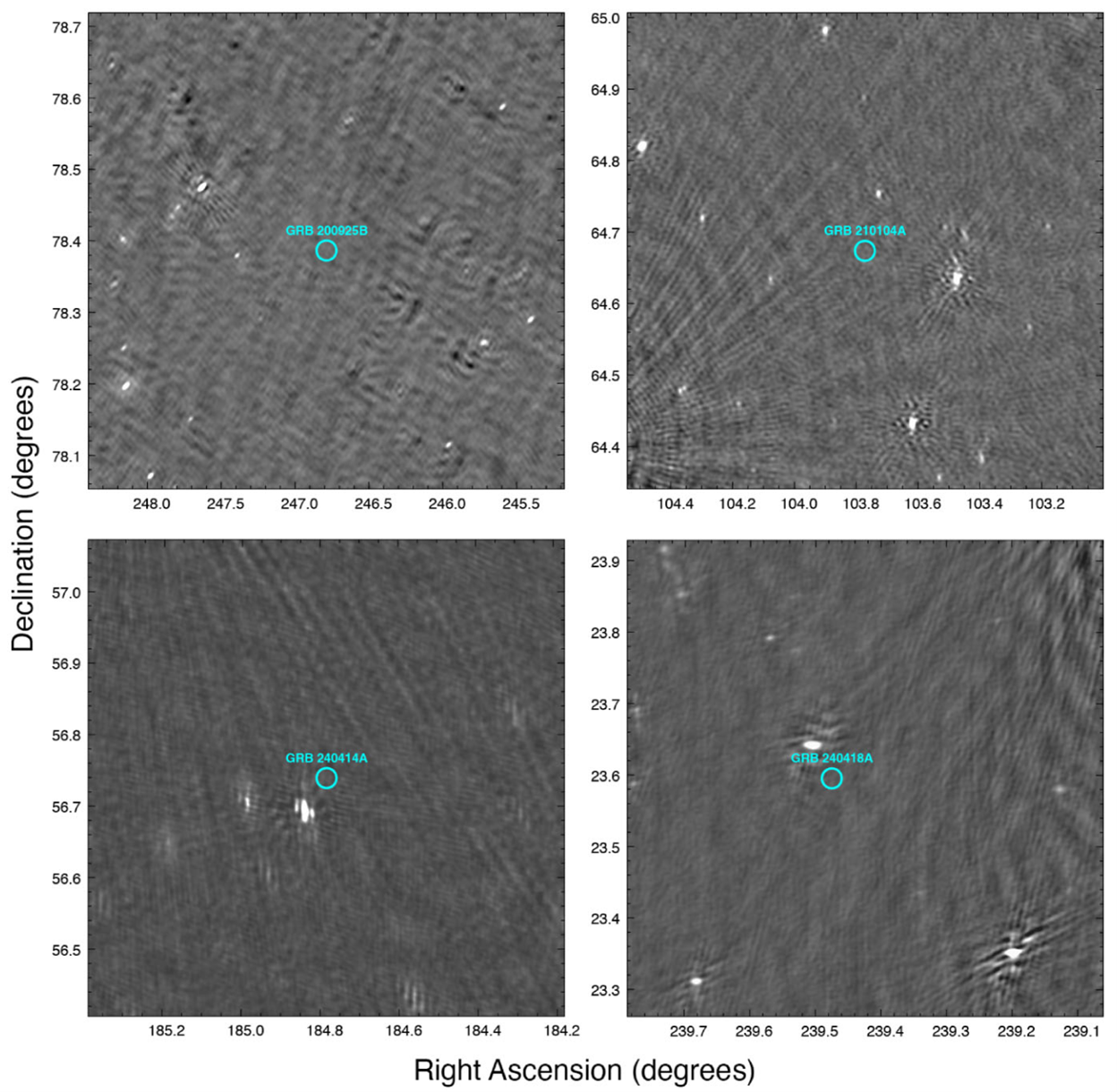
The four Swift-LOFAR GRBs our authors end up with in their study are fairly typical events, which is ideal, and their LOFAR images are shown in Figure 3. The first, GRB200925B, has an unknown redshift, but does appear to have a slight bump in its radio light curve, peaking at about twice the background noise. The timing of the little bump would match the radio burst delay for a GRB with redshift 1.8…if only someone had gotten some spectroscopy!!
The second GRB, GRB210104A, does have a measured redshift of 0.46, but our authors argue this redshift is questionable at best. If the redshift is accurate, we would have missed the burst and would see only the afterglow phase. However, if the redshift is actually higher, we should catch the burst! In any case, LOFAR detected nothing.
No radio emission was detected for the third source, GRB240414A, either. This GRB had a redshift of 1.8, indicating we should have been able to catch the burst. Unfortunately, the Earth’s atmosphere thwarted this effort by badly interfering with the LOFAR observations.
Lastly, GRB240418A, the fourth source investigated, has no known redshift and was not detected in LOFAR.
Conclusions
Our authors are hampered by the same mystery as the previous GRB radio studies: were there no radio bursts at all, indicating the magnetized wind model is inadequate? Or were the bursts just too faint, meaning there must be even less energy in the jet’s magnetic field than previously estimated? However, they are optimistic this won’t remain a mystery for too much longer. In the near future, with the advent of highly sensitive radio arrays with rapid follow-up capabilities, such as LOFAR 2.0 and the Square Kilometer Array (SKA) we will have way more radio-GRBs to study, making this an exciting area for future work.
Astrobite edited by: Kasper Zøllner and Nathalie Korhonen Cuestas
Featured image (and all illustrations) by the astrobite author
- I’m just kidding, we have over 6 million cows in Nebraska, which still leaves plenty of humans to observe the tornadoes. ↩︎

Love the drawings.