
In this series of posts, we sit down with a few of the keynote speakers of the 248th AAS meeting to learn more about them and their research. You can see a full schedule of their talks here, and read our other interviews here!
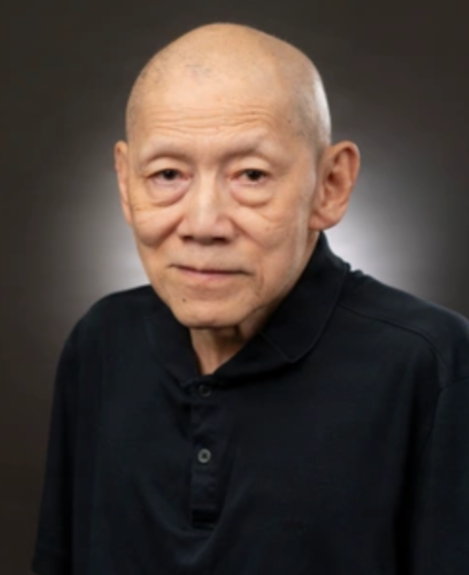
Dr. Yi-Ming Wang did not plan to be a solar physicist. In 1986 he was hired at the U.S. Naval Research Laboratory to do radio astronomy. He showed up six months late because of a German fellowship he had been wrapping up, and by the time he arrived, the person who had offered him the radio astronomy job had run out of funding. Two months later, he was redirected to a solar physicist named Neil Sheeley, who hired him only, as Dr. Wang remembers it, “because my name had been on a paper with a solar physicist he knew.” That accident produced what NOAA’s Space Weather Prediction Center now uses every day to forecast the solar wind: the Wang–Sheeley-Arge model. It is the work he is best known for, though, he is quick to note, you can never predict in advance which of your papers the world will end up using. “That happens a lot in research,” he tells me. “You’re known for things that you didn’t think were actually your best work. But you never know what people are going to use.”
Dr. Wang is a senior solar physicist at NRL’s Space Science Division, where he has been working for forty years. Earlier this year he was awarded the 2026 George Ellery Hale Prize, for what the citation calls his “seminal discoveries and groundbreaking contributions” to research on the Sun’s magnetic field, the solar wind, the solar dynamo, and the long-term variability of total solar irradiance. This June, he will give a plenary lecture at the 248th meeting of the American Astronomical Society in Pasadena, where he plans to focus on three of those threads: the rigid rotation of coronal holes and what it tells us about large-scale magnetic fields, the long-standing puzzle of how the Sun’s outer atmosphere is heated, and the physical basis of the WSA model.
The path to all of this started, Dr. Wang tells me, with a paperback. His father gave him a pair of binoculars for his fourteenth birthday, and he started looking at stars and planets from the backyard. Around the same time, he picked up Fred Hoyle’s Frontiers of Astronomy. Hoyle’s writing, he says, was clear enough that even a ninth-grader could follow most of it, and the writing itself, the trick of explaining hard ideas in plain language, made an impression that has stayed with him ever since. He went to Harvard for his undergraduate degree in astronomy and then to MIT for a ScD in physics, where the department made him take courses in many different areas of physics. He spent the next decade in Europe, first at Sussex University, then in Bonn working on pulsars, neutron stars, and accretion onto compact objects. It was while he was at Bonn University that the opening sentence in a German funding decision, “Herr Wang is now approaching his mid-thirties, and it is time for him to look for a long-term position” sent him job-hunting. By chance, he had just gotten to know two visiting scientists from NRL, and one of them offered him a job in radio astronomy over lunch at a pizza place near the institute. After the radio astronomy plan fell through and he was redirected to Neil Sheeley, he became a solar physicist. “My career was a random walk,” he tells me cheerfully. “You never know where you’re going to end up. But sometimes you’re lucky, you end up in the right place.”
What pulled him into the new field, he says, was the data. In high-energy astrophysics, he had been spending years building theoretical models of accretion disks and neutron-star magnetospheres. “Has anyone ever seen an accretion disk around a neutron star?” he asks. “You just imagine it.” Solar physics was the opposite: enormous publicly archived datasets, much of them barely touched. He still remembers a piece in the Wall Street Journal in the late 1980s about NASA’s NSSDC archive of in-situ solar-wind measurements going back to 1963, which noted that few people were using it. He and Neil Sheeley combined those in-situ data with magnetic maps of the Sun’s surface and tried correlating the solar-wind speed at Earth with every parameter they could think of. None of them worked very well, until one did. The rate at which the Sun’s coronal magnetic field “fans out” as you go up from the surface, it turned out, was a surprisingly good predictor of the wind speed: slow expansion gave fast wind, rapid expansion gave slow wind. “It was so much better than the other correlations,” Dr. Wang remembers. “I just knew it had to be right.’” That empirical relationship became the heart of the Wang–Sheeley model, and the basis of the operational Wang–Sheeley–Arge model NOAA still runs today.
In 1991, he, Sheeley, and a postdoc named Ana Nash used earlier Doppler measurements of a 10 m/s poleward flow on the solar surface and helioseismic observations of the Sun’s internal rotation to develop a simple two-layer dynamo model, in which a subsurface equatorward return flow of 1 m/s was able to naturally produce the eleven-year solar cycle. The paper is now widely credited as a foundational work of the modern flux-transport dynamo, though it took some years to reach that status. He sees a similar pattern in his current work. He believes coronal holes maintain their nearly rigid rotation, despite the differentially rotating surface beneath them, because of continual magnetic reconnection at their boundaries, and that the Sun’s corona is heated by reconnection between small, undetected magnetic bipoles and the overlying large coronal loops; the bipoles show up clearly as small loops in extreme-ultraviolet images but do not appear in the corresponding magnetograms. “Nobody believes that,” he says, laughing. “But that’s okay. It gives me time to work on it.”
When I ask what advice he would give to undergraduates reading Astrobites, his answer arrives instantly: don’t over-specialize and learn some basic physics. It is the mistake he sees most often in his own field, where it is easy to become a world expert on one small topic or technique without ever having a working command of the underlying physics. He recommends two specific things. The first is to take a lot of physics courses; he credits the MIT physics department for forcing him to take physics courses he did not think he would ever need. The second is to look beyond your immediate corner of the field. Some of his most important insights in solar physics, for example, that a magnetic field anchored in a differentially rotating layer doesn’t simply wind up indefinitely, but continually reconnects and rearranges itself, applied retroactively to questions he had worked on in high-energy astrophysics years before. “I wish I had known these things when I was doing accretion disks,” he tells me.
There is something elegant about being honored, late in a career, for the careful and patient act of looking at data harder than anyone else has. That is what Dr. Wang’s Hale-Prize-winning career amounts to: forty years of paying close attention to measurements other people had archived and forgotten, and the willingness to say, calmly and repeatedly, when his eyes told him something the textbooks didn’t. His AAS 248 plenary will be a tour through that habit of looking: at the Sun’s magnetic field, its corona, and the places where standard explanations stop short.
To hear more about coronal holes and what the Sun’s magnetic field can tell us about how our nearest star really works, tune into Dr. Yi-Ming Wang’s Plenary Lecture at 3:40 P.M on Tuesday, June 16th at #AAS248!
Edited by: Natalie Price
Featured Image Credit: AAS
