
In this series of posts, we sit down with a few of the keynote speakers of the 248th AAS meeting to learn more about them and their research. You can see a full schedule of their talks here, and read our other interviews here!
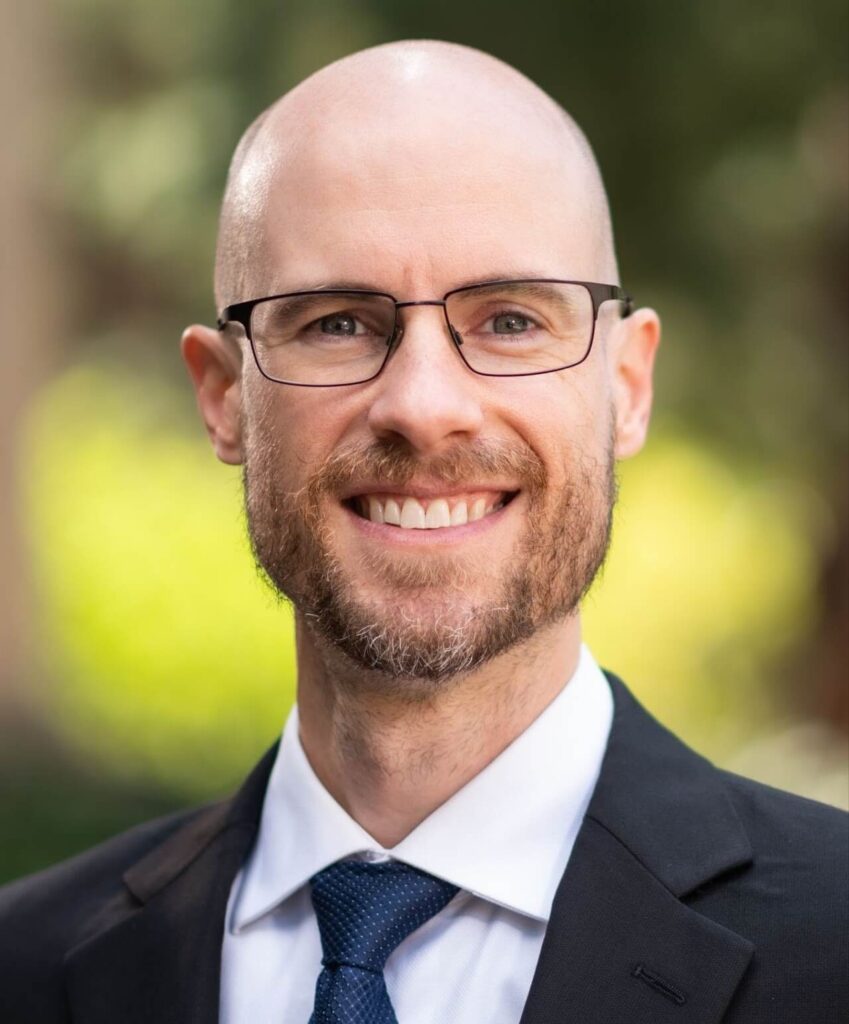
Dr. Ian Roederer has always wanted to be an astronomer. “I never really had a backup plan,” he told me in our interview, and he has not deviated since his first astronomy class as an undergraduate. We had the opportunity to sit down and chat about all things astronomy, from his research journey to building your community in academia. This year at #AAS248, he will be presenting a plenary lecture on his work in r-process nucleosynthesis, the very mechanism that shaped the periodic table as we know it today.
The Origin of the Periodic Table
Now a professor at North Carolina State University, Roederer has been probing older stellar populations for nearly twenty years. While his work has matured over the years, he is still asking some of the same questions: where do the elements come from? There are a myriad of processes that create heavy elements, but Roederer focuses on the r-process. Rapid neutron-capture is the process by which nuclei are bombarded with neutrons too fast for the nuclei to decay, leaving behind stable heavy elements such as Selenium, Tellurium, and Platinum.
This process only happens in high-energy events, such as kilonovae, the resulting explosion from merging neutron stars. Traditionally, astronomers measure the abundances of old stars in order to determine the timeline of these events, but Roederer has turned his spectroscope to the ultraviolet, where there are more detectable lines for these rare elements. This allows him to better constrain the models for such cataclysmic r-process events, and even identify some of the nuclear physics at play.
Looking Forward and Asking Big Questions
Roederer is also one of hundreds of astronomers working to investigate the possibilities of NASA’s next flagship astrophysics mission: Habitable Worlds Observatory (HWO), which hopes to find habitable exoplanets. To further his own work, he is pushing for a high-resolution UV spectrometer, which would be able to characterize the abundances of r-process elements in stars beyond the Solar neighborhood.
While the design of the mission itself will be left to NASA’s finest engineers, Roederer has been exploring the possible science cases HWO could be capable of. He not only asks questions about the potential science gain, but also about what sorts of design and instrument trade-offs would be required to answer these questions.
The Secrets of the Universe
As we spoke, I couldn’t help but notice how Roederer exuded passion for his work. Although his days are jam-packed with emails, meetings, and seminars, he still maintains a love for most things astronomy. His secret: identifying the parts of the process you enjoy, and “minimizing your involvement with the parts you find less exciting.” For example, he does not have a GitHub account; instead, relying on his peers for heavy-duty programming.
“I still know the phone numbers of most of the stars I work with regularly,” even as a busy lecturer, mentor, and astronomer, Roederer still finds time to “get to know” his data, something that isn’t possible when working with the large-scale surveys that dominate 21st-century astronomy. He also enjoys the writing process, even when it comes to plain old emails; understanding and synthesizing his ideas in research is what excites Roederer the most (we at Astrobites can relate).
But amongst his passion lingers the same impostor syndrome Roederer has battled throughout his career, “I learned to accept and recognize that for what it is… But it’s there.” To astronomers in all stages of their careers, from the undergraduates taking their first course, to those defending their bachelor’s, master’s, and doctorate’s, and even those well-established in their careers, he stresses the importance of community. “Maybe not a large one, but a few people you trust that you can talk with.” Peers, but also more senior astronomers who have walked this path before, and can offer advice, “Develop those networks when things are good, not when you find yourself in trouble.”
The key to astronomy might not be the physics governing the universe, or the biggest telescope money can buy, but the people we surround ourselves with, and the process of discovering new things, not just about our research, but about ourselves as well.
To hear more about r-process nucleosynthesis, tune into Ian Roederer’s Plenary Lecture at 11:40 PT on Thursday, June 18th, at #AAS248!
Edited by: Sowkhya Shanbhog
Featured Image Credit: AAS
