
The Undergraduate Research series is where we feature the research that you’re doing. If you are an undergraduate that took part in an REU or similar astro research project and would like to share this on Astrobites, please check out our submission page for more details. We would also love to hear about your more general research experience!

I looked through the telescope to the moon for the first time when I was 12 and ever since then I have had a passion for space, particularly astrophysics. Currently, I am pursuing a Mechanical Engineering degree, with a minor in Physics. Upon completing courses in quantum physics and thermodynamics, my passion for discovering the unknown has led me to research the quantum properties of black holes. This research addresses the thermodynamic properties of black holes in the frame of quantum thermodynamics. In addition, this research aims to model Schwarzschild black holes (non-rotating, uncharged black holes) as quantum heat engines, and aims to provide insights into the Information Paradox.
Begum Kutuklu
Koç University
This guest post was written by Begum Kutuklu. Begum is an undergraduate studying mechanical engineering and physics at Koç University.
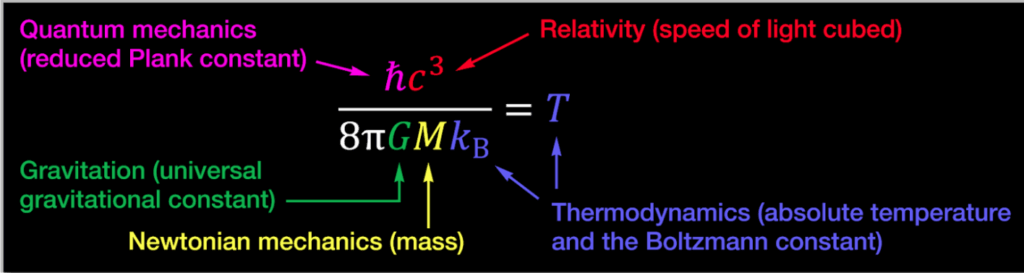
Black holes are one of the most mysterious celestial bodies. They do not only exist as gravitational giants but also as thermodynamic systems, as first described by Jacob Bekenstein and Stephen Hawking in 1973. Bekenstein suggested that a black hole’s area (A) is related to its entropy (S) according to \(S=kc^3A/4G\hbar\). Furthering this suggestion, Hawking argued that black holes radiate energy (a.k.a Hawking Radiation), with the Hawking Temperature (T) dependent on the black hole mass (M) via \(T=\hbar c^3/8\pi k_b GM\). These discoveries implied that black holes show thermodynamic properties. However, the quantum behaviour of black holes through their thermodynamic properties and especially the Information Paradox—whether Hawking radiation causes information loss—stays as an unknown.
Traditional research primarily focuses on the macroscopic thermodynamic properties of black holes. However, the microscopic models of quantum thermodynamics, including quantum heat engines, are often overlooked. This research addresses this gap by modeling a Schwarzschild black hole as a quantum heat engine to explore work extraction from Hawking radiation. Quantum heat engines operate using quantum mechanics principles. Quantum states near the black hole’s event horizon act as the working substance, as the hot reservoir. On the other hand, the cosmic microwave background acts as the cold reservoir. Converting the thermal energy from Hawking radiation into useful work is referred to as work extraction, and by modeling the Schwarzschild black holes as quantum heat engines, this research delves into the work extraction topic.
Efficiency is an important concept for quantum heat engines, since they convert thermal energy from Hawking radiation into useful work. Thus, efficiency is the fraction of input heat converted to work. Accordingly, effects such as quantum consistency and entanglement, compared to the classical engines, could increase efficiency and provide insights about the Information Paradox.
The methodology of this research is based on a combination of theoretical reviews and computational simulations. Firstly, the energy flow of Hawking radiation is analyzed by deriving its energy flux and estimating heat input. Then, the quantum heat engine’s efficiency is calculated. Computational simulations, implemented in MATLAB, calculate the work output and Bekenstein entropy for black holes with masses ranging from \(10^{12}\) kg to \(10^{30}\) kg. Initial simulations have suggested that smaller black holes (high TH) provide higher efficiency. Additionally, the entropy analysis uses von Neumann entropy to assess the effects of quantum consistency in information conservation and mutual information.

The simulation results are presented in Figure 2. It plots the efficiency of the quantum heat engine against black hole mass, confirming that the efficiency increases as the mass decreases. This is accounted for by the fact that the smaller black holes have significantly higher Hawking temperatures. The steep rise in efficiency for smaller masses highlights the thermodynamic advantage of high Hawking temperatures, supporting the model’s potential to extract work from Hawking radiation efficiently. This trend also suggests that quantum effects may play a role in optimizing efficiency, offering a pathway to explore information preservation in the context of the information paradox.
The unique contribution of this research is that it provides a different approach by applying quantum heat engines to black holes. The existing body of research mostly addresses the Information Paradox through Quantum Information Theory or the Holographic Principle. On the contrary, the proposed model in this research investigates the potential relation between work extraction and entropy balance.
There are some restrictions of this research, including the fact that the model is limited to Schwarzschild black holes and does not apply to rotating (Kerr) black holes, as they exhibit complexities such as frame-dragging and electric fields. The model also omits the Backreaction Effect, which is the mass-loss impact on the black hole. Moreover, as the Unified Field Theory does not exist, the research lacks a theoretical supportive framework. Future research may take into consideration rotating black holes and quantum gravitational corrections. Furthermore, more profound integration of the Quantum Information Theory may lead to better agreement between the model and the Holographic Principle.
This research provides a combination of quantum physics and astrophysics. The aim is to develop new understandings of the microscopic nature of the universe. Looking at the Information Paradox through the lens of quantum thermodynamics enables an insightful perspective that should be further explored.
Astrobite edited by: Sonja Panjkov
Featured Image Credit: EHT Collaboration/ESO
