
Martian Dust Shining in the Night Sky
Sometimes your $1.5 billion spacecraft becomes an interplanetary dustpan. Read today’s bite to learn more!

Sometimes your $1.5 billion spacecraft becomes an interplanetary dustpan. Read today’s bite to learn more!

Every time sexual harassers are given authorship on prominent papers, chaos ensues for the broader astronomy community; but nobody is more affected than the junior members (grad students and postdocs) within those research groups. This is the story about how we, the Early Career Researchers within the California Planet Search, have tackled the most recent authorship “debacle.”
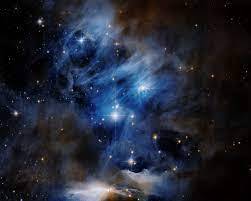
In this post, we explore the use of modern telescopes to identify and study Young Stellar Objects in the Chamaeleon Cloud Complex – a star-forming region in the Chamaeleon constellation. YSOs exhibit an infrared excess due to the presence of cooler circumstellar matter. By analyzing their Spectral Energy Distribution, we can gain insights into the rate at which stars form and the factors that govern this process. Using GAIA parameters, such as parallax and proper motion, we can refine the list of known young stars and identify new ones. Our results demonstrate the power of modern telescopes in unlocking the mysteries of star formation.
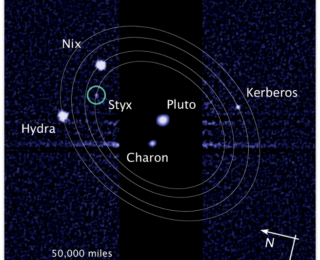
Pluto and Charon form a binary system. Around their barycenter, four recently discovered moons are orbiting: Styx, Nix, Kerberos and Hydra. In this work, two separate approaches were utilized to model their orbits. At first, all bodies were simulated using an n-body integrator and then outcomes were validated by a theoretical model. The motions that the four small moons follow are a superposition of forced oscillations by the binary system and mutual gravitational interactions. Results indicated that we cannot use Keplerian elements to describe the circumbinary orbits, as the central potential by the dwarf binary planet forces the small moons into several oscillations. Even when demanding a zero-orbital eccentricity, distances appeared to have many fluctuations through time. Lastly, we noticed that the mutual effects induce many long period perturbations, especially for the lighter moons, whereas the binary effects mainly dominate in the high frequency region.

Eliot Walton shares her research on gender and sexual minorities within the physics and astronomy community