• RSS
  • Submit a Guest Post
  • Undergraduates: Submit your Research!
  • Suggest a Paper Topic!
astrobites
  • About
    • About Astrobites
    • Meet the Authors
    • Statement of Inclusivity
    • Copyright & Permissions
  • Latest Research
    • Daily Paper Summaries
    • Classics
    • Undergrad Research
    • Physical Review Coverage
  • Beyond astro-ph
    • Beyond astro-ph Library
    • Interviews
    • Career Navigation
    • Personal Experiences
    • Current Events
    • Teaching with Astrobites
  • Guides
    • EM Spectrum
    • Galaxies & AGNs
    • Spectroscopy and Spectral Lines
    • Adaptive Optics
    • Gravitational Waves
    • Transient Astronomy
    • Astrophysical Software
    • Graduate School
    • Writing a personal statement for grad apps
    • First Observing Run
    • …More Guides!
Select Page
Overcoming Small Sources of Noise to Help Reveal Small Planets

Overcoming Small Sources of Noise to Help Reveal Small Planets

by Jack Lubin | Dec 4, 2023 | Daily Paper Summaries

Today’s paper creates a new model for predicting the RV scatter from convective blueshift and helps reveal the challenges of finding small exoplanets

Siblings or Only Child: M Dwarf Planets

Siblings or Only Child: M Dwarf Planets

by Jack Lubin | Oct 23, 2023 | Daily Paper Summaries

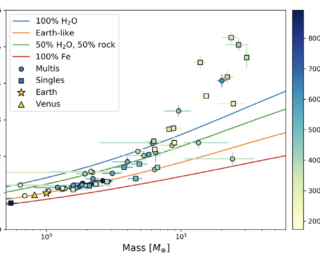
M dwarf stars host single planet systems (only child) and multi-planet systems (siblings). Let’s explore the differences!
Astronomers Join Forces Against The Sun

Astronomers Join Forces Against The Sun

by Jack Lubin | Oct 16, 2023 | Daily Paper Summaries

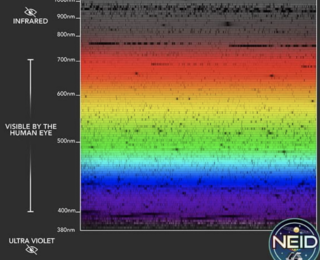
Our own Sun holds the keys to our understanding of how stellar activity signals present in radial velocity data sets. Now four international spectrograph teams have joined forces to combine data.
Where’s the Edge of a Planetary System?

Where’s the Edge of a Planetary System?

by Jack Lubin | Sep 15, 2023 | Daily Paper Summaries

Many exoplanet systems are found to contain similar sized planets at evenly spaced orbits within the system. Where does this pattern end? And could it be due to a Jupiter like planet at the outer reaches of the system?
Do Small Stars Have Big Planets? No.

Do Small Stars Have Big Planets? No.

by Jack Lubin | Jun 24, 2023 | Daily Paper Summaries

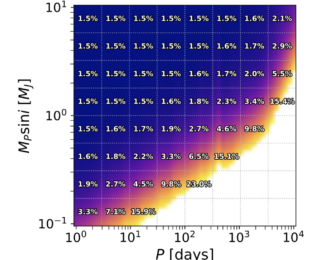
The most common type of star in the universe, the M dwarf, seems to be lacking any Jupiter-sized exoplanets. Why is that?

« Older Entries
Next Entries »

Loading

Follow our socials

  • Bluesky
  • Facebook
  • Instagram
  • RSS Feed

More Posts About

AAS AGN astronomy astrophysics binary stars black holes cosmology dark matter dwarf galaxies exoplanets galaxies galaxy evolution gravitational waves habitability JWST Kepler Milky Way observations planetary science planet formation protoplanetary disks radio astronomy simulations solar system spectroscopy star formation stars stellar evolution supernovae theory

Posts by Category

  • Accessibility
  • Applications
  • Beyond
  • Book Reviews
  • Career Navigation
  • Classics
  • Climate Change
  • Course Assignments
  • Crossposts
  • Current Events
  • Daily Paper Summaries
  • Game Reviews
  • Guides
  • Historical Astronomy
  • Instrumentation
  • Interviews
  • Outreach
  • Personal Experiences
  • PRJ
  • Quick Notes
  • Satellites
  • Teaching
  • Undergraduate Research

More Astronomy

  • AAS
  • AAS Nova
  • astro-ph
  • AstroBetter
  • APOD

Read Astrobites in Other Languages

  • Astrobitos (Spanish)
  • Astropontos (Portuguese)
  • staryab (Farsi)

Listen to Astrobites

  • astro[sound]bites

Discover More Incredible Science

  • ScienceBites Network
  • RSS

© 2026 Astrobites | All Rights Reserved | Supported by AAS | Designed by Elegant Themes | Powered by WordPress