by Nathan Sanders | Jan 18, 2011 | Daily Paper Summaries
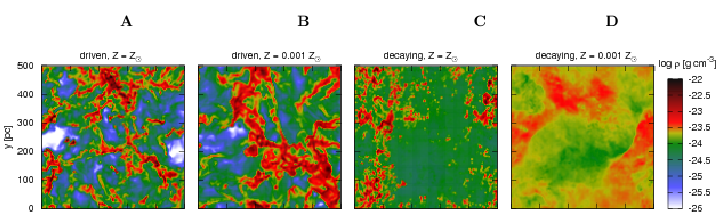
Incorporating all the effects relevant to star formation into accurate simulations of the interstellar medium is a major frontier in astrophysics. These authors start to tackle the effects of chemical composition.
by Nathan Sanders | Jan 16, 2011 | Quick Notes
I’m sure we’ll be covering supernovae frequently in our daily astro-ph digesting, but if you can’t wait to learn more about these amazing stellar explosions, I invite you to read my short piece at the Science in the News Flash.The piece (very!) briefly covers the characteristics of supernovae, their role in the chemical enrichment of the universe and the formation of galaxies, their applications to cosmology, and new transient searches that are detecting new supernovae at an incredible rate. Only a small percentage of stars will end their lives in a supernova and it’s an outrageously brief stage in their lives — I think it’s fascinating how far-reaching the consequences are.Science in the News is a terrific student organization in the Graduate School of Arts and Sciences at Harvard. They hold a live public lecture every week during the academic year where graduate students get the opportunity to tell a few hundred Boston-area residents about their research. They also run the Flash, an online science news publication; hold science cafes; visit schools; and more. Is there a science outreach organization you participate in at your university or in your community? Leave a comment and tell us all about...
by Nathan Sanders | Jan 14, 2011 | Daily Paper Summaries
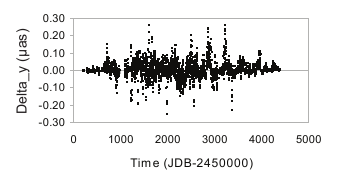
Understanding the uncertainties involved in the techniques used to detect exoplanets is an important aspect of the search for life beyond the Earth. What role could phenomenon like sunspots play in planet detection?
by Nathan Sanders | Jan 12, 2011 | Daily Paper Summaries
Assuming every star in a cluster has the same age and metallicity is a powerful simplification, but it may not be true.
by Nathan Sanders | Jan 7, 2011 | Daily Paper Summaries
A new cluster of galaxies discovered in the early universe using the Sunyaev-Zel’dovich (SZ) effect could have important consequences for studying galaxy evolution and cosmology.
