• RSS
  • Submit a Guest Post
  • Undergraduates: Submit your Research!
  • Suggest a Paper Topic!
astrobites
  • About
    • About Astrobites
    • Meet the Authors
    • Statement of Inclusivity
    • Copyright & Permissions
  • Latest Research
    • Daily Paper Summaries
    • Classics
    • Undergrad Research
    • Physical Review Coverage
  • Beyond astro-ph
    • Beyond astro-ph Library
    • Interviews
    • Career Navigation
    • Personal Experiences
    • Current Events
    • Teaching with Astrobites
  • Guides
    • EM Spectrum
    • Galaxies & AGNs
    • Spectroscopy and Spectral Lines
    • Adaptive Optics
    • Gravitational Waves
    • Transient Astronomy
    • Astrophysical Software
    • Graduate School
    • Writing a personal statement for grad apps
    • First Observing Run
    • …More Guides!
Select Page
Irregular Clocks: The Influences of Generous Companions

Irregular Clocks: The Influences of Generous Companions

by Stacy Kim | May 7, 2015 | Daily Paper Summaries

Pulsars, or rapidly-spinning neutron stars, have been observed to suddenly change in spin. Typically, the pulsars we’ve seen do this are isolated—what happens if they have a stellar companion?

The Milky Way’s Alien Disk and Quiet Past

The Milky Way’s Alien Disk and Quiet Past

by Stacy Kim | Apr 17, 2015 | Daily Paper Summaries

The Milky Way grew by accreting many smaller galaxies. What did these doomed galaxies leave behind, and what could they say about the Milky Way’s early past?
Turbulent Deaths

Turbulent Deaths

by Stacy Kim | Mar 12, 2015 | Daily Paper Summaries

New 3D simulations that capture the last minutes of a massive star’s life reveal that its violently turbulent interior can affect how it dies.
Corpse too Bright? Make it Bigger!

Corpse too Bright? Make it Bigger!

by Stacy Kim | Feb 26, 2015 | Daily Paper Summaries

The rare (un)lucky star dies by means of black hole, which shreds the star to bits before swallowing it. It’s a spectacular death to observe, but one which is less bright and hot than we thought they would be…
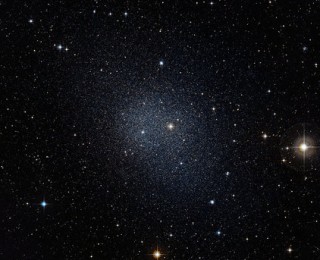
Delphic Dwarfs and the Nature of Dark Matter

Delphic Dwarfs and the Nature of Dark Matter

by Stacy Kim | Jan 16, 2015 | Daily Paper Summaries

Dwarf galaxies have long been vaunted a useful probe for dark matter physics due to their high dark matter content. But is this true for all dwarfs, particularly the smallest ones? And can the minority baryons affect dark matter signatures?

« Older Entries
Next Entries »

Loading

Follow our socials

  • Bluesky
  • Facebook
  • Instagram
  • RSS Feed

More Posts About

AAS AGN astronomy astrophysics binary stars black holes cosmology dark matter dwarf galaxies exoplanets galaxies galaxy evolution gravitational waves habitability JWST Kepler Milky Way observations planetary science planet formation protoplanetary disks radio astronomy simulations solar system spectroscopy star formation stars stellar evolution supernovae theory

Posts by Category

  • Accessibility
  • Applications
  • Beyond
  • Book Reviews
  • Career Navigation
  • Classics
  • Climate Change
  • Course Assignments
  • Crossposts
  • Current Events
  • Daily Paper Summaries
  • Game Reviews
  • Guides
  • Historical Astronomy
  • Instrumentation
  • Interviews
  • Outreach
  • Personal Experiences
  • PRJ
  • Quick Notes
  • Satellites
  • Teaching
  • Undergraduate Research

More Astronomy

  • AAS
  • AAS Nova
  • astro-ph
  • AstroBetter
  • APOD

Read Astrobites in Other Languages

  • Astrobitos (Spanish)
  • Astropontos (Portuguese)
  • staryab (Farsi)

Listen to Astrobites

  • astro[sound]bites

Discover More Incredible Science

  • ScienceBites Network
  • RSS

© 2026 Astrobites | All Rights Reserved | Supported by AAS | Designed by Elegant Themes | Powered by WordPress