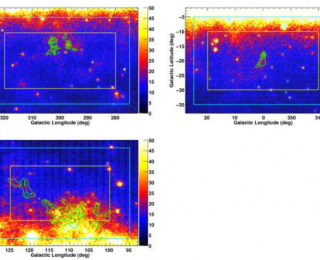
X Marks the Spot, said the Gamma Ray
A Fermi/LAT study of the ISM using gamma rays finds evidence for missing gas and variations in the CO-to-molecular gas conversion factor.

A Fermi/LAT study of the ISM using gamma rays finds evidence for missing gas and variations in the CO-to-molecular gas conversion factor.
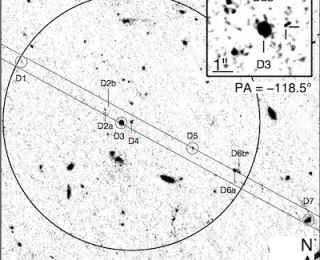
Using a combination of spectra from gamma-ray burst afterglows and photometry and spectroscopy of nearby objects, astronomers have found the galaxy counterpart to at least one high-redshift absorption system, bumping the total number of such galaxies from nine to ten.
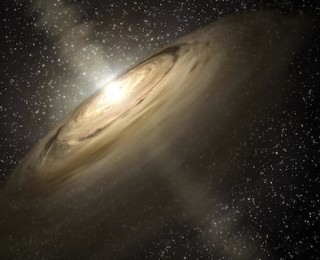
Planet formation theory predicts a water-rich Earth. On a comparative basis, the Earth is water-poor. This paper aims to reconcile theory and observation.
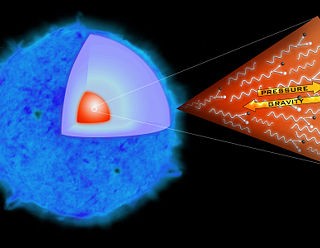
Scientists search for signatures of pair-instability supernovae in thousands of Sloan Digital Sky Survey Stars.
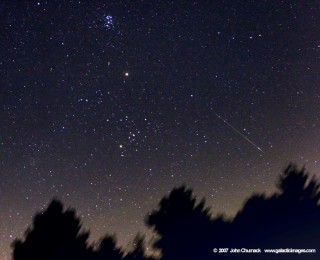
The well-known constellation Taurus is home to many young stars, and the details of star formation are explained by observing far-infrared radiation from several of these objects with the Herschel space observatory.
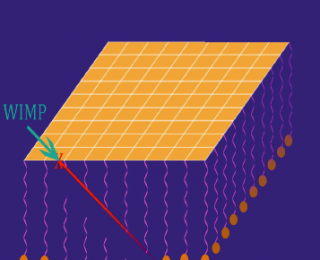
Can DNA be used to detect dark matter? Guest author Elisa Chisari explains how biology and physics can combine to teach us more about the universe.