by Lauren Weiss | Apr 5, 2012 | Current Events, Quick Notes
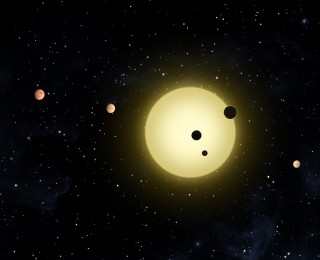
Kepler mission extended to 2016.
by Elizabeth Lovegrove | Mar 19, 2012 | Current Events, Quick Notes
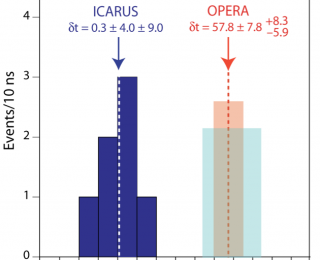
In our last update on the situation regarding OPERA’s superluminal neutrino measurement, I said that the true test of the result would be whether it stood up to independent verification. Since the controversial result was announced last November, neutrino detector experiments have scrambled to help settle the neutrino time-of-flight with their own findings. Now the first of those independent results has come in, and the outlook looks good for fans of special relativity: the ICARUS experiment, a time projection chamber located in the Gran Sasso tunnel, has made its own measurements of the same CERN beam used by OPERA, and has found no evidence of superluminal velocities.ICARUS is another experiment located in the Gran Sasso tunnel, an Italian facility buried beneath a mountain in the Apennines. Because it’s in the same place as OPERA, it can also make measurements of the beam fired from CERN. Unlike OPERA, which measures neutrinos by watching for flashes in photoscintillation material, ICARUS is a time-projection chamber. Time-projection chambers are a modern upgrade of bubble chambers, using a large cryogenic target volume (in this case, liquid argon) gridded with electronic detectors that pick up the signatures of collisions. Using this method, ICARUS looked for neutrino interactions from the widely-spaced beam that CERN switched to in late 2011. The long spacing between brief pulses – 3 ns bursts separated by 524 ns – makes it much easier for the experiments on the other end to be sure of the timing, because it’s clear which origin pulse each neutrino belongs to.According to relativistic theory, neutrinos should be moving extremely quickly because they have such small masses....
by Astrobites | Mar 5, 2012 | Quick Notes
We are interested in how astrobites is being used in classrooms and what we can do to facilitate this. If you’re a student or educator, please take 5min to fill out our survey.
by Lauren Weiss | Feb 10, 2012 | Quick Notes
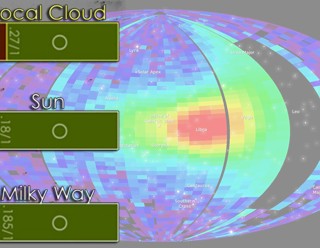
One of the most important elements for complex life on Earth is oxygen. In a recent publicity video, NASA explained how its IBEX Mission found that the solar system is oxygen-rich compared to its surroundings. The original press release is here, and the results were published in a series of six articles in the Astrophysical Journal – you (or your institution) need a subscription to see the ApJ article.The IBEX Mission measured the ratio of neon to oxygen in neutral atoms that slipped through our Solar System’s protective heliosphere (neutral particles are not affected by its magnetic field, so they pass right through) and determined that there is more oxygen for each neon atom inside our Solar System than outside. The Mission scientists posit two theories to explain the relative over-abundance of oxygen in our solar system: (1) the sun originally formed in a part of the galaxy with an oxygen abundance different from that of our current location, or (2) much of the oxygen of the interstellar medium (the space between stars) is trapped in grains of ice and dust, and was thus not detected by the IBEX Mission. Either explanation could have important implications for astrobiology, and for understanding the formation of our solar system and...
by Elisabeth Newton | Jan 7, 2012 | Current Events, Quick Notes
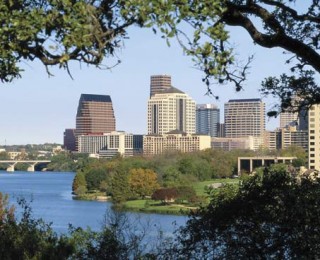
The winter meeting of the American Astronomical Society (AAS) will kick off on Sunday. The 219th meeting will take place in Austin, Texas from January 8-12. There will be four full days of talks and posters on every topic in astronomy. We’ve written about previous AAS Meetings, including Boston (AAS #218) and Seattle (AAS #217).This year at AAS, we’ll be doing something different: liveblogging the conference. The Astrobites authors attending the conference will be keeping you up to date on some of the talks and posters through tweets, short posts and longer pieces. With support from the wonderful folks at AAS, especially Debra Elmegreen and Rick Fienberg, we’ll be attending the press meetings so we can keep you up to date on the exciting discoveries being presented at AAS. So from Monday through Thursday, follow us on twitter and keep checking back here at astrobites.com for updates.If you’ll be at AAS this year, we’d love it if you’d stop by the Astrobites poster! We will present the results of the latest Astrobites Readership Survey and data collected on visits to the site.Astrobites: The Astro-ph Reader’s Digest For Undergraduates Poster #147.01 Monday, Jan 09, 2012, 9:00 AM – 6:30 PMThere several special events for undergraduates at AAS. On Sunday evening there is an undergraduate reception. The Astrobites authors will also be in attendance, so look for us there! On Tuesday, Jane Rigby has organized an exciting splinter session for students of all levels.Student Meet-Up with Nobel Laureate John Mather Tuesday, Jan 10, 2012, 10:00 AM -11:30 AM Room 8The following Astrobites authors will be in attendance and have individual posters and presentations:Dan...
by Nathan Sanders | Dec 31, 2011 | Quick Notes
Astrobites looks back at its first year as the astro-ph reader’s digest.
