
Featured Astrobites
Our latest posts
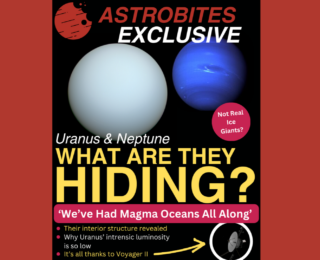
These “Ice Giants” Have a Hot Secret
You’re probably used to seeing tabloids in the checkout aisle of the grocery store claiming all sorts of wild things. The scandals of life on Earth are abundant, and it seems like the rest of the solar system isn’t any different. Although you might not see their pictures on the front covers of any gossip magazines, Uranus and Neptune may not be what you think. Allegedly, these “ice giant” planets have a piping-hot secret that the authors of today’s paper are exposing.
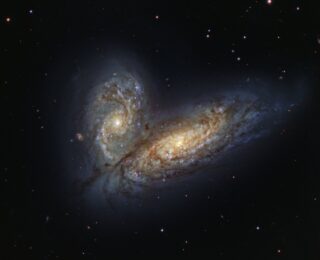
A Merger is Not a Meal: How to Feed Supermassive Black Holes in the Early Universe
How did supermassive black holes in the early universe get so massive? Today’s bite uses simulations to investigate whether galaxy mergers can help beef up black holes.
![[Guest post] Excavating Exoplanets: How to Dust off Debris Disks Using a New High-Contrast Imaging Technique](https://astrobites.org/wp-content/uploads/2026/05/Screenshot-2026-06-01-at-10.50.56-AM-320x260.png)
[Guest post] Excavating Exoplanets: How to Dust off Debris Disks Using a New High-Contrast Imaging Technique
What do astronomers and archaeologists have in common? Today’s guest author discusses how faint exoplanet signals are extracted from their noisy surroundings.
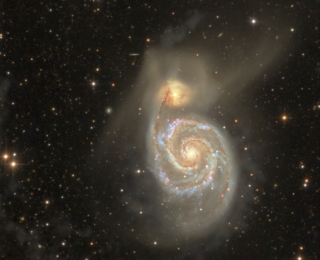
Hungry Hungry Galaxies: How does the shape of a galaxy’s halo affect its appetite?
Stream in to today’s paper to understand how tearing apart dwarf galaxies can reveal the shape of the dark matter haloes of hungry galaxies.
Astrobites at AAS 248: Day 4
Astrobites covers the final day of AAS 248.
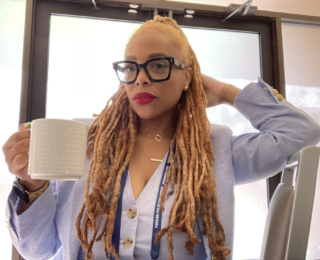
Black Space Week 2026: Interview with Dr. Nola Haynes
As part of Astrobites coverage of Black Space Week, we interviewed members of the Black in Astro community. Today’s interviewee is Dr. Nola Haynes!
Beyond astro-ph
Astronomy beyond the research

What to watch when the stars are behind clouds
In need of inspiration for astronomy videos to watch? Look no further! We have gathered a list of some of the greatest YouTube communicators out there.

A Guide to Writing Your First Referee Report
The email asking you to referee your first paper is coming. Here’s a practical, step-by-step guide for that exact moment, built from the AAS peer review workshop.

Australia is closing its Very Large eyes to the Universe
Literally and figuratively, Australia is closing its eyes to the future of astronomy. Where does that leave its next generation of students?
Navigating careers in astronomy
Career advice

The Secret Language of Astrophysics Plots
Ever been confused by a plot online or in a paper? This post decodes the secret language of astrophysics plots so you can finally read the universe like a pro.

From Exhibits to Proposals: Kim Burtnyk on Scientific Communication
Kim Burtnyk shares her journey into science communication, her work as techincal writer and editor at LIGO Lab, and advice for aspiring communicators.

The First Semester as Faculty: Interview with Professor Jiayin Dong
I sat down with the newest astronomy professor at UIUC to ask about her first semester as a faculty member and how she made the transition to a permanent position.