
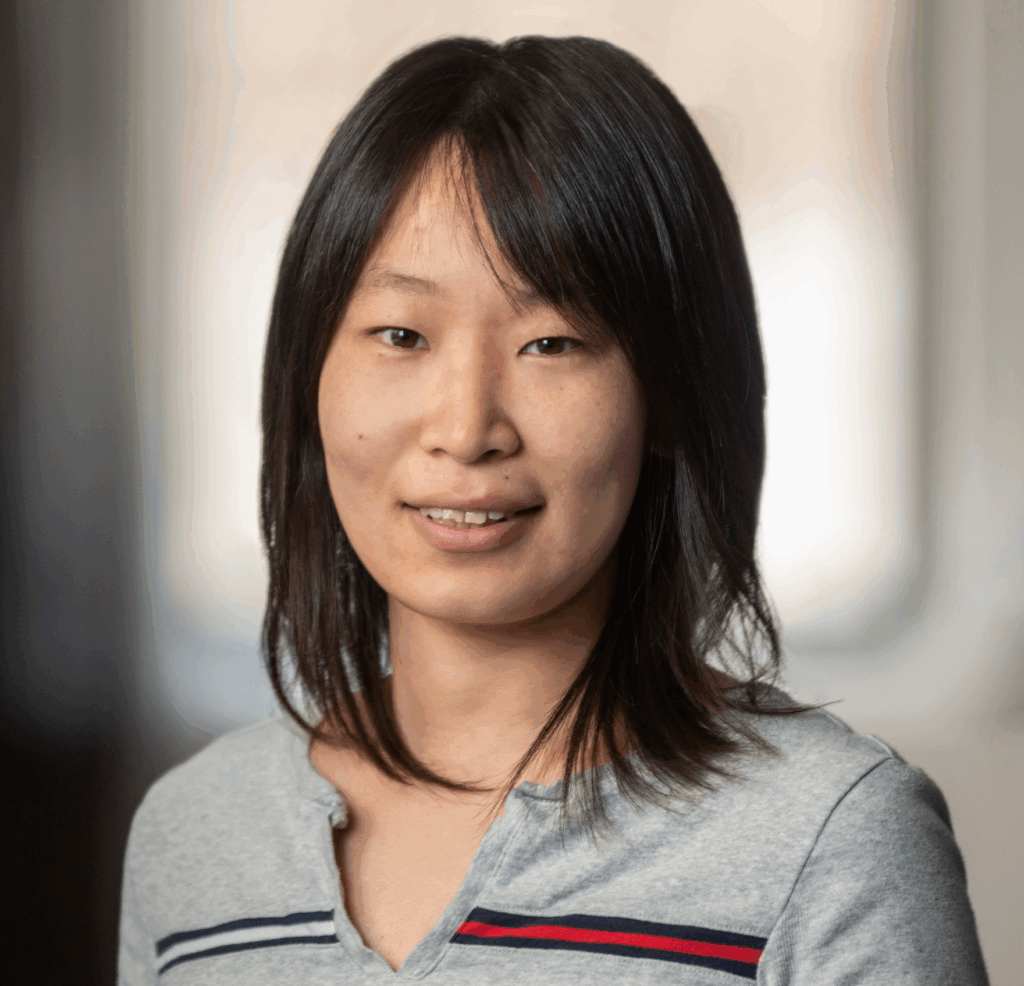
Astrobites has covered a lot of career stages over the years, from our Guide to Graduate School to articles on postdoc applications and the many career paths available in astronomy. But for those of us interested in pursuing academia long-term, there’s very little written about the experience of starting a faculty position. If you’re a graduate student right now, you may be curious about the transition from postdoctoral research to faculty positions; if you’re an undergraduate, you may be wondering what life is like for the faculty whose classes you take or whose research you admire. This week, I was lucky enough to sit down with a brand-new professor, Jiayin Dong, to ask her about her experience in her first semester as a faculty member at the University of Illinois Urbana-Champaign (UIUC). Reflecting on her first semester, she told me that as students, “We are all surrounded by faculty members. We observe our advisors all the time. What they actually do is much more than what we observe.”
Deciding to apply to faculty positions
Prof. Dong, who studies how exoplanet systems form and dynamically evolve, originally attended University of Illinois Urbana-Champaign as an undergraduate before earning her Ph.D. from Penn State in 2022. She had a Flatiron Research Fellowship, a three-year position at Flatiron’s Center for Computational Astrophysics. In the second year of her fellowship, Prof. Dong decided to start applying for faculty positions. When I asked how she knew she was ready to apply for faculty positions, she told me, “I was mentoring students, I was doing independent research, I had a record of getting proposal time independently.” She also had experience giving guest lectures in undergraduate and graduate classes. Her experience gave her confidence: “I knew I could adapt to a professor job.”
Adjusting to life as a professor
Prof. Dong started as faculty at UIUC this fall. In addition to building a new research group, she is teaching an upper-level undergraduate course in exoplanets. She told me it was challenging to balance the many roles of a faculty member, including teaching, research mentoring, department service (aka serving on faculty committees), and doing her own research. “I heard all the stories about how crazy the first year of being a professor is,” she told me. “Without experiencing it myself, I would never realize it.” Over the course of the semester, she learned to balance her workload and deadlines, emphasizing the importance of giving up on perfectionism. One of the most useful pieces of advice she received was from a seminar on teaching as a new professor. She was told that it takes three rounds of teaching to fully prepare a course. In the first round, the important thing is to hit the ground running. In the second round, you can take time to polish the material and its presentation. In the third round, you become confident and comfortable with the material, making it possible to “truly teach it.” Her advice for new instructors? “Just have it there and complete. You don’t have to have a perfect course on your first try—it’s nearly impossible!”
Prof. Dong highlighted “working with really talented students” as her favorite part of becoming a professor. UIUC has a large undergraduate astronomy major, and Prof. Dong is the only professor in the Astronomy department whose research focuses entirely on exoplanet science. That’s led to a huge demand to work in her group. In her first semester, she’s built a large group, with one graduate student and eight undergraduates. She told me she took inspiration from industry and saw herself as a team leader, where her group worked together as a startup to try to solve difficult problems. Together, her undergraduates have been developing code, learning exoplanet science, and addressing problems central to the field: “This is not something where I already know the solution.” She tried to be thoughtful about creating projects that everyone could benefit from, whether they came in with zero programming experience or were already experienced with research. For undergraduates interested in exploring research for the first time, she encouraged departmental and summer research programs as a way to get started, as well as putting real effort into coursework. She emphasized that course assignments like writing research papers and programming problems provide opportunities to develop crucial research skills.
Advice for those considering a faculty career
I asked Prof. Dong what characteristics would lead a person to be a successful professor and to enjoy the job. She told me a professor at an R1 (or research-focused) university needs to have three main traits: to be able to multitask under stressful conditions, to feel at ease with teaching, and to have the mindset of leading a team. For the first, she highlighted the many hats a professor wears throughout the day: mentor, teacher, member of the department, and researcher. Tasks from each of these “hats” can be critical and urgent, and balancing them all is a key part of the job. For the second, she told me that at an R1 institution, the teaching load is not as high as liberal arts colleges, but it still takes up a significant amount of time. At the very least, it’s important not to dislike teaching, though she told me that if you truly enjoy teaching, that’s even better. Finally, it’s important to have a vision of your research group and to see yourself as “… a curator of junior people and a leader at the same time.” Enjoying working with students and juggling multiple projects is a crucial part of the job.
To wrap up our conversation, I asked Prof. Dong if she had any advice for people considering a faculty position. She told me that for early career researchers, it’s most important to think often about all your career options. Many of Prof. Dong’s friends as an undergraduate went into engineering or computer science, and she always knew that was an option outside of academia. After considering throughout her undergraduate and graduate degree about whether she was interested in industry or academia, her decision to pursue academia was clearer: “If you know you’ve thought through it thoroughly,” she told me, “you’ll trust your own decision.”
Edited by: Caroline von Raesfeld
Featured image credit: Jiayin Dong
