
Featured Astrobites
Our latest posts
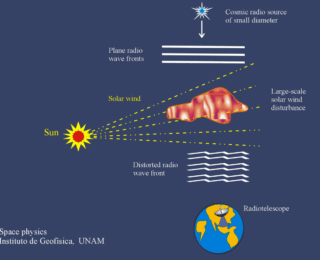
Call us an Uber! My radio telescope had a bit too much plasma and now his vision’s all blurry!
Everyone has seen a star twinkle in the night sky, but did you know stars and galaxies will also twinkle if you look at them through a radio telescope? Read here to learn how our pesky Sun makes a radio astronomer’s job more challenging (and what we can do about it!).
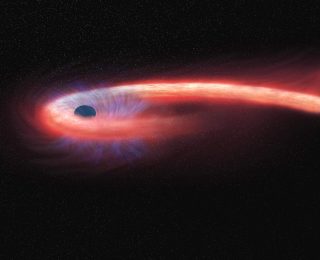
Guest: What are Partial Tidal Disruption Events, and How Do We Find Them?
What happens when a star survives a close encounter with a massive black hole? Read more about these partial tidal disruption events in today’s bite!
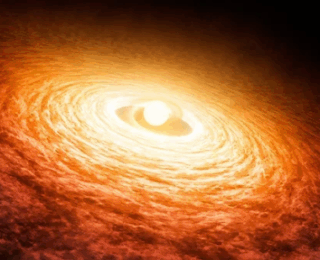
Eating Up the Competition: Super-Competitive Accretion in Early Star Clusters
Some of the first clusters of stars may have had massive cannibal stars! Learn more in today’s bite.
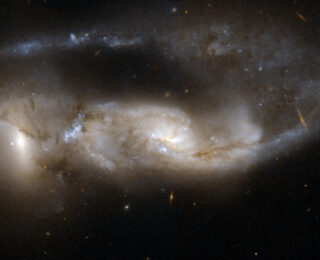
Splish, Splash: Taking a bath in the cool gas of the circumgalactic medium
How is a galaxy like a bathtub? Today’s authors use quasars to light up the gas around galaxies.
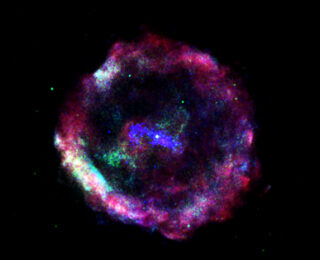
Crushing, Collapsing, Combusting — How Massive Single Stars Die
A deep dive into the classic paper on how massive single stars die, and what it means for the evolution of the universe.
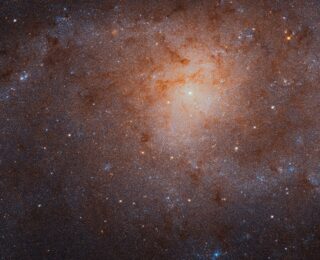
Measuring Star Formation in the Triangulum Galaxy
In our latest of our #UndergradResearch series, learn about the [CII] deficit and star formation with Natalie Price.
Beyond astro-ph
Astronomy beyond the research
No Results Found
The page you requested could not be found. Try refining your search, or use the navigation above to locate the post.
Navigating careers in astronomy
Career advice
Meet the AAS Keynote Speakers: Dr. Xander Tielens
Professor Xander Tielens, a chemical physicist and self-described moon child, studies molecules in the interstellar medium as a tool for understanding everything from galaxy evolution to the origin of life. Learn more at his plenary talk at #AAS234.
Meet the AAS Keynote Speakers: Professor Elisabeth Mills
Professor Elisabeth Mills studies one of the most mysterious regions of the Milky Way: the galactic center. Learn about the stars, gas, and a black hole that make this such an exciting area of research ahead of her talk at #AAS234.
Meet the AAS Keynote Speakers: Professor Yacine Ali-Haïmoud
Professor Yacine Ali-Haïmoud studies the theory behind our astrophysical observations, from primordial black holes to organic compounds in the interstellar medium. Learn more at his keynote at #AAS234.