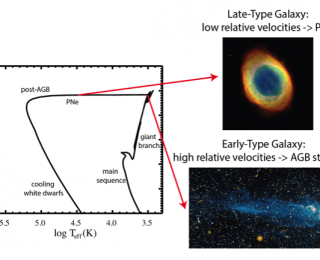
by Ben Cook | Nov 24, 2014 | Daily Paper Summaries
The authors of this paper pursued a mechanism which could possibly keep dead galaxies from forming new stars: mass ejected from AGB stars moving through the galaxy could heat the ambient gas.
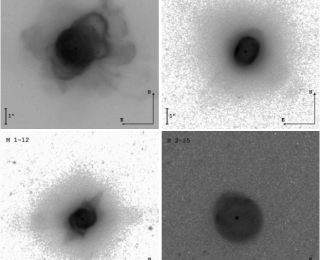
by Meredith Rawls | Nov 20, 2014 | Daily Paper Summaries
Sometimes, stellar evolution happens on more human timescales—tens to hundreds of years rather than millions or billions.
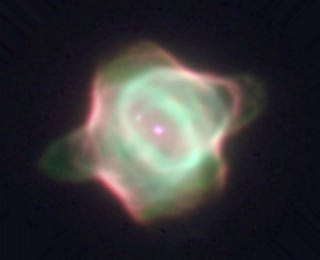
by Korey Haynes | Mar 28, 2014 | Daily Paper Summaries
How can a star heat up by 40,000 K in just 30 years? Reindl et al. explore the star at the heart of the Stingray Nebula to find out.
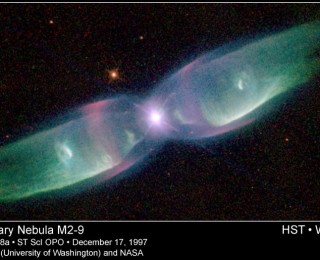
by Susanna Kohler | Jul 13, 2012 | Daily Paper Summaries
This paper looks into the heart of Minkowski’s Butterfly Nebula to answer the question: is there one star or two at work in the formation and evolution of this nebula?
by Nathan Sanders | Aug 8, 2011 | Daily Paper Summaries
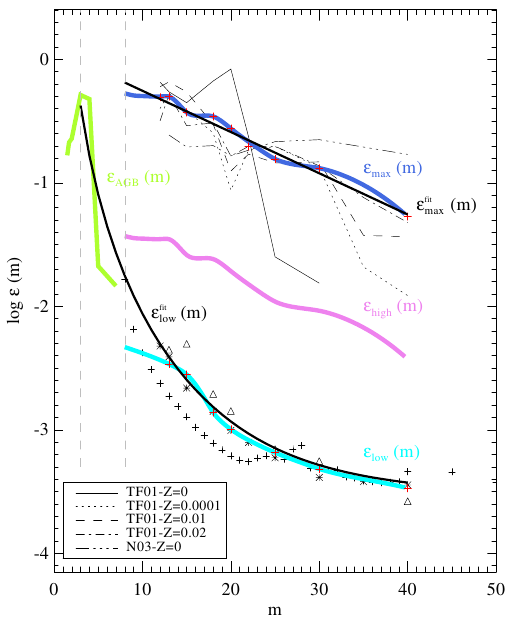
I just vacuumed my apartment and asked the question, ‘how does so much dust accumulate in one week?’ These authors ask a more scientifically interesting question: how can galaxies accumulate more than 100 million solar masses of dust in just a few hundred million years?
