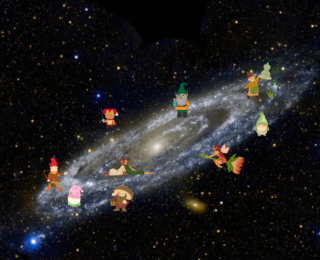
Snow White and the seven(teen) dwarves search for dark matter
Today’s authors use the VERITAS telescope to hunt for dark matter in the Milky Way’s satellite galaixes!

Today’s authors use the VERITAS telescope to hunt for dark matter in the Milky Way’s satellite galaixes!

Today’s authors compare small K-dwarf and M-dwarf planetary climates!
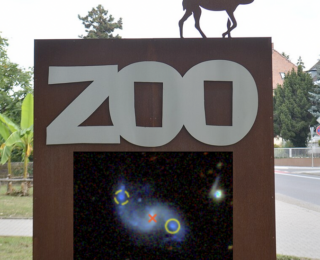
In today’s paper, citizen scientists helped create the first major catalog of nearby clumpy galaxies as part of the Galaxy Zoo: Clump Scout project.
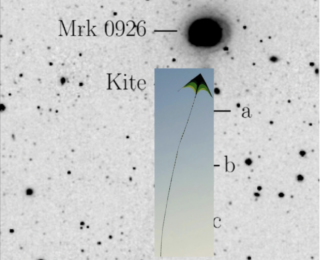
In today’s post the authors fly a galactic kite formed from tidal interactions between galaxies.

For today’s bite we interview Samantha Gilbert-Janizek about a new prison outreach program she founded called Raising eSTEAM!

What might the orbit of a primordial black hole going in and out of a Sun-like star look like?