
A Guide to Writing Your First Referee Report
The email asking you to referee your first paper is coming. Here’s a practical, step-by-step guide for that exact moment, built from the AAS peer review workshop.

The email asking you to referee your first paper is coming. Here’s a practical, step-by-step guide for that exact moment, built from the AAS peer review workshop.
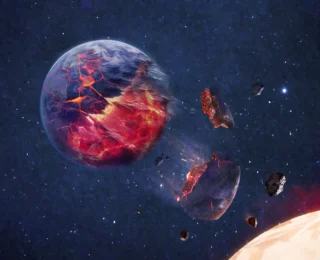
Some stars hide a strange ingredient in their atmospheres: the remains of a planet they devoured. It turns out to be more common than expected.

Ever been confused by a plot online or in a paper? This post decodes the secret language of astrophysics plots so you can finally read the universe like a pro.
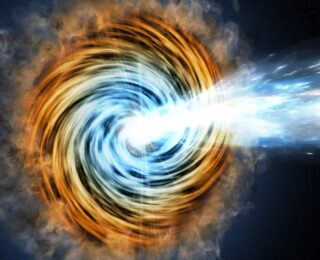
The authors of today’s featured paper investigated how a decades-long stakeout of a sample of blazars uncovered new insights into a serious case of cosmic “jet-lag”.
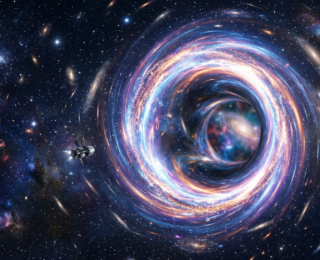
A new solution to Einstein’s general relativity suggests wormholes could be real and traveling through them might be possible.

Artemis, AI, Astronomy, and our place in it. The author asks why do astrophysics at all. To produce results faster, or to turn graduate students into inefficient stand-ins for software? Or because astronomy is one of the most human things we do. It gives us wonder, yes, but also responsibility: to remember the histories of colonialism and militarization tied to our instruments, to use new tools without surrendering judgment, and to insist that people remain the point of the enterprise. The universe is not only something to be computed. It is something to be encountered, interpreted, and loved.