by Alice Olmstead | Nov 25, 2012 | Guides, Personal Experiences
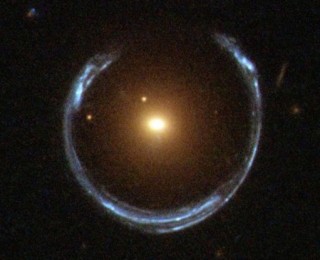
I recently attended a two-week crash course in the “Astrophysical Applications of Gravitational Lensing”. In this post, I overview a few of the ways astronomers employ lensing to study the Universe, from extrasolar planets to distant quasars and large-scale structure.
by Alice Olmstead | Oct 22, 2012 | Daily Paper Summaries
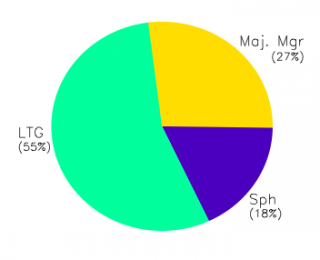
In this study, Kaviraj et al. find that major mergers only contribute a small percentage (17-27%) of the total star formation at a redshift of 2, when the Universe was 3.3 billion years old and vigorously creating new stars. This goes against what we once thought, and leaves the door open for other mechanisms to drive the global star formation rate in the early Universe.
by Elisabeth Newton | Sep 26, 2012 | Daily Paper Summaries
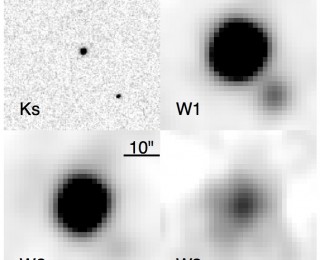
Astronomers like to find cool things. The first Earth-sized planet. The most distant galaxy yet. Two stars that merged while we watched. The coolness factor is certainly one reason why we keep at it – who wouldn’t want to be the first to find an Earth-sized planet, or the first human to see light from a galaxy that’s existed for billions of years? But there’s also a compelling scientific reason to search for these oddballs. This paper reports on the likely discovery of dust around a pair of binary stars.
by Alice Olmstead | Sep 25, 2012 | Daily Paper Summaries
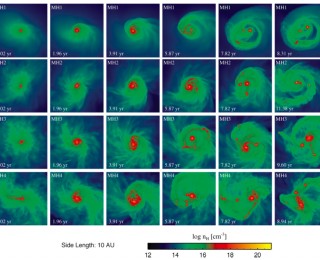
In a recent paper, Stacy et al. reveal the detailed internal structure of the seeds of four of the first stars, and demonstrate for the first time that they are rapidly spinning throughout. Their results bring us one step closer to a coherent story of the lives and deaths of Population III stars.
by Elisabeth Newton | Aug 30, 2012 | Classics, Daily Paper Summaries
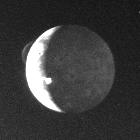
It’s March 2, 1979. Two years ago, the Voyager spacecraft were launched on trajectories that will allow them to carry out their primary missions: the study of the outer Solar System, in particular Jupiter and Saturn. It’s just three days before Voyager 1’s closest approach to Jupiter. The paper that was published on March 2nd, 1979 in Science is a prediction for what the Voyager spacecraft might see on Io based on the orbital motions of these three satellites.
by Alice Olmstead | Aug 28, 2012 | Daily Paper Summaries
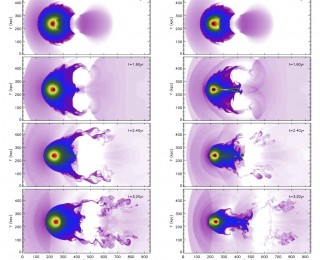
Most simulations to date have implied that satellite galaxies traveling through galaxy clusters are stripped of gas for future star formation in a process known as “strangulation”. In contrast, the authors of this paper suggest that satellite galaxies may not be as cut off as some might think: instead, their simulations show that the cooler, stripped gas from the corona will mix with the surrounding intra-cluster medium and remain near the original galaxy as a potential new source of star-forming fuel.
