M Dwarfs Are Not Passé
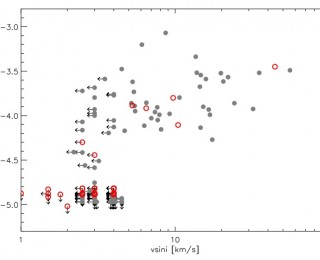
This paper delves into some of the physical properties of early M dwarfs (M0-M4.5), focusing on chromospheric/magnetic activity and rotation. The authors present a catalog of activity and rotation for 334 early M dwarfs.

This paper delves into some of the physical properties of early M dwarfs (M0-M4.5), focusing on chromospheric/magnetic activity and rotation. The authors present a catalog of activity and rotation for 334 early M dwarfs.
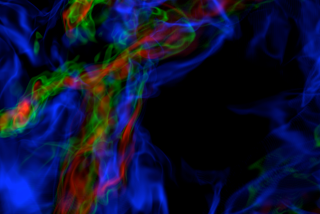
The first simulations of low-mass star formation on parsec scales to include protostellar feedback successfully reproduce observed mass functions, luminosities, and clustering properties.

A collection of thoughts about AAS events throughout Thursday morning.
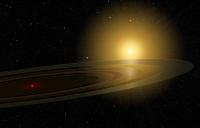
Today at the “Extraordinary Exoplanets” press release (which could righty be called “Extreme Exoplanets”), there were three very interesting and very distinct discoveries announced. William Welsh announced Kepler-34b and Kepler-35b, two new circumbinary planets from the Kepler team. John Johnson and Phil Muirhead presented three new sub-Earth sized planets orbiting an M dwarf. Finally, Erik Mamajek showed us the first ever transit of an extrasolar “ring” system.
A collection of thoughts about AAS events throughout Wednesday afternoon.
A collection of thoughts about AAS events throughout Wednesday morning.