by Nick Ballering | Nov 10, 2014 | Daily Paper Summaries
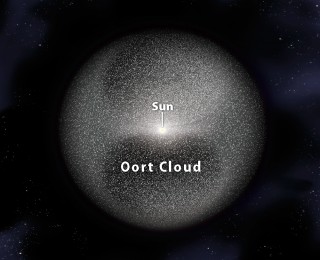
Simulations show that the Oort cloud contains eight billion asteroids (in addition to hundreds of billions of comets). Do these asteroids pose a threat to Earth?
by Erika Nesvold | Oct 17, 2013 | Daily Paper Summaries
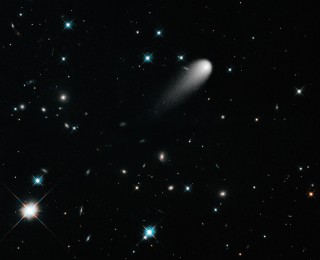
Comet ISON will be flying by on its way from the Oort Cloud to the Sun and back for the next couple months. Will the meteoroids it leaves behind produce any meteor showers here on Earth? The authors of this paper use orbital mechanics to find out.
by Sukrit Ranjan | Aug 1, 2013 | Daily Paper Summaries
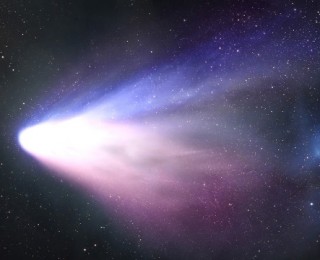
This paper describes the measurement of the deuterium-to-hydrogen (D/H) ratio in a Jupiter-family comet, 45P. This ratio is related to the formation history of the comet and helps inform our understanding of the formation of our solar system.
by Erika Nesvold | Jan 4, 2013 | Daily Paper Summaries
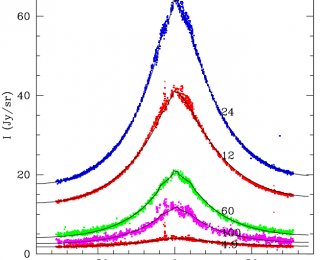
The Solar System’s interplanetary dust (called zodiacal dust) can be a source of noise in infrared and optical observations, but it also holds information about the recent history of the Solar System. This new and improved model of the zodiacal dust reveals the relative contributions to the dust by asteroids, comets, and interstellar dust.
by Sukrit Ranjan | Nov 14, 2012 | Daily Paper Summaries
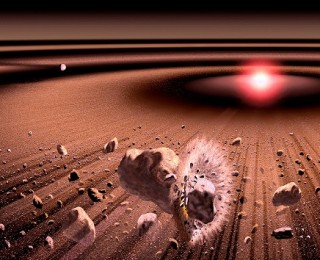
Paper Title: Comet-Like Mineralogy of Olivine Crystals in an Extrasolar Proto-Kuiper Belt (arxiv: 1211.2626) Authors: B. L. de Vries et al First Author’s Affiliation: K. U. Leuven, Flanders, Belgium Journal: Nature OverviewThis paper describes observations of the mineral olivine in the famous debris disk surrounding the star Beta Pictoris. Olivine is very important as it is one of the primary building blocks of rocky planets. They find its composition and temperature to match what we find in our outer solar system, hinting that we are spying on a proto-Kuiper belt. The similarity between solar systems suggests similar processes may be operating in other systems as happened here around Sol.More DetailIn the past decade, we’ve made huge advances in remote characterization of planetary bodies. From the atmospheres of exoplanets to the surfaces of asteroids, astronomers have conducted some pretty extraordinary measurements (for example, the discovery of Alpha Centauri Bb, which entailed measuring the motion of Alpha Cen to 51 cm/s — a slow walk!). However, most of these measurements have been surface measurements. It’s much harder to study the interiors of objects, because we don’t receive photons from them.There are exceptions, though. Consider a young planetary system with plenty of asteroids. These asteroids will run into each other, shattering apart and generating dust. Light passing through these dust clouds will then have their spectral signature imprinted on them, letting us study their interior composition!Astronomers have discovered several such systems, allowing us for the first time to characterize the interior composition of rocky bodies remotely. This paper presents the results of the latest such study, on the system Beta Pictoris. Beta...
by Elizabeth Lovegrove | Sep 22, 2012 | Current Events, Guides
Fact: Jupiter is the best planet. What’s not to like? Big, beautifully stripey, four exciting moons, hurricane three times the size of the Earth, lots of fascinating hydrodynamics…I could go on. But Jupiter isn’t just awesome on its own. It was also the site of the first observed extraterrestrial impact event, and is routinely struck by asteroids and comets. Last week on Monday the 10th another piece of cosmic debris impacted the planet, producing a brief fireball spotted by amateur astronomers and providing an excellent opportunity to reflect on the history of impacts in Jupiter and the solar system at large.Jupiter has 67 known satellites, but only 8 are considered regular, i.e. they have stable, prograde, roughly circular, roughly planar orbits. The rest of the satellites are irregular and are likely captures. Jupiter’s mass means that it scoops up nearly everything that passes near it. The area of gravitational influence around a body orbiting another, much larger body is called the Hill sphere. Within the Hill sphere a satellite can be considered to orbit the smaller object (the planet) rather than the central one (the Sun). The Earth has a Hill sphere radius of about 1.5 million km, or 1% of the distance between it and the Sun. Jupiter, on the other hand, has a Hill sphere radius of about 53 million km – 0.355 AU, or nearly 7% of the distance between it and the Sun. This radius is well away from the bulk of the main asteroid belt, but close enough to pick up strays – and anything foolish enough to come close to the giant planet.In 1993 astronomers Carolyn and Eugene Shoemaker...
