• RSS
  • Submit a Guest Post
  • Undergraduates: Submit your Research!
  • Suggest a Paper Topic!
astrobites
  • About
    • About Astrobites
    • Meet the Authors
    • Statement of Inclusivity
    • Copyright & Permissions
  • Latest Research
    • Daily Paper Summaries
    • Classics
    • Undergrad Research
    • Physical Review Coverage
  • Beyond astro-ph
    • Beyond astro-ph Library
    • Interviews
    • Career Navigation
    • Personal Experiences
    • Current Events
    • Teaching with Astrobites
  • Guides
    • EM Spectrum
    • Galaxies & AGNs
    • Spectroscopy and Spectral Lines
    • Adaptive Optics
    • Gravitational Waves
    • Transient Astronomy
    • Astrophysical Software
    • Graduate School
    • Writing a personal statement for grad apps
    • First Observing Run
    • …More Guides!
Select Page
(almost) No Time (for stars) to Die

(almost) No Time (for stars) to Die

by Sahil Hegde | Jun 27, 2022 | Daily Paper Summaries

How long does it take for a star’s core to collapse in a supernova explosion? Today’s authors use observations to place new constraints on the explosion timescale!

Could Companion Stars Cause Stripped-Envelope Supernovae?

Could Companion Stars Cause Stripped-Envelope Supernovae?

by Sarah Bodansky | May 26, 2022 | Daily Paper Summaries

How do you make a supernova without hydrogen and helium lines? The answer may surprise you! (It’s probably binary stars)
Interpreting The Relics of Stellar Burials

Interpreting The Relics of Stellar Burials

by Lindsay DeMarchi | Apr 22, 2022 | Daily Paper Summaries

The authors of today’s paper seek to uncover what is occulted in the final moments of a massive star’s death. To this end, they outline the feasibility of measuring the background flux of “relic neutrinos” and connect them to their origins.
Type II Supernovae are H0t on the Trail

Type II Supernovae are H0t on the Trail

by Abby Lee | Apr 16, 2022 | Daily Paper Summaries

Type Ia supernovae’s dimmer cousin, type II supernovae, take a shot at measuring the Hubble constant.
Transient Butterflies: Fast Blue Optical Transients can be powered by Jet-Shocked Cocoons

Transient Butterflies: Fast Blue Optical Transients can be powered by Jet-Shocked Cocoons

by Jason Hinkle | Jan 23, 2022 | Daily Paper Summaries

FBOTs or butterflies? Today’s paper presents a new model to describe the emission from fast blue optical transients.
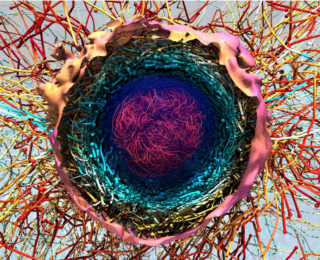
A New Recipe for Neutron Star Magnetic Fields

A New Recipe for Neutron Star Magnetic Fields

by Ryan Golant | Nov 30, 2021 | Daily Paper Summaries

How do neutron stars acquire such strong magnetic fields? Why do these fields differ between pulsars and magnetars? Today’s paper suggests that *convective dynamos* may be at play.

« Older Entries
Next Entries »

Loading

Follow our socials

  • Bluesky
  • Facebook
  • Instagram
  • RSS Feed

More Posts About

AAS AGN astronomy astrophysics binary stars black holes cosmology dark matter dwarf galaxies exoplanets galaxies galaxy evolution gravitational waves habitability JWST Kepler Milky Way observations planetary science planet formation protoplanetary disks radio astronomy simulations solar system spectroscopy star formation stars stellar evolution supernovae theory

Posts by Category

  • Accessibility
  • Applications
  • Beyond
  • Book Reviews
  • Career Navigation
  • Classics
  • Climate Change
  • Course Assignments
  • Crossposts
  • Current Events
  • Daily Paper Summaries
  • Game Reviews
  • Guides
  • Historical Astronomy
  • Instrumentation
  • Interviews
  • Outreach
  • Personal Experiences
  • PRJ
  • Quick Notes
  • Satellites
  • Teaching
  • Undergraduate Research

More Astronomy

  • AAS
  • AAS Nova
  • astro-ph
  • AstroBetter
  • APOD

Read Astrobites in Other Languages

  • Astrobitos (Spanish)
  • Astropontos (Portuguese)
  • staryab (Farsi)

Listen to Astrobites

  • astro[sound]bites

Discover More Incredible Science

  • ScienceBites Network
  • RSS

© 2026 Astrobites | All Rights Reserved | Supported by AAS | Designed by Elegant Themes | Powered by WordPress