Shining (the wrong?) light on Self-Interacting Dark Matter
Dark matter is very hard to study because, well, it’s dark. Today’s authors explore how the light we can see in galaxy clusters might not trace dark matter as well as we thought.

Dark matter is very hard to study because, well, it’s dark. Today’s authors explore how the light we can see in galaxy clusters might not trace dark matter as well as we thought.
Find out in today’s bite if dark matter has any role in the formation of supermassive black holes!
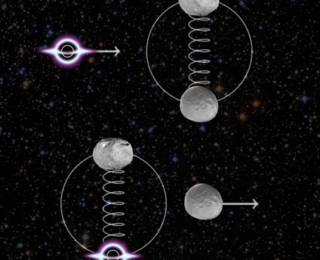
If primordial black holes exist, one place we might find them is in binary systems with other objects like planets or asteroids. Today’s paper explores how common these systems might be and the various ways we might go about finding them.
Today’s authors use the VERITAS telescope to hunt for dark matter in the Milky Way’s satellite galaixes!
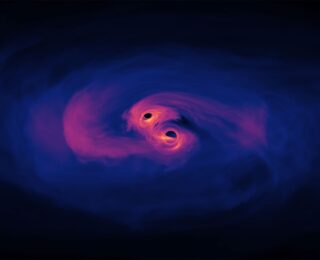
In today’s bite, we look at a paper that investigates if self-interacting dark matter can accelerate the inspiral of supermassive black holes binaries, and if we can detect this with gravitational waves.
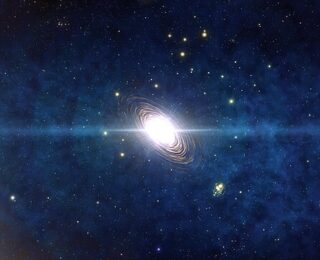
Pair-Instability Supernovae could be the fate of some of the universe’s most massive stars. Today’s Astrobite explores if dark matter accumulated in the cores of these stars could help drive these gargantuan explosions!