• RSS
  • Submit a Guest Post
  • Undergraduates: Submit your Research!
  • Suggest a Paper Topic!
astrobites
  • About
    • About Astrobites
    • Meet the Authors
    • Statement of Inclusivity
    • Copyright & Permissions
  • Latest Research
    • Daily Paper Summaries
    • Classics
    • Undergrad Research
    • Physical Review Coverage
  • Beyond astro-ph
    • Beyond astro-ph Library
    • Interviews
    • Career Navigation
    • Personal Experiences
    • Current Events
    • Teaching with Astrobites
  • Guides
    • EM Spectrum
    • Galaxies & AGNs
    • Spectroscopy and Spectral Lines
    • Adaptive Optics
    • Gravitational Waves
    • Transient Astronomy
    • Astrophysical Software
    • Graduate School
    • Writing a personal statement for grad apps
    • First Observing Run
    • …More Guides!
Select Page
The Eldest Sibling of Our Milky Way

The Eldest Sibling of Our Milky Way

by Wei Vivyan Yan | May 26, 2020 | Daily Paper Summaries

Gas before forming a disk galaxy: To be cool, or to be hot, that is the question.

What is causing these Little Dippers?

What is causing these Little Dippers?

by Emma Foxell | Dec 11, 2018 | Daily Paper Summaries

Could exocomets be causing these strange shaped lightcurves?
Disk Destruction in the Trapezium

Disk Destruction in the Trapezium

by Jesse Feddersen | Jan 12, 2016 | Daily Paper Summaries

Sherlocks Holmes investigates the scene of a crime for clues about whodunit. Today’s paper investigates the massacre of circumstellar disks in a star cluster for clues about the cluster itself.
What’s going on in Orion’s head?

What’s going on in Orion’s head?

by Adele Plunkett | Sep 14, 2012 | Daily Paper Summaries

A wealth of observations tell an active accretion story within the Lambda Orionis Star Forming Region, at the head of the Orion constellation.
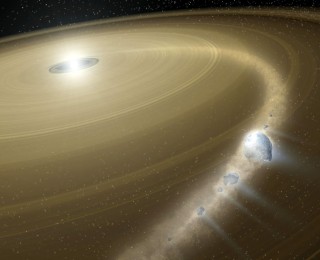
Asteroid vs. White Dwarf

Asteroid vs. White Dwarf

by Susanna Kohler | Aug 10, 2012 | Daily Paper Summaries

What happens when an asteroid and a white dwarf (WD) meet? The asteroid doesn’t get the better end of the deal — and the WD might end up with a brand new debris disk.
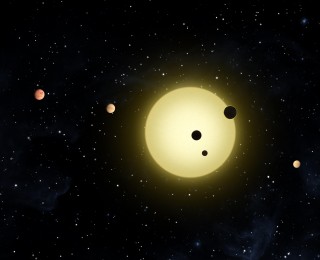
How to Build a Low-Density Super-Earth

How to Build a Low-Density Super-Earth

by Courtney Dressing | Apr 26, 2012 | Daily Paper Summaries

Many Super-Earths appear to be less dense than the Earth. How do such planets form? Could a rocky Super-Earth accrete a hydrogen-helium atmosphere in-situ?

« Older Entries
Next Entries »

Loading

Follow our socials

  • Bluesky
  • Facebook
  • Instagram
  • RSS Feed

More Posts About

AAS AGN astronomy astrophysics binary stars black holes cosmology dark matter dwarf galaxies exoplanets galaxies galaxy evolution gravitational waves habitability JWST Kepler Milky Way observations planetary science planet formation protoplanetary disks radio astronomy simulations solar system spectroscopy star formation stars stellar evolution supernovae theory

Posts by Category

  • Accessibility
  • Applications
  • Beyond
  • Book Reviews
  • Career Navigation
  • Classics
  • Climate Change
  • Course Assignments
  • Crossposts
  • Current Events
  • Daily Paper Summaries
  • Game Reviews
  • Guides
  • Historical Astronomy
  • Instrumentation
  • Interviews
  • Outreach
  • Personal Experiences
  • PRJ
  • Quick Notes
  • Satellites
  • Teaching
  • Undergraduate Research

More Astronomy

  • AAS
  • AAS Nova
  • astro-ph
  • AstroBetter
  • APOD

Read Astrobites in Other Languages

  • Astrobitos (Spanish)
  • Astropontos (Portuguese)
  • staryab (Farsi)

Listen to Astrobites

  • astro[sound]bites

Discover More Incredible Science

  • ScienceBites Network
  • RSS

© 2026 Astrobites | All Rights Reserved | Supported by AAS | Designed by Elegant Themes | Powered by WordPress