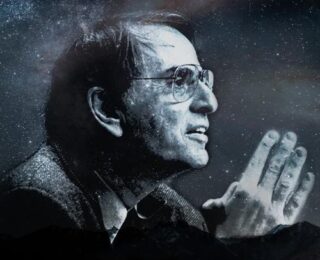
Giving thanks to Carl Sagan for 90 years of science inspiration
Read about Carl Sagan and his legacy during your turkey break!

Read about Carl Sagan and his legacy during your turkey break!
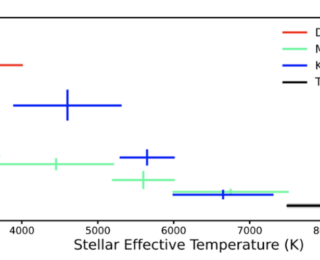
Hot stars seem to host fewer small planets than their cold star cousins.
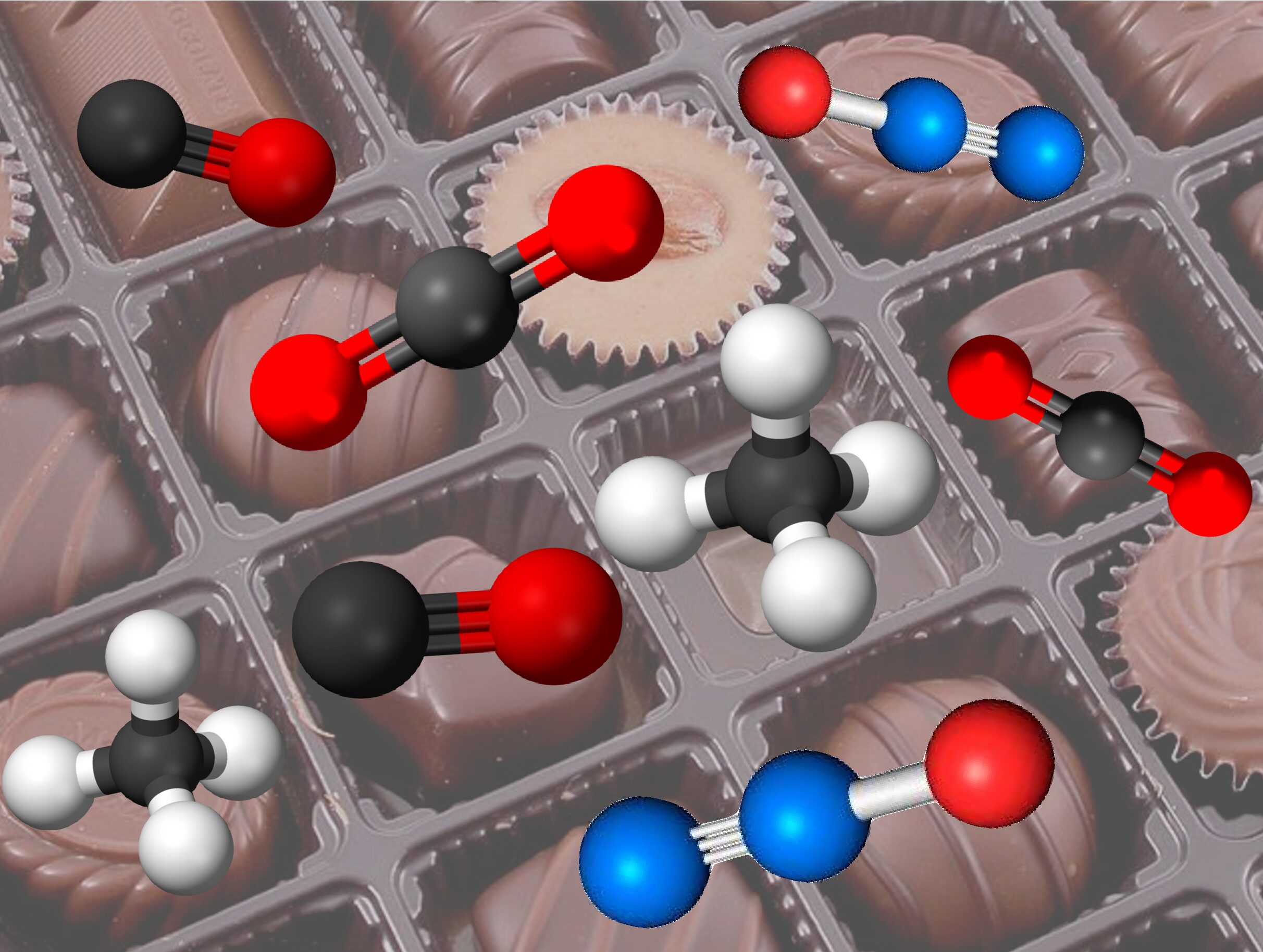
The authors of today’s paper put forth theoretical models of how habitable exoplanets might appear to the Habitable Worlds Observatory (HWO) using the molecules present in the Earth’s atmosphere from earlier eons, and test if HWO will be able to detect these molecules in simulated observations.
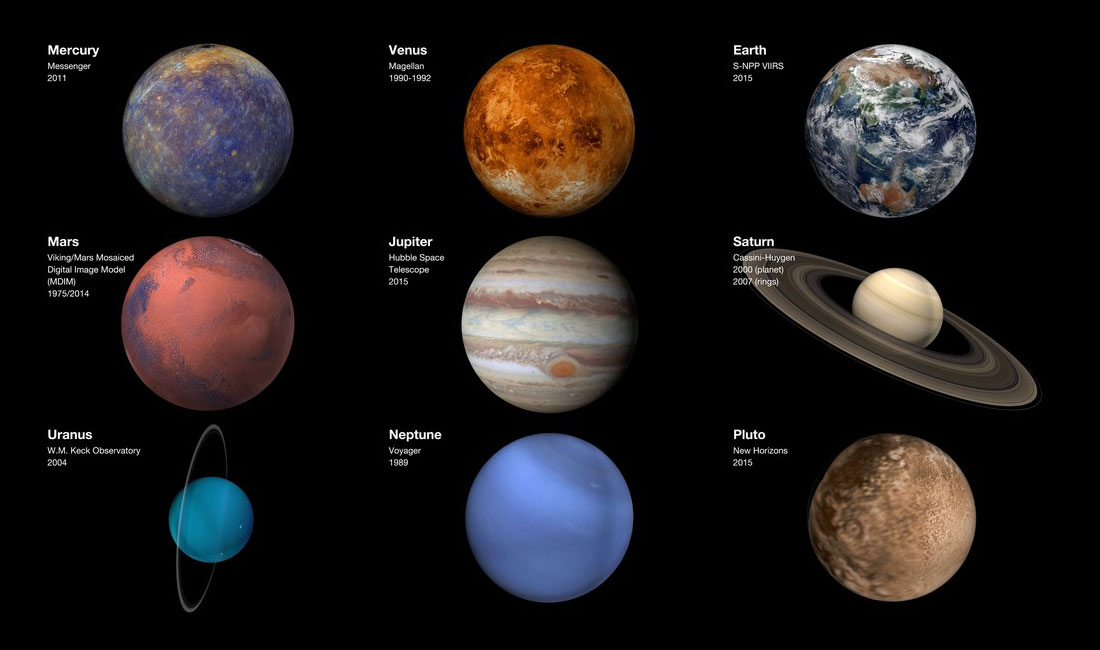
We have not found a Solar System analog, but upcoming missions stand to discover more and more multi-planet systems. We can begin to understand these systems by asking: what would our own Solar System look like to distant observers?
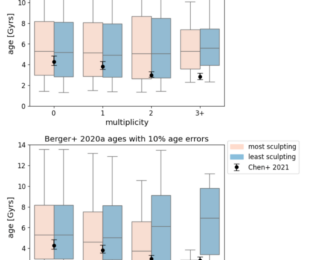
The Kepler dataset appears to be split between single planet systems and multi-planet systems. Could this be because systems become dynamically hot over time?
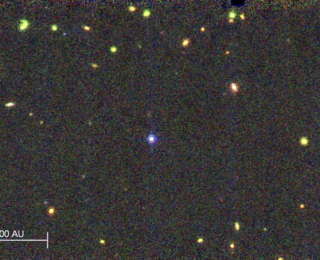
It’s uncertain if exoplanets survive the deaths of their host stars, but now astronomers have found exactly that: a Jupiter-like planet orbiting a White Dwarf!