
Gobbling up Gas Giants
Could the consumption of a massive planet be responsible for the timing of this star’s flares? These authors investigate!

Could the consumption of a massive planet be responsible for the timing of this star’s flares? These authors investigate!
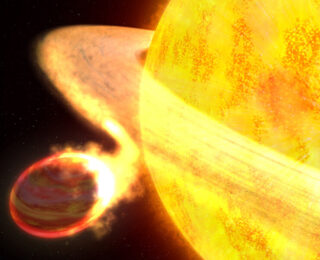
Close-in planets are expected to have shrinking orbits. Catching a planet decay on its way to the warm embrace of its star is however impressively difficult.
Is Saturn dancing around the Solar System with a bright Lyman-alpha tutu?
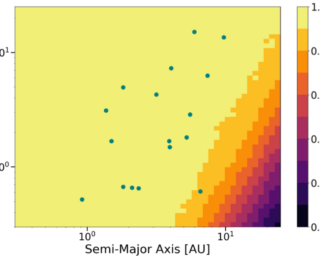
How common are systems like our own solar system? Do big and small planets often form together?
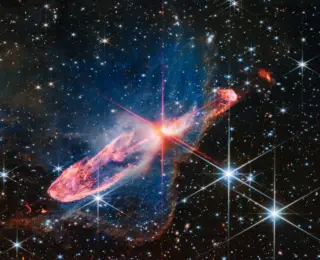
Astrobites offers coverage of the Physical Review Invited Session: “Looking Ahead as we Look Far through the JWST.” #APSApril

The authors of today’s papers investigate whether photoevaporation or core-powered mass loss is the more likely culprit for the exoplanet radius gap.