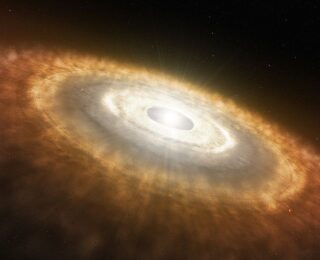
What our solar system was probably like a long time ago — Discovering a debris disk around BD+45°598
Today’s astrobite discusses how an edge-on debris disk was discovered and modeled, and what sort of planets might be found there!

Today’s astrobite discusses how an edge-on debris disk was discovered and modeled, and what sort of planets might be found there!

Today’s post tells you whether cyanobacteria, a type of bacteria that can do photosynthesis, could survive in an exoplanet orbiting M-dwarfs (which are cool, red stars)!
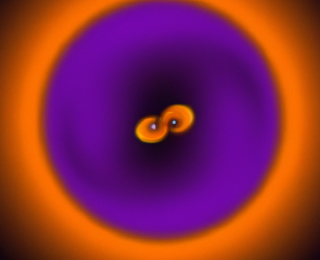
Can binary stars have circumbinary disks that orbits them in a perpendicular plane? Today’s authors took a closer look at this setup and the complex exchange of material between stars and circumbinary disk.
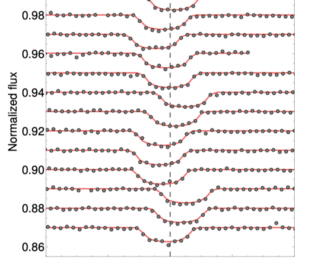
A new study finds that Hot Jupiters have companion planets in the system at a higher rate than previously thought. This has big implications for the theories on how these fascinating planets, and their larger systems, form.
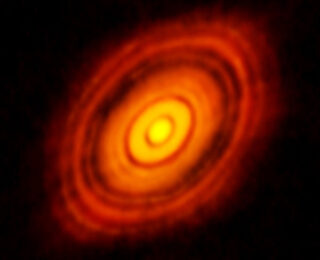
In today’s paper, the authors analyze millimeter and submillimeter ALMA observations of a protoplanetary disk, and find kinematic signs of candidate companions within!
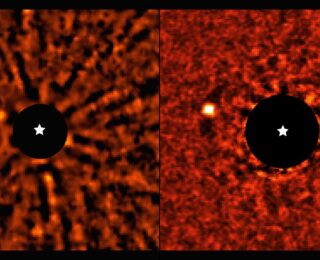
Direct imaging exoplanets is difficult, but a new method of vetting targets has just helped three independent teams discover, and image, a new gas giant.