• RSS
  • Submit a Guest Post
  • Undergraduates: Submit your Research!
  • Suggest a Paper Topic!
astrobites
  • About
    • About Astrobites
    • Meet the Authors
    • Statement of Inclusivity
    • Copyright & Permissions
  • Latest Research
    • Daily Paper Summaries
    • Classics
    • Undergrad Research
    • Physical Review Coverage
  • Beyond astro-ph
    • Beyond astro-ph Library
    • Interviews
    • Career Navigation
    • Personal Experiences
    • Current Events
    • Teaching with Astrobites
  • Guides
    • EM Spectrum
    • Galaxies & AGNs
    • Spectroscopy and Spectral Lines
    • Adaptive Optics
    • Gravitational Waves
    • Transient Astronomy
    • Astrophysical Software
    • Graduate School
    • Writing a personal statement for grad apps
    • First Observing Run
    • …More Guides!
Select Page
There Are Many Ways Galaxies and Supermassive Black Holes Dance

There Are Many Ways Galaxies and Supermassive Black Holes Dance

by Pranav Satheesh | Dec 12, 2024 | Daily Paper Summaries

Find out how supermassive black holes dance along with their host galaxies in today’s paper

Tracing the chemistry of our galactic ancestors

Tracing the chemistry of our galactic ancestors

by Katherine Lee | Dec 5, 2024 | Daily Paper Summaries

High-redshift galaxies are the keys to understanding our own galactic history, and today’s authors show us how.
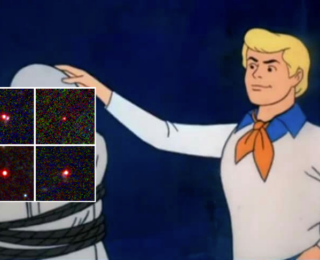
Unmasking the little red dots: AGN or not?

Unmasking the little red dots: AGN or not?

by Pranav Satheesh | Nov 23, 2024 | Daily Paper Summaries

Did we figure out what is behind the little red dot mask ? Find out in today’s bite.
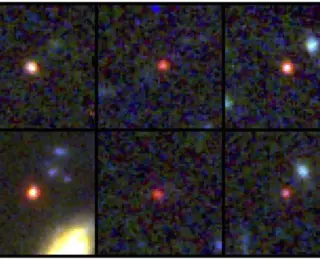
Them’s the (Balmer) breaks

Them’s the (Balmer) breaks

by Nathalie Korhonen Cuestas | Nov 22, 2024 | Daily Paper Summaries

Little Red Dots have been puzzling astronomers, learn more about what might be powering these strange, young galaxies.
Zig-zagging across the universe

Zig-zagging across the universe

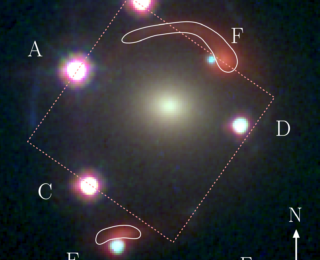
by William Lamb | Nov 20, 2024 | Daily Paper Summaries

What’s better than a single gravitational lens? A double gravitational lens! Learn about how light from a distant quasar zig-zags across the universe because of the first double gravitational lens to be observed!
Did AGNs drive the Cosmic Reionization?

Did AGNs drive the Cosmic Reionization?

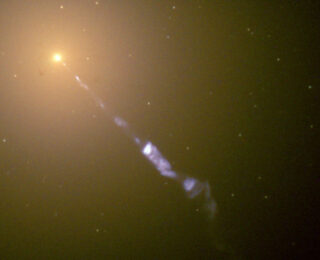
by Guest | Nov 14, 2024 | Daily Paper Summaries

Guest author Teja Teppala shows us how supermassive black holes may be energizing the early Universe!

« Older Entries
Next Entries »

Loading

Follow our socials

  • Bluesky
  • Facebook
  • Instagram
  • RSS Feed

More Posts About

AAS AGN astronomy astrophysics binary stars black holes cosmology dark matter dwarf galaxies exoplanets galaxies galaxy evolution gravitational waves habitability JWST Kepler Milky Way observations planetary science planet formation protoplanetary disks radio astronomy simulations solar system spectroscopy star formation stars stellar evolution supernovae theory

Posts by Category

  • Accessibility
  • Applications
  • Beyond
  • Book Reviews
  • Career Navigation
  • Classics
  • Climate Change
  • Course Assignments
  • Crossposts
  • Current Events
  • Daily Paper Summaries
  • Game Reviews
  • Guides
  • Historical Astronomy
  • Instrumentation
  • Interviews
  • Outreach
  • Personal Experiences
  • PRJ
  • Quick Notes
  • Satellites
  • Teaching
  • Undergraduate Research

More Astronomy

  • AAS
  • AAS Nova
  • astro-ph
  • AstroBetter
  • APOD

Read Astrobites in Other Languages

  • Astrobitos (Spanish)
  • Astropontos (Portuguese)
  • staryab (Farsi)

Listen to Astrobites

  • astro[sound]bites

Discover More Incredible Science

  • ScienceBites Network
  • RSS

© 2026 Astrobites | All Rights Reserved | Supported by AAS | Designed by Elegant Themes | Powered by WordPress