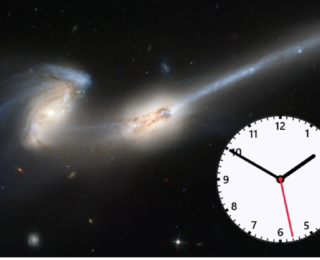
Memoirs of a Galaxy
Today’s bite explores how we can look at the stellar haloes of galaxies to reconstruct their past merger and accretion events.

Today’s bite explores how we can look at the stellar haloes of galaxies to reconstruct their past merger and accretion events.
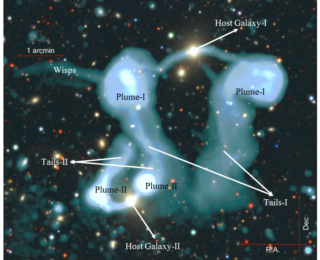
Plasma jets, emerging from a galaxy’s central black hole, sometimes bend in the same direction, forming head-tail structures. A recent study investigated two such galaxies found in unexpectedly close proximity, resembling a peculiar ‘dancing ghost’-like structure in the sky.

An astronomer and a galaxy walk into a carnival stand… check out today’s bite to see how this one ends!
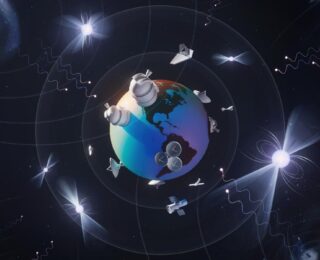
Post-detection of a gravitational wave background, pulsar timing arrays could detect individual sources of gravitational waves, called Continuous Waves. Let’s find out what properties we expect them to have!
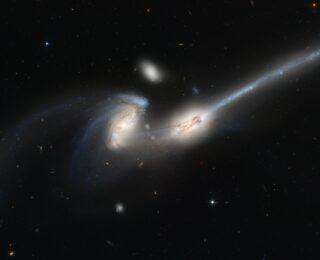
In today’s paper, learn how astronomers can identify merging galaxies and investigate the importance of these collisions over cosmic time.

In today’s addition to our Undergrad Research series, a collaboration of students presents their guide to reducing JWST NIRSpec IFU data.