• RSS
  • Submit a Guest Post
  • Undergraduates: Submit your Research!
  • Suggest a Paper Topic!
astrobites
  • About
    • About Astrobites
    • Meet the Authors
    • Statement of Inclusivity
    • Copyright & Permissions
  • Latest Research
    • Daily Paper Summaries
    • Classics
    • Undergrad Research
    • Physical Review Coverage
  • Beyond astro-ph
    • Beyond astro-ph Library
    • Interviews
    • Career Navigation
    • Personal Experiences
    • Current Events
    • Teaching with Astrobites
  • Guides
    • EM Spectrum
    • Galaxies & AGNs
    • Spectroscopy and Spectral Lines
    • Adaptive Optics
    • Gravitational Waves
    • Transient Astronomy
    • Astrophysical Software
    • Graduate School
    • Writing a personal statement for grad apps
    • First Observing Run
    • …More Guides!
Select Page
And I’m Free, Free-Floatin’… or am I?

And I’m Free, Free-Floatin’… or am I?

by Kylee Carden | May 27, 2024 | Daily Paper Summaries

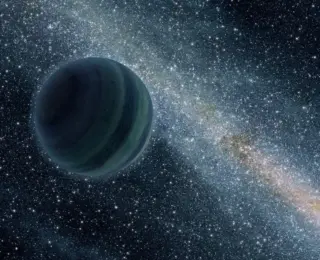
TESS was designed to find transiting planets. Today’s authors use TESS to search for free-floating planets via gravitational lensing and find a candidate event.

How to tell if a Black Hole is making your fairy lights twinkle

How to tell if a Black Hole is making your fairy lights twinkle

by Storm Colloms | Dec 9, 2023 | Daily Paper Summaries

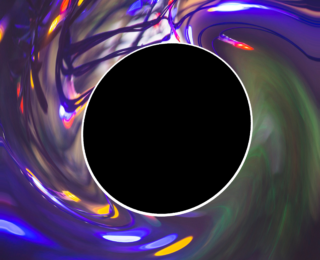
Are your fairy lights being warped by a black hole this holiday season? Find out in today’s post!
A Predicted Alignment of the Stars

A Predicted Alignment of the Stars

by Macy Huston | Jun 1, 2023 | Daily Paper Summaries

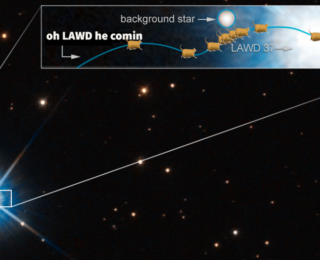
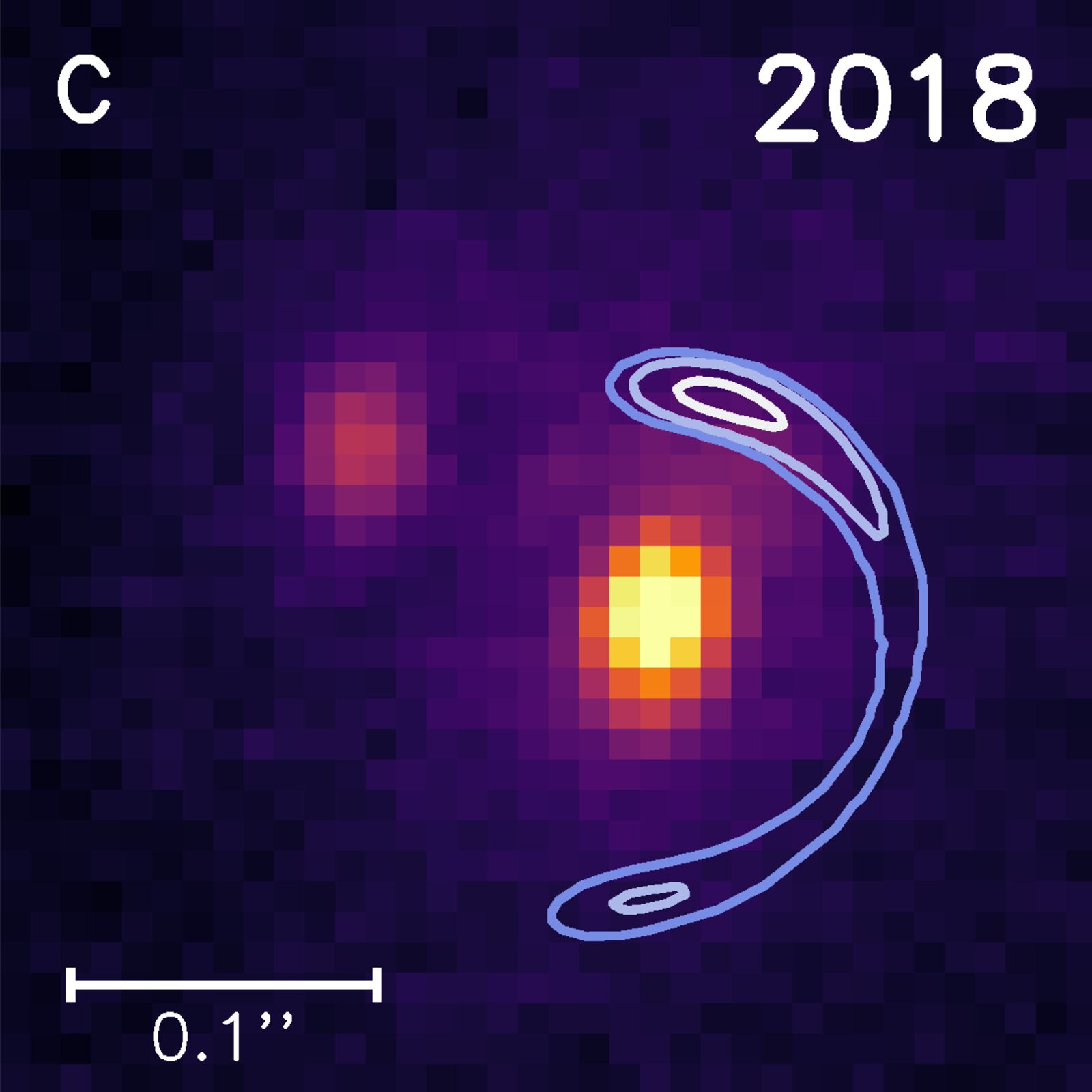
Today’s paper leverages a predicted astrometric microlensing event to study an isolated white dwarf and test stellar evolution theories.
The Peculiar Nature of Black Hole Birth Kicks

The Peculiar Nature of Black Hole Birth Kicks

by Sonja Panjkov | Jan 27, 2023 | Daily Paper Summaries

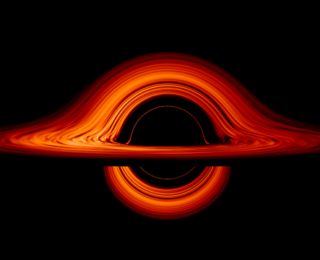
General relativity to the rescue! Today’s paper teaches us how microlensing data can be used to infer black hole natal kick velocities.
Herald of the Change: A microlensing Jupiter-analogue spotted in K2 data portends Roman’s yield of new planets

Herald of the Change: A microlensing Jupiter-analogue spotted in K2 data portends Roman’s yield of new planets

by William Balmer | Apr 11, 2022 | Daily Paper Summaries

Astronomers have just found Jupiter’s twin in a distant solar system. Their discovery technique may surprise you, and might just be the most important method for discovering Earth-like exoplanets in the next decade…
What will happen to Jupiter when the Sun dies?

What will happen to Jupiter when the Sun dies?

by Zili Shen | Oct 23, 2021 | Daily Paper Summaries

The Sun will become a white dwarf. Will any Solar System planets survive?

« Older Entries
Next Entries »

Loading

Follow our socials

  • Bluesky
  • Facebook
  • Instagram
  • RSS Feed

More Posts About

AAS AGN astronomy astrophysics binary stars black holes cosmology dark matter dwarf galaxies exoplanets galaxies galaxy evolution gravitational waves habitability JWST Kepler Milky Way observations planetary science planet formation protoplanetary disks radio astronomy simulations solar system spectroscopy star formation stars stellar evolution supernovae theory

Posts by Category

  • Accessibility
  • Applications
  • Beyond
  • Book Reviews
  • Career Navigation
  • Classics
  • Climate Change
  • Course Assignments
  • Crossposts
  • Current Events
  • Daily Paper Summaries
  • Game Reviews
  • Guides
  • Historical Astronomy
  • Instrumentation
  • Interviews
  • Outreach
  • Personal Experiences
  • PRJ
  • Quick Notes
  • Satellites
  • Teaching
  • Undergraduate Research

More Astronomy

  • AAS
  • AAS Nova
  • astro-ph
  • AstroBetter
  • APOD

Read Astrobites in Other Languages

  • Astrobitos (Spanish)
  • Astropontos (Portuguese)
  • staryab (Farsi)

Listen to Astrobites

  • astro[sound]bites

Discover More Incredible Science

  • ScienceBites Network
  • RSS

© 2026 Astrobites | All Rights Reserved | Supported by AAS | Designed by Elegant Themes | Powered by WordPress