
The First Directly Imaged Binary System with Substellar Siblings
The first directly imaged hierarchical quadruple system: two stars, each with a substellar companion!

The first directly imaged hierarchical quadruple system: two stars, each with a substellar companion!

JWST just made one of the highest-redshift galaxies ever observed even more interesting! Check out today’s bite to see what it found!

Will Betelgeuse go supernova in the next few decades? This paper suggests so…
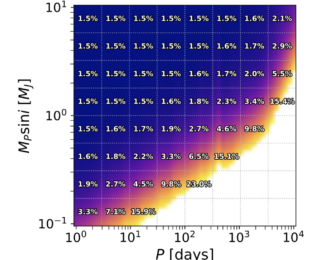
The most common type of star in the universe, the M dwarf, seems to be lacking any Jupiter-sized exoplanets. Why is that?
We’re still not sure what causes quasars, some of the brightest objects in the universe, to switch on. Today’s authors present a compelling case for galaxy mergers being the culprit!
Journey to the distant universe with today’s paper, as we discover what the X-ray emission from high-redshift quasars can tell us about their formation and accretion physics!