by Yvette Cendes | Nov 1, 2014 | Daily Paper Summaries
Title: Limits on low frequency radio emission from southern exoplanetsAuthors: Tara Murphy, et al.First Author Institution: Sydney Institute for Astronomy, The University of Sydney, AustraliaStatus: Accepted for publication in MNRASAstrobites is no stranger to exotic exoplanet discoveries– the Kepler mission alone has increased our knowledge of these worlds by leaps and bounds, and many exciting discoveries have been done by optical telescopes as well through a variety of methods. In today’s paper, however, the authors present results on yet another method of extrasolar planet detection: the possibility of discovering planets in radio frequencies.How does this work? Well we know that planets with high magnetic fields can give of gigantic radio flares in the right circumstances- in our own solar system, Jupiter gives off flares that can be brighter than the sun in radio frequencies thanks to its powerful magnetosphere (which produces bright aurorae like Earth’s magnetosphere- see Figure 1). This is thanks to something called cyclotron maser emission, where electrons from plasma material interact with the magnetic field in a way that beams them like a laser in radio frequencies. In the case of Jupiter, these bursts are visible from Earth when Io– the nearest Galilean moon to Jupiter, which is constantly spewing out material from its volcanoes- is at a particular point in its orbit and this beam of radio radiation is pointed towards us.Of course, if such a thing is a well-documented phenomenon in our own solar system with Jupiter, shouldn’t it also occur around other planets? Astronomers think so, and such flares have been observed from brown dwarfs, but the question is whether these exoplanet radio flares would be strong enough to be detectable from Earth. The answer is “perhaps,” under circumstances such as if the exoplanet is...
by Josh Fuchs | Sep 2, 2014 | Daily Paper Summaries
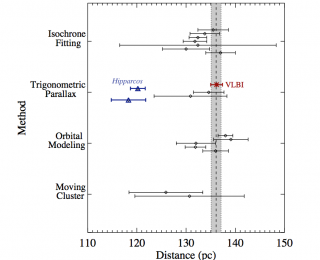
The Pleiades is one of the most well-known open clusters visible with the naked eye from Earth. But just how far away is the cluster? New results help determine a more accurate distance and suggest a troubling error in a previous study.
by Andrew Emerick | Jun 10, 2014 | Daily Paper Summaries
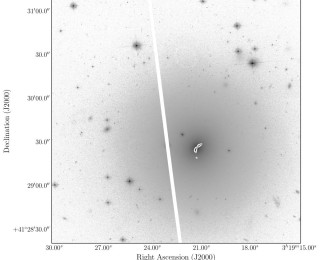
The diffuse gas contained within galaxy clusters can dramatically affect the galaxies moving within it. This includes bending the jets coming out of active galactic nuclei in galaxy clusters. The authors in today’s Astrobite report on extremely bent jets recently discovered in galaxy NGC 1272.
by Yvette Cendes | Apr 18, 2014 | Daily Paper Summaries
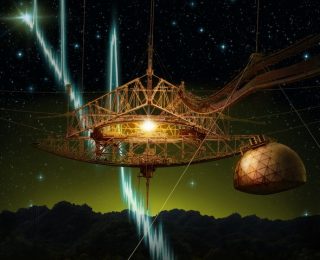
A mysterious Fast Radio Burst (FRB) from beyond the galaxy has been detected at Arecibo. This is the first FRB discovered outside of Parkes Observatory, giving greater credence to the astronomical nature of these signals.
by Yvette Cendes | Feb 21, 2014 | Daily Paper Summaries
Astronomers are hearing a new type of radio transient, but no one knows where they come from and how they are created. This paper suggests one of the six documented Fast Radio Bursts detected so far originated close to home, within our own galaxy.
by Yvette Cendes | Dec 16, 2013 | Daily Paper Summaries
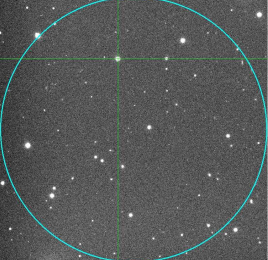
Title: Fast Radio Bursts May Originate from Nearby Flaring Stars Authors: Abraham Loeb, Yossi Shvartzvald, Dan Maoz First Author’s Institution: Institute for Theory and Computation, Harvard University Paper Status: MNRAS, in press One of the most intriguing discoveries in radio astronomy in recent years has been the discovery of Fast Radio Bursts (FRBs). Originally called Lorimer bursts after the first (and for some time, only) burst observed, there are currently six of these bursts published in the literature, and astronomers are puzzled because they look very different from any other astronomical signals observed before. They are bright- FRBs are the brightest astronomical phenomena seen in radio frequencies, and they don’t seem to have known counterparts in other wavelengths. They are brief- a burst only lasts a few microseconds, and they don’t seem to repeat. And they have a very high dispersion measure (DM)- a relationship between time and frequency that tells you how far away a signal comes from (explained well in this Astrobite)- which has indicated an extragalactic origin for FRBs. To writ, what exactly FRBs are and where they come from is a mystery.In this paper, the authors decided to take a different track from previous theories about FRB origins that point to extragalactic sources, and instead tackled the option of a much more local origin. Their proposed candidate sources are flare stars– variable stars which can undergo dramatic and unpredictable increases in brightness. Flare stars are typically dim dwarf stars, and some are already known to produce radio bursts with brief rise times on the order of milliseconds, thought to be produced by cyclotron maser mechanisms in the stellar atmospheres. ...
