• RSS
  • Submit a Guest Post
  • Undergraduates: Submit your Research!
  • Suggest a Paper Topic!
astrobites
  • About
    • About Astrobites
    • Meet the Authors
    • Statement of Inclusivity
    • Copyright & Permissions
  • Latest Research
    • Daily Paper Summaries
    • Classics
    • Undergrad Research
    • Physical Review Coverage
  • Beyond astro-ph
    • Beyond astro-ph Library
    • Interviews
    • Career Navigation
    • Personal Experiences
    • Current Events
    • Teaching with Astrobites
  • Guides
    • EM Spectrum
    • Galaxies & AGNs
    • Spectroscopy and Spectral Lines
    • Adaptive Optics
    • Gravitational Waves
    • Transient Astronomy
    • Astrophysical Software
    • Graduate School
    • Writing a personal statement for grad apps
    • First Observing Run
    • …More Guides!
Select Page
The Beating Heart(-Shaped Region) of Pluto

The Beating Heart(-Shaped Region) of Pluto

by Kaitlyn Shin | Feb 14, 2020 | Daily Paper Summaries

Like human, like dwarf planet – it turns out Pluto’s heart has a “heartbeat.”

Spin-teresting Effects of Binary Star Formation

Spin-teresting Effects of Binary Star Formation

by Jenny Calahan | Dec 18, 2019 | Daily Paper Summaries

We see that many stars have a buddy star or two i.e. they are a binary or multi-star system. This paper addresses the question: How in the heck does that happen?
Modeling Supernovae Feedback as a Galactic Fountain

Modeling Supernovae Feedback as a Galactic Fountain

by Bryanne McDonough | Nov 13, 2019 | Daily Paper Summaries

Stellar feedback can drive a galactic fountain by pushing out gas that later falls back in.
When Do Stars Form? Simulating Dynamic Star Formation Efficiencies in Giant Molecular Clouds

When Do Stars Form? Simulating Dynamic Star Formation Efficiencies in Giant Molecular Clouds

by Michael Foley | Nov 8, 2019 | Daily Paper Summaries

Observations of Giant Molecular Clouds (GMCs) yield large scatters in star formation efficiencies. Simulations in this work show that much of this scatter may stem from the fact we observe GMCs at different evolutionary stages driven by stellar feedback.
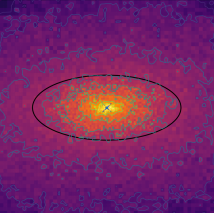
How to Un-squash a Galaxy

How to Un-squash a Galaxy

by Tomer Yavetz | Oct 29, 2019 | Daily Paper Summaries

Does our galaxy look like an Advil, a NyQuil, or just a simple sphere? The simulations studied in today’s paper may have the answer.
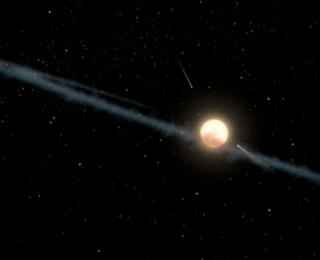
Can an Orphaned Exomoon Help Solve the Mystery of Tabby’s Star?

Can an Orphaned Exomoon Help Solve the Mystery of Tabby’s Star?

by Jamie Wilson | Oct 11, 2019 | Daily Paper Summaries, Undergraduate Research

Simulations by astronomers at Columbia University suggest an evaporating exomoon could be behind the mysterious dimming behaviour of KIC 8462852.

« Older Entries
Next Entries »

Loading

Follow our socials

  • Bluesky
  • Facebook
  • Instagram
  • RSS Feed

More Posts About

AAS AGN astronomy astrophysics binary stars black holes cosmology dark matter dwarf galaxies exoplanets galaxies galaxy evolution gravitational waves habitability JWST Kepler Milky Way observations planetary science planet formation protoplanetary disks radio astronomy simulations solar system spectroscopy star formation stars stellar evolution supernovae theory

Posts by Category

  • Accessibility
  • Applications
  • Beyond
  • Book Reviews
  • Career Navigation
  • Classics
  • Climate Change
  • Course Assignments
  • Crossposts
  • Current Events
  • Daily Paper Summaries
  • Game Reviews
  • Guides
  • Historical Astronomy
  • Instrumentation
  • Interviews
  • Outreach
  • Personal Experiences
  • PRJ
  • Quick Notes
  • Satellites
  • Teaching
  • Undergraduate Research

More Astronomy

  • AAS
  • AAS Nova
  • astro-ph
  • AstroBetter
  • APOD

Read Astrobites in Other Languages

  • Astrobitos (Spanish)
  • Astropontos (Portuguese)
  • staryab (Farsi)

Listen to Astrobites

  • astro[sound]bites

Discover More Incredible Science

  • ScienceBites Network
  • RSS

© 2026 Astrobites | All Rights Reserved | Supported by AAS | Designed by Elegant Themes | Powered by WordPress