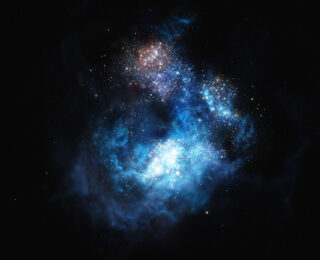
Chasing a Starlight: Investigating One of the Oldest Known Galaxies with MUSE
Today’s authors study one of the oldest known galaxies and its spectra to learn more about the early universe.

Today’s authors study one of the oldest known galaxies and its spectra to learn more about the early universe.
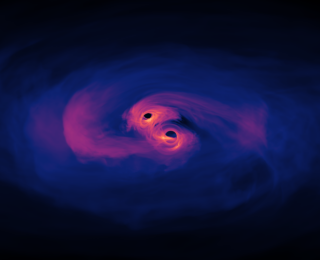
Scientists discover new dual luminous quasars, the most powerful and luminous couples in the Universe.
![UR #21: Confirmation of Broadband Selection of Extreme [OIII] Emitters at z~0.5](https://astrobites.org/wp-content/uploads/2020/06/EELG-320x260.jpg)
This month’s undergraduate research post features a student who looked at statistically improving extreme emission line galaxy identification in wide field surveys.
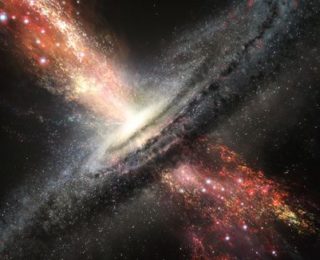
Mysterious emissions are coming from the other side of the wall in a quasar!
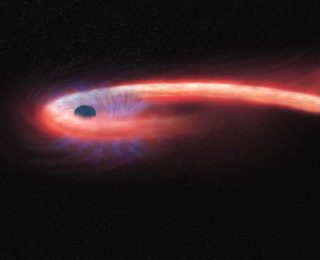
We know that supermassive black holes consume almost anything that comes near them. But have you ever wondered how we know when or what they are devouring? Today’s paper provides an answer to that question as the author’s present the first confident detection of an accretion disk around a supermassive black hole following the tidal disruption of a star. Find out what astronomers see when a supermassive black hole has star for lunch!
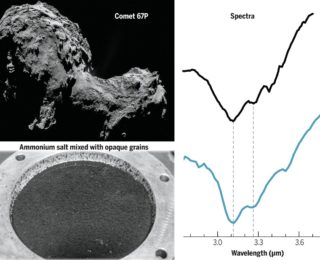
Ammonium salts have been discovered on Comet 67P! This discovery helps solve a big mystery about the nitrogen content on the comet, which was previously measured to be lower than expected.