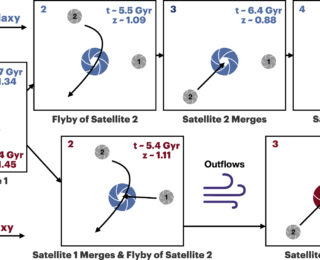
When good galaxies go bad: a new mechanism for galaxy death
Why are so many modern galaxies not actively forming stars? Today’s guest post by Katherine Lee explores one mechanism that may quench star formation in Milky Way-like galaxies.

Why are so many modern galaxies not actively forming stars? Today’s guest post by Katherine Lee explores one mechanism that may quench star formation in Milky Way-like galaxies.

As part of our #BlackInAstro series for Black History Month, we interview Dr. Gibor Basri, a pioneer in stellar astronomy (one of the discoverers of brown dwarfs) and the founding Vice Chancellor for Equity and Inclusion at UC Berkeley!
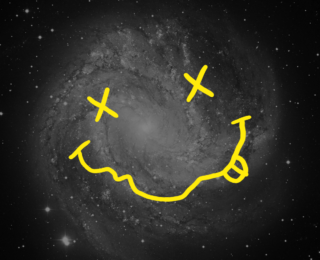
What kills the most massive disk galaxies in the Universe? Their own bulge, a sneaky bar, or a giant black hole? Let’s find out!
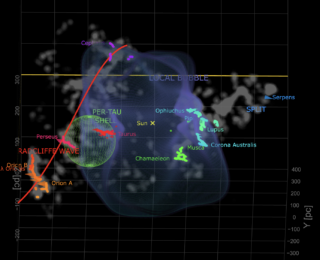
We’ve known for some time that we reside in the Local Bubble, a cavity of low-density gas excavated by an orchestra of dying stars ~15 Myrs ago. Today’s authors find that this Bubble’s expansion is driving nearly all nearby star formation.
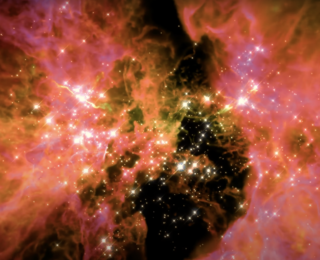
Making a star cluster from scratch is no easy task. Today’s paper addresses the big question: what does it take to get the recipe right?
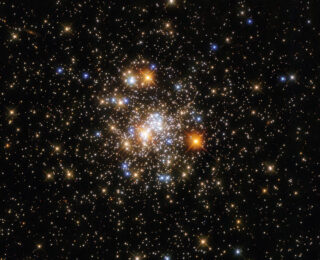
What can counting globular clusters tell us about a galaxy’s star formation history? Today’s authors investigate using Hubble Space Telescope observations.