• RSS
  • Submit a Guest Post
  • Undergraduates: Submit your Research!
  • Suggest a Paper Topic!
astrobites
  • About
    • About Astrobites
    • Meet the Authors
    • Statement of Inclusivity
    • Copyright & Permissions
  • Latest Research
    • Daily Paper Summaries
    • Classics
    • Undergrad Research
    • Physical Review Coverage
  • Beyond astro-ph
    • Beyond astro-ph Library
    • Interviews
    • Career Navigation
    • Personal Experiences
    • Current Events
    • Teaching with Astrobites
  • Guides
    • EM Spectrum
    • Galaxies & AGNs
    • Spectroscopy and Spectral Lines
    • Adaptive Optics
    • Gravitational Waves
    • Transient Astronomy
    • Astrophysical Software
    • Graduate School
    • Writing a personal statement for grad apps
    • First Observing Run
    • …More Guides!
Select Page
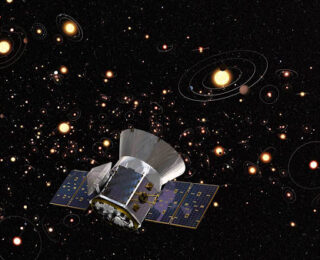
Getting to Know the Neighborhood: Who Can See Earth Transit?

Getting to Know the Neighborhood: Who Can See Earth Transit?

by Briley Lewis | Oct 31, 2020 | Daily Paper Summaries

Out of all the stars around us, which ones would be able to find Earth with the transit method? Today’s paper makes a list, which can help us with future SETI efforts!

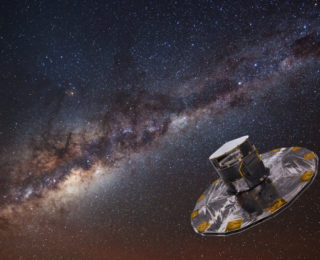
Speed check on the ‘fastest’ star in Gaia

Speed check on the ‘fastest’ star in Gaia

by Emma Foxell | May 15, 2019 | Daily Paper Summaries

This astrobite looking at a star that is moving so fast, it can escape our galaxy. But is everything as it seems?
Telescopes Don’t Make Catalogs

Telescopes Don’t Make Catalogs

by Philipp Plewa | Jun 21, 2017 | Daily Paper Summaries

A probabilistic approach to making better astronomical source catalogs.
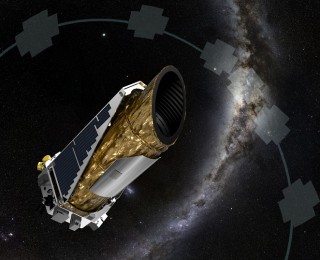
No Need for De-trending: Finding Exoplanets in K2

No Need for De-trending: Finding Exoplanets in K2

by Gudmundur Stefansson | Feb 23, 2015 | Daily Paper Summaries

A new analysis technique, that fits simultaneously for light-curve systematics and transit signals, finds 36 planet candidates in the K2 dataset — Kepler is still in the game!
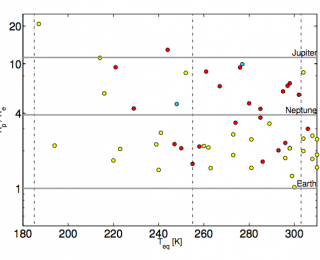
Kepler’s Habitable Worlds

Kepler’s Habitable Worlds

by Lauren Weiss | Feb 29, 2012 | Daily Paper Summaries

Of Kepler’s 2,321 planet candidates, many are in the “habitable zone.”

Loading

Follow our socials

  • Bluesky
  • Facebook
  • Instagram
  • RSS Feed

More Posts About

AAS AGN astronomy astrophysics binary stars black holes cosmology dark matter dwarf galaxies exoplanets galaxies galaxy evolution gravitational waves habitability JWST Kepler Milky Way observations planetary science planet formation protoplanetary disks radio astronomy simulations solar system spectroscopy star formation stars stellar evolution supernovae theory

Posts by Category

  • Accessibility
  • Applications
  • Beyond
  • Book Reviews
  • Career Navigation
  • Classics
  • Climate Change
  • Course Assignments
  • Crossposts
  • Current Events
  • Daily Paper Summaries
  • Game Reviews
  • Guides
  • Historical Astronomy
  • Instrumentation
  • Interviews
  • Outreach
  • Personal Experiences
  • PRJ
  • Quick Notes
  • Satellites
  • Teaching
  • Undergraduate Research

More Astronomy

  • AAS
  • AAS Nova
  • astro-ph
  • AstroBetter
  • APOD

Read Astrobites in Other Languages

  • Astrobitos (Spanish)
  • Astropontos (Portuguese)
  • staryab (Farsi)

Listen to Astrobites

  • astro[sound]bites

Discover More Incredible Science

  • ScienceBites Network
  • RSS

© 2026 Astrobites | All Rights Reserved | Supported by AAS | Designed by Elegant Themes | Powered by WordPress