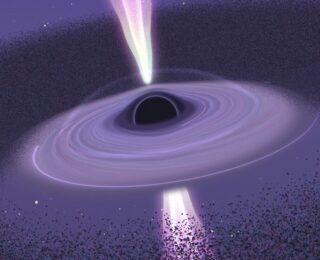
Smooth like cosmic butter: How AGN destroy molecular gas clumps in galactic nuclei
Today’s bite zooms in on nearby galaxies to understand how they impact future stellar nurseries and (maybe) suppress star formation.

Today’s bite zooms in on nearby galaxies to understand how they impact future stellar nurseries and (maybe) suppress star formation.
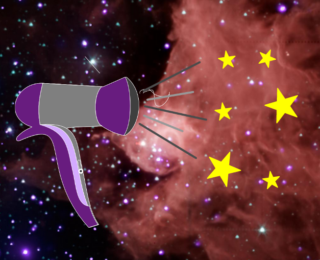
In today’s paper, the authors use JWST to investigate how warm, star-forming molecular gas is blown away by AGN.
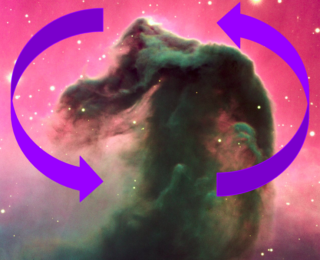
All galaxies are a complex ecosystem of interactions between hydrogen gas and stars. In today’s paper, the authors look at the Horsehead Nebula to narrow down the details of those interactions.
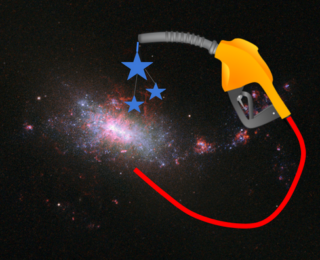
It’s really hard to see molecular hydrogen (the fuel that makes stars) directly, so astronomers have to use other spectral lines to guess how much is there. In today’s paper, the authors discuss how to do that in the smallest galaxies in the universe!
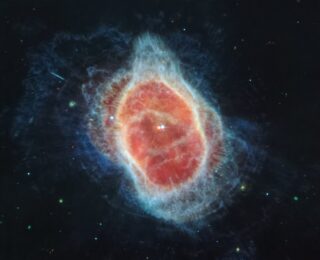
In today’s paper: the sensitivity and power of JWST has allowed scientists to discover signs of at least two, if not three, unknown companions to NGC 3132’s central star!
Galaxy mergers are violent places, which makes simulating their effects on fragile molecular clouds very difficult. The authors of today’s paper manage to do it anyway!