
Bars Rejuvenating Bulges?
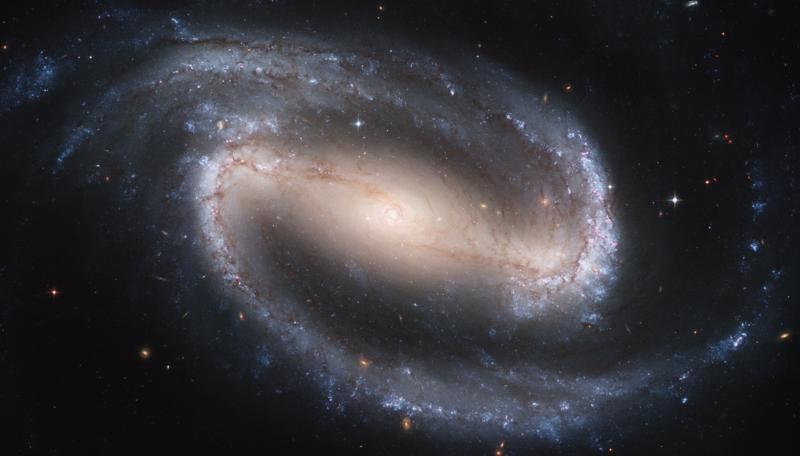
Paper title: Bars rejuvenating bulges? Evidence from stellar population analysis Authors: Paula Coelho and Dimitri A. Gadotti First author’s affiliation:Núcleo de Astrofísica Teórica, Universidade Cruzeiro do Sul, São Paulo, Brasil SummaryAs you may recall from Nathan Sanders’ April post, some spiral galaxies have central bulges with high concentrations of stars. Coelho and Gadotti examine a sample of 575 of these galaxies to investigate whether the presence or absence of a bar (a bar-shaped overdensity of stars) influences the rate of star formation in the central bulge. Astronomers expect to see a higher star formation rate in the bulges of barred galaxies because bars can transport gas from the outer regions of the galaxy into the center and supply fuel for growing stars. Previous detections of star-formation indicators (such as enhanced Hα emission) have indicated that the current star formation rates are higher in barred spirals than in unbarred spirals, but Coelho and Gadotti take the alternative approach of determining the ages of the stellar populations in the bulges. They find that the bulges of barred galaxies are systematically younger than the bulges of unbarred galaxies, which is consistent with the expectation that bars should promote star formation. The Galaxy SampleIn a previous paper, Gadotti derived stellar masses, bulge stellar masses, bar properties, and other parameters for a sample of face-on galaxies observed by Sloan Digital Sky Survey (SDSS). All of the galaxies had stellar masses above 10^10 solar masses and redshifts between 0.02 and 0.07. Selecting face-on galaxies reduced the effect of dust and simplified the process of identifying bars and bulges in the galaxies. In this paper, Coelho...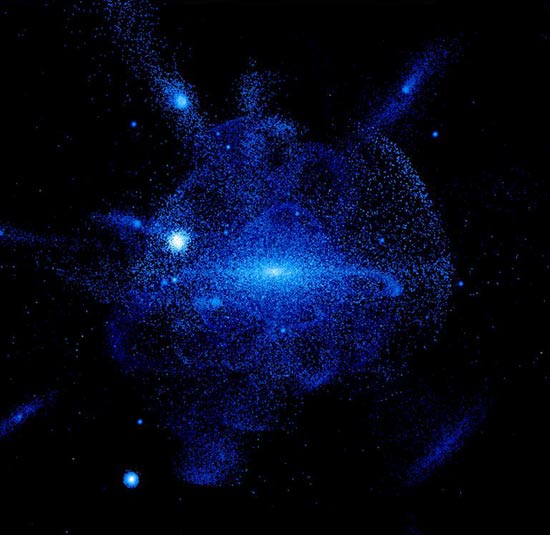
Simulating the Milky Way’s stellar halo
The Milky Way’s stellar halo – a roughly spherical distribution of stars surrounding our spiral galaxy – is a valuable tool for probing the early evolution of our galaxy. The stellar halo contains some of the oldest stars in our galaxy, whose properties reflect that of the environment in which they formed. This paper focuses on using cosmological simulations of galaxy formation to match the observed structure and kinematics (how the stars move) of stars in Milky Way’s halo.
Discovering Trojan Asteroids in Earth’s Orbit
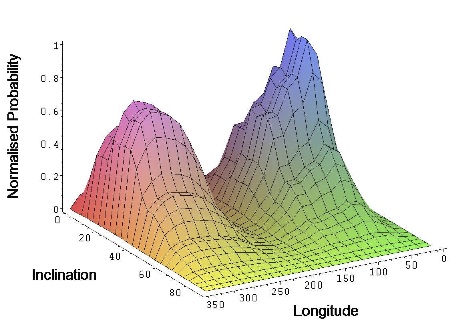
One of the many cool observations that have come from the WISE telescope survey this year has been the discovery of the first Trojan asteroid orbiting at the same semi-major axis as the Earth. The authors of this paper outline a way to optimize future surveys to find more of these Earth Trojans.
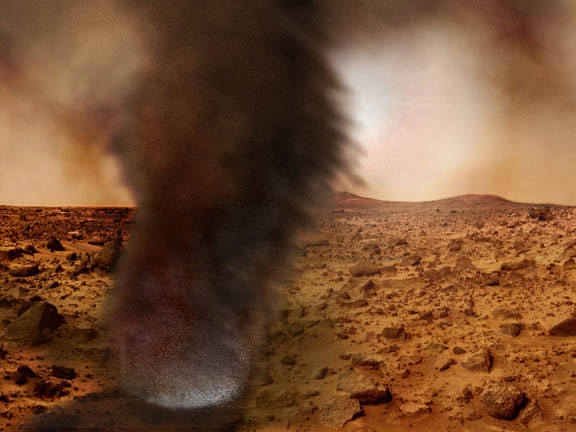
Looking for Lightning on Mars
Do dust storms cause lightning on Mars? This paper uses the Allen Telescope Array to search for electrostatic discharge on the Red Planet.