by Nathan Goldbaum | Oct 26, 2011 | Daily Paper Summaries
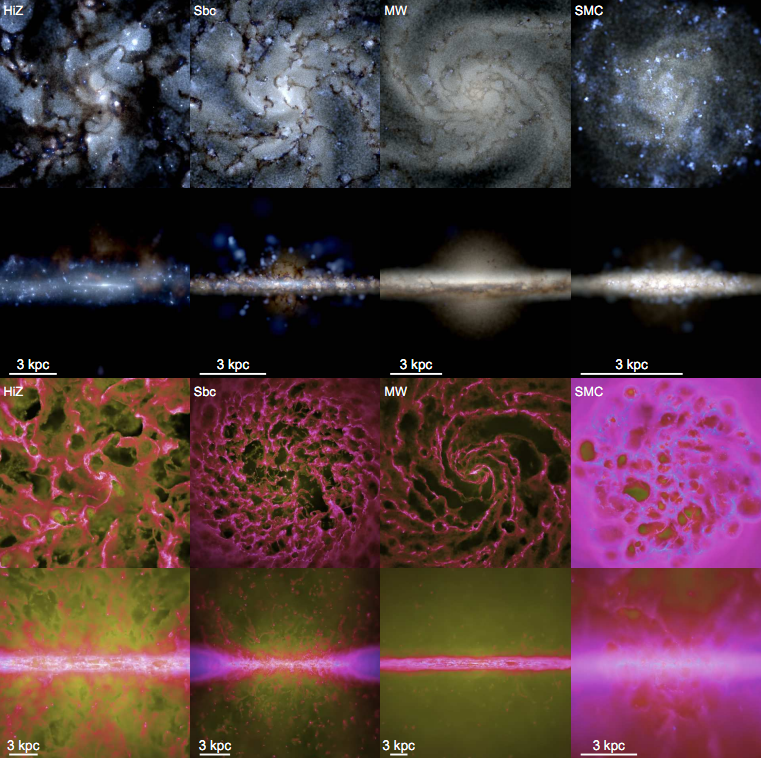
For today’s astrobite, we will be discussing some of the highest-resolution simulations of isolated galaxies performed to date. Not only are these simulations high resolution, but they also include prescriptions to model several physical effects that previous galaxy evolution simulations have mostly ignored.
by Dan Gifford | Oct 26, 2011 | Quick Notes
Now it is easier than ever to find advice on navigating your way to and around graduate school. Presenting the newest Astrobites Glossary:Astrobites’ Graduate School GuideHere we have compiled career navigation posts from regular and guest Astrobite authors about how to prepare yourself for and survive graduate school. Everything from deciding if graduate school is really what you want, to applying to and visiting schools, and even balancing life and work. There is an endless amount of topics still to be covered, so keep an eye out for new graduate school astrobites in the...
by Caroline Morley | Oct 26, 2011 | Daily Paper Summaries
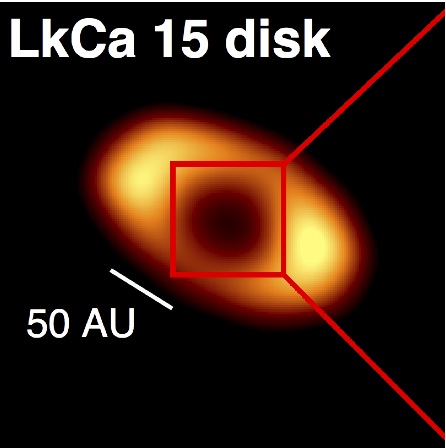
The authors present results that show a feature in the final reconstructed image of this transition disk in both K band and L band (2 bands in the near-infrared). The L band source is somewhat elongated and appears to include two separate regions. The K band image falls between these two L band regions and is more like a point source. The authors interpret this as a protoplanet in the process of forming with an extended heated region around it.
by Elizabeth Lovegrove | Oct 24, 2011 | Daily Paper Summaries
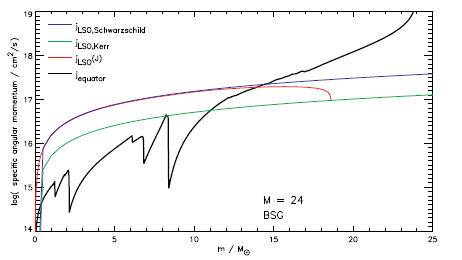
The collapsar model of gamma ray burst production posits that a black hole forms at the center of the star and sucks in the rest of the star’s mass, but that the inner regions have sufficient angular momentum to form an accretion disk which then radiates some fraction of its power in the form of a relativistic jet of matter beaming out of the star. But what if it were the outer, not the inner, layers of the star that had most of the angular momentum? The answer is a very different sort of gamma-ray transient.
by Elizabeth Lovegrove | Oct 24, 2011 | Personal Experiences
You have likely experienced analysis paralysis, though just as likely you have not heard it called by that name. It can be as simple as trying to buy laundry detergent at the supermarket or as complex as trying to publish a key piece of research. And it all stems from the basic fact that the human brain is bad at graph traversal.
