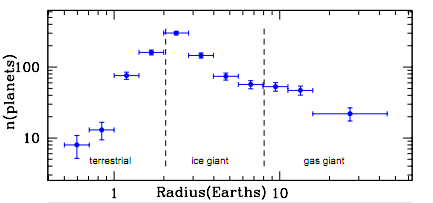
How Many Exoplanets are Habitable?
The answer to the above question, according to a new analysis of data from NASA’s Kepler mission, may be roughly one-third.

The answer to the above question, according to a new analysis of data from NASA’s Kepler mission, may be roughly one-third.
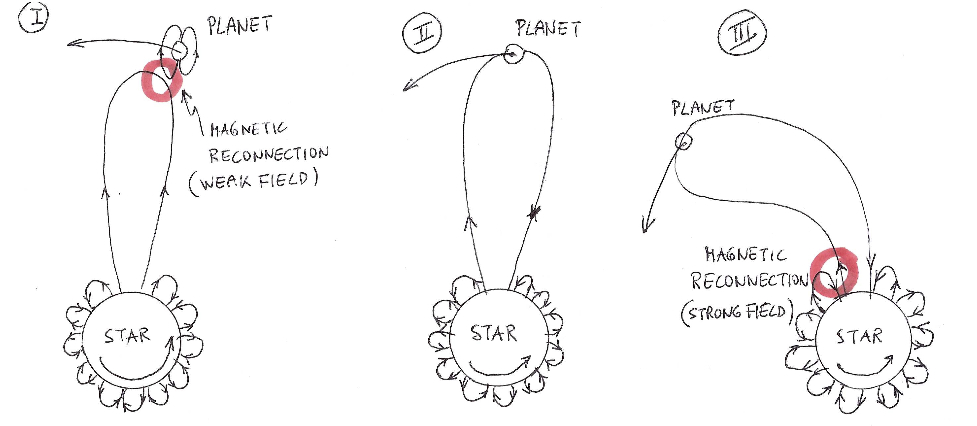
This paper investigates the interaction between close-in (semimajor axis a<0.15AU) massive planets (a.k.a. “hot Jupiters'') and their host (late-type) stars. Two possible mechanisms for interaction are tidal and magnetic, with the focus of this paper being the latter. The pioneering work on the topic of stellar activity enhancement (such as dark spots, faculae, etc) due to planet interaction is by Cuntz et al. (2000). You can see related contributions about stellar activity on previous astrobites posts.

A new survey investigates social perceptions of astronomy and our sister site Chembites has an article about the grad school application process.
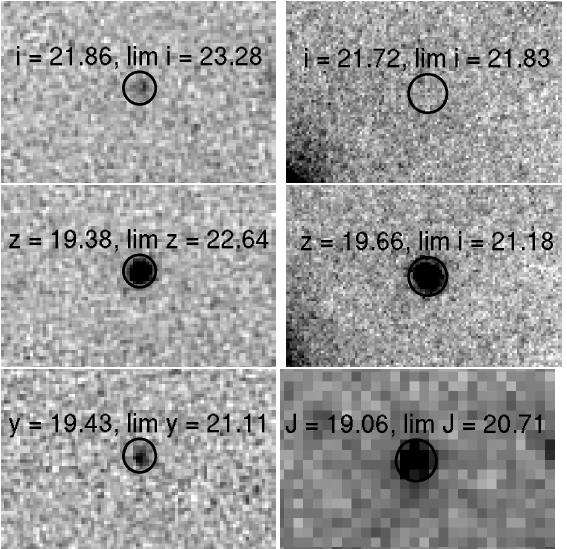
Morganson et al. announce the discovery of the first quasar discovered by Pan-STARRS. The newly detected quasar is a Broad Absorption Line quasar at a redshift of 5.73 +/- 0.02 with a z band magnitude of 19.4, a luminosity of 3.8×1047 erg/s, and an estimated black hole mass of 6.9×10⁹ solar masses.
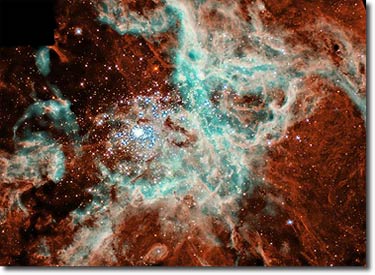
Stars form in environments that are characterized by vastly different densities, pressures and metal content. Yet the sizes of the stars formed don’t vary substantially (as measured by the median mass). Why don’t the properties of the clouds out of which stars fragment have a stronger influence on the result? Why is there a characteristic stellar mass? Why is this mass scale similar to that for nuclear burning (the process that fuels stars)?
(photo: NASA via LANL, https://www.llnl.gov/news/newsreleases/2005/NR-05-11-10.html)