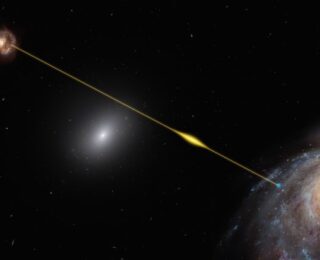
Flash! A Bright Fast Radio Burst Detected at High Frequencies
Today’s authors discover a shockingly bright Fast Radio Burst at an unexpectedly high frequency, and consider what this might mean about so-called “cataclysmic” FRBs!

Today’s authors discover a shockingly bright Fast Radio Burst at an unexpectedly high frequency, and consider what this might mean about so-called “cataclysmic” FRBs!
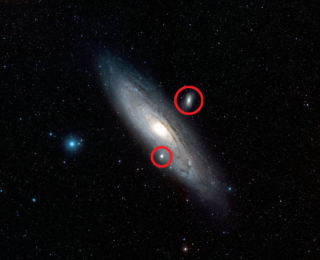
Some of the smallest galaxies we know of live right next door to the Milky Way — but we’ve only just found them!

The number of super-Earths with small semimajor axis appears to decrease with the mass of the host star. How can this be, if more massive stars have more massive protoplanetary disks and thus more material to build planets from? An icy dead zone may be the answer to this riddle!
The National Osterbrock Leadership Program (NOLP) is an AAS-supported initiative aimed at incorporating leadership training into the Astronomy PhD. Read on to learn more about NOLP and about the workshop led by the NOLP fellows at AAS 241!
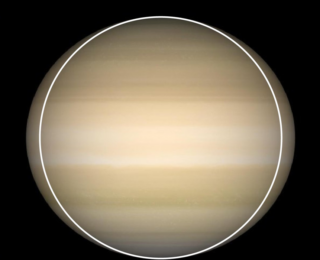
We usually assume that all exoplanets are perfectly round. Today’s authors wonder: what are we getting wrong if some are slightly squished?