
In this series of posts, we sit down with a few of the keynote speakers of the 248th AAS meeting to learn more about them and their research. You can see a full schedule of their talks here, and read our other interviews here!
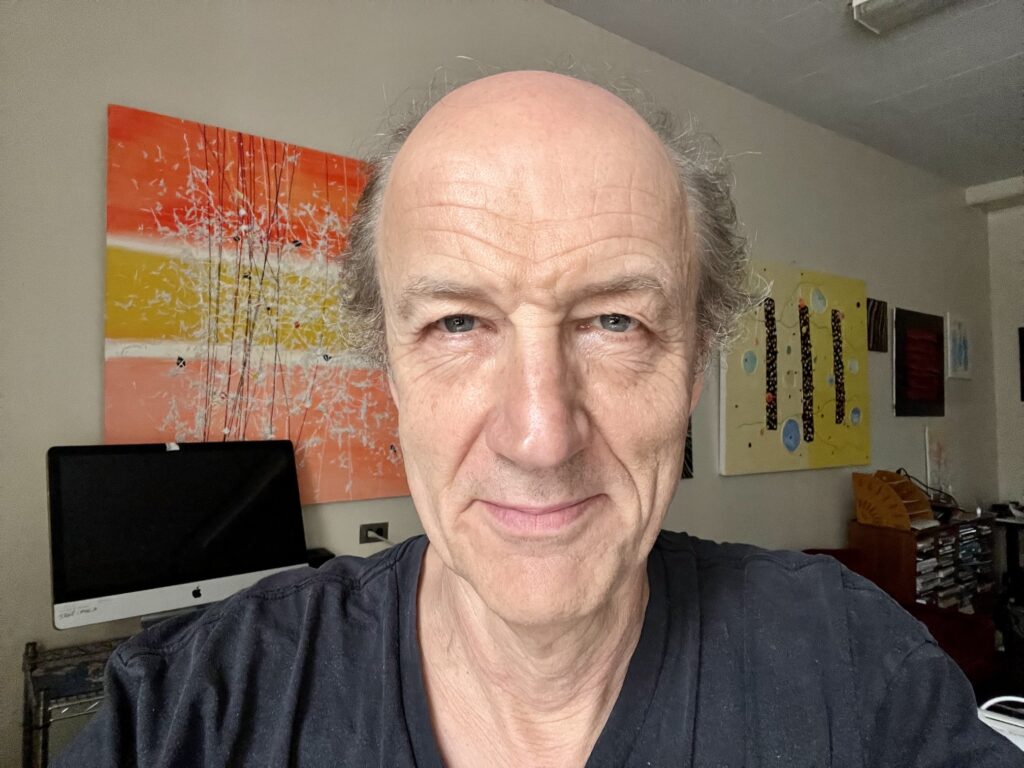
On a Mauna Kea night in August 1992, Dr. David Jewitt was blinking through telescope images of the same patch of sky out of pure boredom. He and his graduate student, Jane Luu, had been searching for moving dots in the outer solar system for more than five years and had found nothing. The rules of the search were strict: you needed at least three images of an object before you could believe it was real: anything less could just be randomly aligned cosmic rays. But that night, having only seen two images, Dr. Jewitt had a suspicion something real was moving through the sky. He called Luu over. The third image came in, perfectly in line. Then the fourth. “Just bang, bang, bang, bang,” he tells me. “Absolutely perfect. Straight line, constant spacing.” Within an hour they had calculated the object’s distance, about 40 to 50 AU, its size, roughly 200 kilometers across and, from the tiny patch of sky their camera had covered, the staggering implication that there had to be thousands more like it waiting to be found. They had just discovered the Kuiper Belt. “And then,” he says, “we also knew that Pluto was toast.”
Dr. Jewitt is a professor in the Department of Earth, Planetary, and Space Sciences at UCLA. In June, he’ll be giving a plenary lecture at the 248th meeting of the American Astronomical Society. His talk will be on something that, in his words, “we don’t know much about” :the interstellar interlopers, the small handful of objects that have been observed passing through our solar system on hyperbolic orbits from somewhere else in the galaxy. So far only three are known: 1I/’Oumuamua, 2I/Borisov, and 3I/ATLAS. As with the Kuiper Belt objects he found three decades ago, these interlopers are once again forcing astronomers to rethink the edges of the solar system.
Dr. Jewitt grew up in an industrial, working-class neighborhood in North London. He was seven years old when, riding his bike home one evening, he looked up and saw meteors flashing across the sky for the first time in his life. He asked his mother what they were. “Those are shooting stars, David,” she told him. “What’s a shooting star?” he asked. “It’s a star that shoots.” Even at seven, he knew that couldn’t be right and the deeper realization that came with it was the one that stayed: the adults around him, all of them, didn’t necessarily have the answers. “My parents went from all knowing authority figures, they know everything, they’ve been around forever … to, well, maybe they don’t,” he says. “And I really, really liked that idea.” Most questions, he eventually understood, are “one or two questions away from the edge of knowledge.” No one in his family had ever gone to university; almost no one in his school had either. He didn’t know going was even an option for him until a teacher happened to mention it just before the application deadline. Years later, when an American professor at University College London asked offhand whether he’d applied to Caltech, his honest answer was, “I don’t know what that is.”
He found out. After his PhD at Caltech, he took a faculty position at MIT, and from MIT moved to the University of Hawai’i specifically because Mauna Kea was there. Astronomers had been hypothesizing for decades that a population of small icy bodies should lurk beyond Neptune, but no one had ever actually seen one. The search Dr. Jewitt began with Jane Luu in 1985 was set up to find them, taking sequential images of the same patch of sky and then blinking between them to spot a moving dot, and it began well before computers were comfortably up to the job. Dr. Jewitt and his students used to truck a Sun workstation, a gigantic CRT monitor, and a laser printer up to the summit for every observing run, because the computer he kept in Honolulu was more powerful than anything on the mountain. Once the first object turned up, he says, the rest came quickly, because the brain has what he calls a “perception bias” : it is much better at seeing things it expects to see, than it is at seeing things it doesn’t. About thirteen years after that first Kuiper Belt object, in 2005, Dr. Jewitt and another student, Henry Hsieh, found a second new population: the active asteroids, objects on asteroid orbits that behave like comets. JWST has since confirmed that water ice is sublimating from some of them in a part of the asteroid belt where, by all rights, there shouldn’t be any. That ice may be part of the story of how Earth got its oceans. These days, Dr. Jewitt is most interested in how comets die. Most theories suggest they should survive about half a million years once they fall into the inner solar system; instead they live only about ten thousand. His argument for why this occurs is that they don’t quietly fizzle away as their ice runs out, they spin themselves apart. Jets of gas erupting unevenly from the comet’s surface act as tiny thrusters, torquing the nucleus (the comet’s solid, icy core) faster and faster until it can no longer hold together. A recent HST observation of comet 41P/Tuttle–Giacobini–Kresák, whose nucleus he has watched slow down, stop, and begin rotating in the opposite direction, is one of the cleanest pieces of evidence yet. Though, he notes, this picture of how comets die has been slow to gain traction with some of his colleagues.
He is also working on the three interstellar interlopers, the focus of his AAS 248 plenary. The first to arrive, 1I/’Oumuamua in 2017, didn’t look like a comet: more like an asteroid, a point source with no visible cloud of gas, and yet it was being pushed by something. The next two, 2I/Borisov in 2019 and 3I/ATLAS in 2025, looked much more like the comets we know. Why the first behaves so differently from the next two, Dr. Jewitt tells me, is the puzzle and every new one that arrives, he says, is a chance to find out.
When I ask what advice he would give his younger self, Dr. Jewitt is unusually direct. He wishes he had been less ignorant of how the academic world worked; he didn’t know what graduate school was until he became a graduate student, he says, and he “staggered through undergrad and grad school … in a state of almost complete ignorance.” But he’s also wary of the alternative he sees a lot of today, which he describes as a kind of calculation. “There are people who clearly have in their mind, like, I want to be this, I want this job, I want to be at this place. And they do rather calculating things to make that happen instead of actually doing the work. They’re operators.” Astronomy, in his view, should be “an obsession, not a career,” and he is openly suspicious of anything that smells like strategic positioning instead of curiosity. For the undergraduates reading Astrobites, his advice is plain: “Just do something that’s interesting and make sure you can find out something good.” And, wherever possible, do work that no one else is doing. “If you do the same measurement as other people,” he says, “if it’s real, you’ll just get the same result.” The point isn’t to compete with someone by a few seconds or a few percent. The point is to push the edge a little further out and then to look at what’s on the other side of it.
That is what Dr. Jewitt has tried to do, from the Kuiper Belt in 1992, to the active asteroids in 2005, to the dying small comets he’s mapping now, to the three interstellar interlopers, each of which behaves differently from the last. His work keeps returning to the same place: the edge of what we know, and the question of what lies just beyond it.
To hear more about the interstellar interlopers, tune into Dr. David Jewitt’s Plenary Lecture at 4:40 P.M on Tuesday, June 16th at #AAS248!
Edited by: Lucas Brown
Featured Image Credit: AAS
