
Summer is finally here, and while classes might be on pause for most grad students, research is in full swing. Now that I have no other tasks to occupy my workday, I’ve found myself increasingly distracted by worries that itch my brain like summer mosquito bites: Is my research interesting enough? Am I applying to enough conferences and opportunities? Should I have used a different machine learning algorithm for my work? Do I ask insightful enough questions during colloquium talks? Am I doing good enough?
All of these thoughts lead back to the same origin point for me: trying to be as perfect of a researcher as possible. This attitude is somewhat unsurprising — in today’s academic and political climate (particularly in the US), funding cuts have made it much harder to achieve things that were already difficult to begin with: getting into a PhD program, having a telescope proposal accepted, getting grant/fellowship funding, etc. Even without taking these recent events into account, ever-bigger classes of grad students are competing for the same few open faculty positions each year. So it makes sense that so many of us today would tend towards perfectionism — studies have even found that today’s college students are more perfectionistic than ever before.
But coming across this Astrobite by Catherine Slaughter reminded me: while being “perfect” and making no mistakes may seem ideal when filling out applications for faculty jobs, that idea is antithetical to being a researcher. As scientists, our job is to expand humanity’s knowledge about the universe, and this process inherently involves sometimes choosing the wrong method or pursuing research that reaches a dead end. If we already knew where to find the right answers, we wouldn’t have to look for them. As we become more experienced researchers, we gain intuition into which paths will likely lead to useful research, but we still don’t get it right all of the time.
I first started learning how to crochet during the second semester of my first year of grad school, and the first month was incredibly frustrating. I don’t think I made any actual progress in the first few weeks. There were so many different stitches and abbreviations to learn (sc, dc, hdc, sl st, ch, yo, FLO, BLO…) and I couldn’t make it past a few rows of the pattern I was following without having to undo everything. I fully restarted my project at least ten times before I finally finished the tiny whale plushie I was working on. It was still full of mistakes, but that imperfect project was a necessary stepping stone to taking on more difficult crocheting projects in the future.
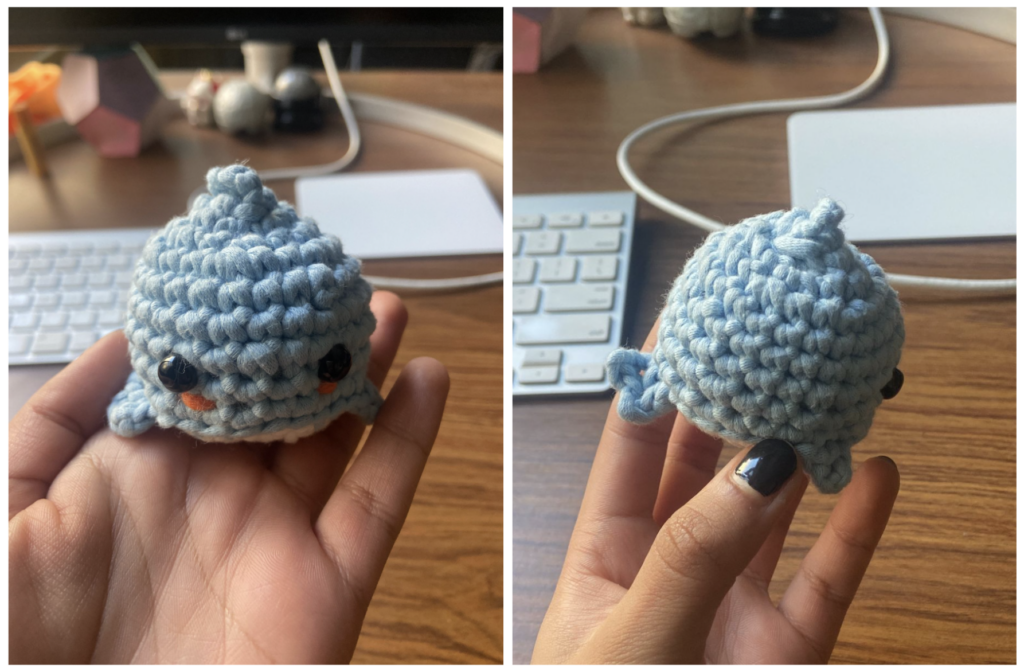
There are three big lessons that messing up my crocheting over the past year and a half has taught me:
1. As long as you learn from your mistakes, there is no shame in making them
By making mistakes in crocheting, I have learned how to effectively keep track of my stitches with stitch markers, how to make up for dropped stitches in previous rows, and how to freehand my own designs without a premade pattern. By making mistakes in my research, I’ve learned to always keep a detailed research notebook, to use “.values” when working with data from a Pandas DataFrame column, and which questions I need to ask myself as a sanity check before starting a new research project. The mistakes that we make today teach us how to course-correct in the future.
2. Some imperfections aren’t worth going back to fix
There will always be a more advanced machine learning model to use, a different model to fit, or a wider dataset to explore. Striving to do good work is very important, but it’s also important to know where to draw the line. At some point, you just need to publish your research paper, or finish crocheting that scarf you promised your grandmother. I’m not saying that this is easy — I’m still figuring it out too.
3. Sometimes you just need to completely start over, and that’s okay
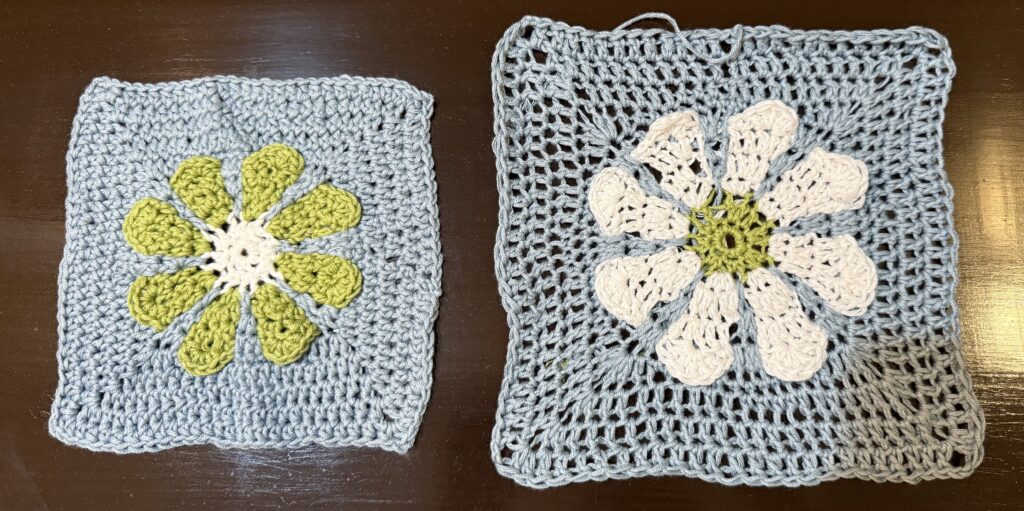
Last week I spent over two hours crocheting a granny square (shown in Figure 2) with a new crochet hook, but when I was almost finished, I realized that the hook was too thick and my stitches were coming out way too loose. I eventually need to combine 23 of these squares to make a cardigan, but the loose square won’t join properly with the others, so I made the difficult decision to remake it. I definitely went through all the stages of grief on this, but at least I caught the mistake and didn’t crochet more bad squares!
Starting over doesn’t mean the experience wasn’t valuable, or that all of your time and work went to waste. It means that you were fortunate enough to learn something BIG that could alter the course of your research, and you were able to address the mistake instead of wasting even more time on a bad method or poorly-designed research question.
Our perfectionism and fear of failure is rooted in real truths about the society we live in, and a few anecdotes about crocheting won’t magically cure it. It will instead take practice, repetition, and support from our peers in academia. In the meantime, I leave you with this: be kind to yourselves, and remember that each mistake is bringing you closer to discovering something new.
Astrobite edited by Jared Bull
Featured image credit: Canva/Pexels/Pixabay/Anavi Uppal
