
Using Gaia as a Gravitational-Wave Detector
We know that Gaia is an amazing instrument to learn more about the Milky Way. Well, it turns out it could also be used to detect gravitational waves!

We know that Gaia is an amazing instrument to learn more about the Milky Way. Well, it turns out it could also be used to detect gravitational waves!
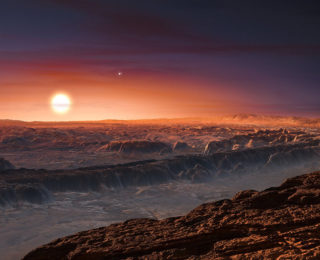
Is Proxima Centauri b habitable?
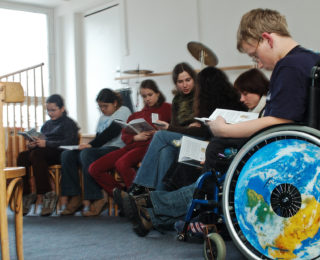
Do common curricula used in physics classrooms follow the principles of Universal Design? Today’s article, written by Nick Young of PERbites, details the findings of just such an investigation and reports possible modifications to improve accessibility of physics education.
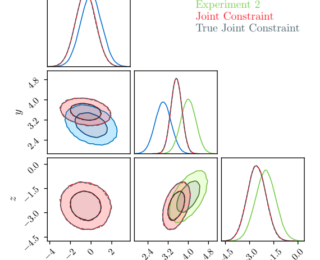
Constraining physical parameters in a cosmological survey is often computationally expensive, especially when considering more than one survey at a time. The authors of this paper offer a simple method to reconstruct parameter distributions in a fraction of the time needed for most high-performance computers.

Can young massive clusters help us to understand how globular clusters formed? MUSE looks at Westerlund 2 to learn more and finds an unexpected velocity signature.