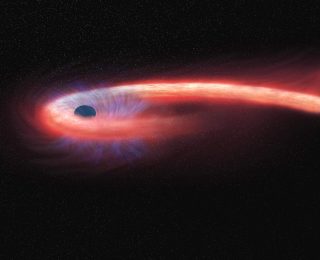
Guest: What are Partial Tidal Disruption Events, and How Do We Find Them?
What happens when a star survives a close encounter with a massive black hole? Read more about these partial tidal disruption events in today’s bite!

What happens when a star survives a close encounter with a massive black hole? Read more about these partial tidal disruption events in today’s bite!
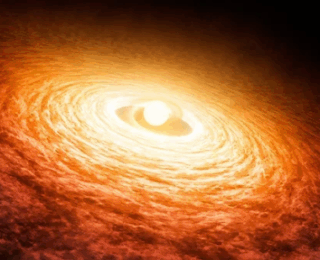
Some of the first clusters of stars may have had massive cannibal stars! Learn more in today’s bite.
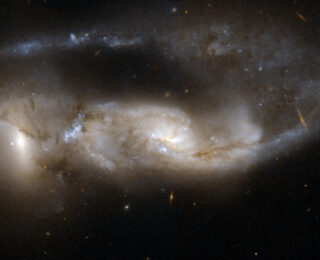
How is a galaxy like a bathtub? Today’s authors use quasars to light up the gas around galaxies.
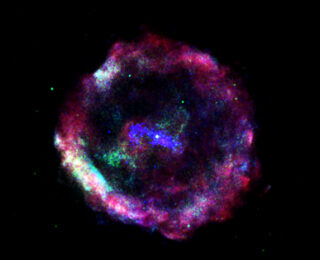
A deep dive into the classic paper on how massive single stars die, and what it means for the evolution of the universe.
Today’s paper explores how ionization from different UVB models affects mock observations from simulations of the Circumgalactic Medium.
Some supernovae have bumpy light curves – could a baby neutron star repeatedly diving into the envelope of its inflated companion be the cause? Today’s authors simulate this to find out!