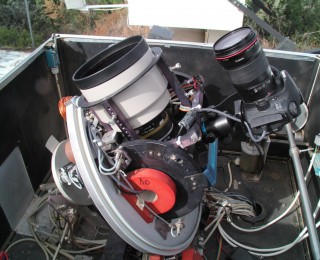
Professional Photometry with a Consumer Camera
Do you own a digital single-lens reflex (DSLR) camera? The authors of today’s paper do. They used it for astronomy. They used it for science.

Do you own a digital single-lens reflex (DSLR) camera? The authors of today’s paper do. They used it for astronomy. They used it for science.
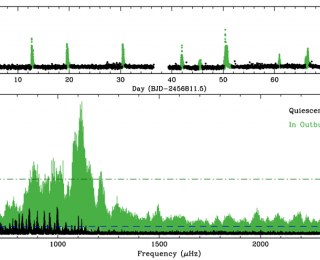
This variable white dwarf pulsates as expected, but it also experiences very bright outbursts. Today’s paper takes us through the discovery and verification of the second pulsating white dwarf with outbursts, and speculates how the pulsations and outbursts may be linked.
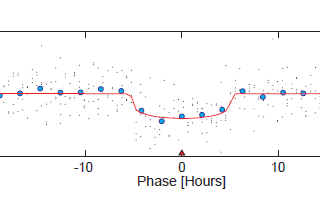
Last month Nasa announced, in what seems like a roughly annual event, the discovery of “Earth 2.0”. Described as a “Bigger, Older Cousin to Earth”, Kepler 452b is the first small planet (defined here as less than twice the radius of the Earth) to be in a roughly one year orbit around a Sun-like star.
But is it otherwise that similar to the Earth? Is it potentially habitable? To try and answer that, let’s look at the discovery paper.
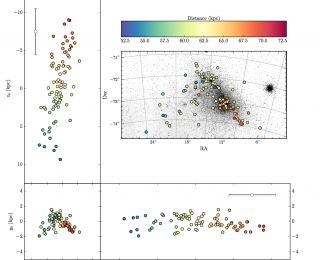
In today’s paper, the authors use Cepheid distance moduli to study the structure of the SMC.
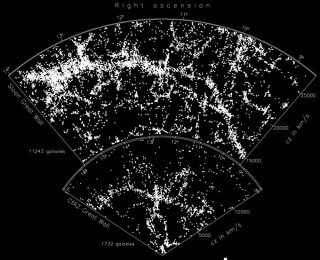
We’re attempting to map the universe in fine detail at its largest scales in 3D. Meet the astrophysical rouges that seek to upend our goal, and the tools we need to weed them out.
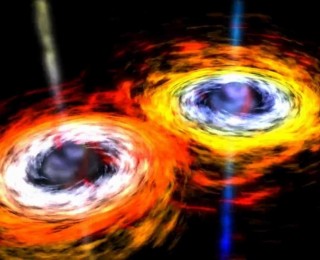
Today’s astrobite is not about disc jockey insects informing us about spacetime. Read on to find out a novel way of detecting electromagnetic counterparts of merging supermassive black holes.