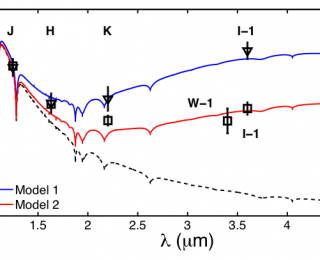
A white dwarf eating a debris disk
This white dwarf is surrounded by a debris disk. What formed the disk, and what’s destroying it now?

This white dwarf is surrounded by a debris disk. What formed the disk, and what’s destroying it now?
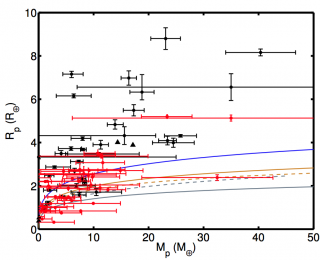
Of all the kinds of planets we’re finding around other stars—hot Jupiters and mini-Neptunes and those dubiously called “Earth-like”—super-Earths orbiting close to their stars are among the most abundant. While planets so close to their stars are poor candidates for habitability, they are important to understanding the possibility of other habitable planets in these seemingly common systems.
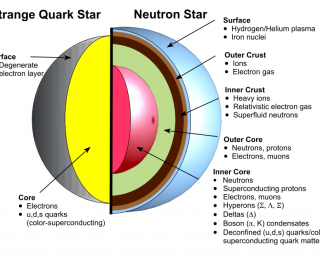
Neutron stars can provide insights into extreme and exotic states of matter.
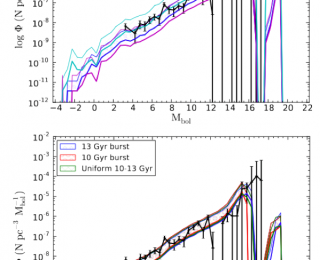
The number and luminosity distribution of white dwarfs stars can be used to help figure out the past history of the Galactic halo.
Planet-planet scattering can either be a good thing or a bad thing for the planetesimals caught in the crossfire. Like many things in life, the key is moderation. The authors of this paper try to figure out how many exoplanet systems with eccentric planets are likely to still have their debris disks after experiencing a planet-planet scattering event.
Artist’s impressions of exoplanets are often wrong!