by Caroline Morley | Feb 14, 2013 | Daily Paper Summaries
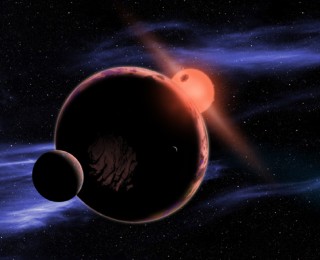
The census of planets for smaller stars—M dwarfs—is now basically complete. In this paper, Courtney Dressing and Dave Charbonneau use this M dwarf advantage to determine the occurrence rate of small planets around M dwarfs.
by Maria Drout | Feb 12, 2013 | Daily Paper Summaries
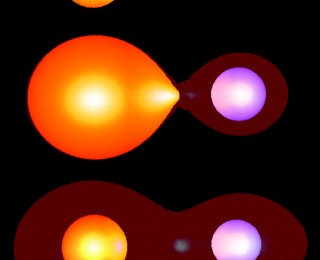
Scientists propose way in which we could observe the envelope being ejected from binaries going through a common envelope phase. And their predictions match a class of objects which have already been observed.
by Shannon Hall | Feb 10, 2013 | Daily Paper Summaries
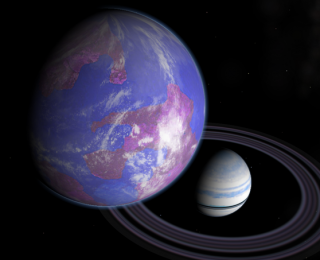
Some exoplanets seem to have walked directly out of the best science fiction movies. Taking these planets into example, the question of habitability seems like a joke. But what if we stopped looking at these extreme worlds and turned our eyes to their moons instead? Surely their moons are less extreme. And given that our own Jupiter hosts 67 moons, surely they’re more abundant. Can such extreme planets host habitable moons? The 36-page paper written by Heller and Barnes attempts to address this question.
by Ben Montet | Feb 8, 2013 | Daily Paper Summaries
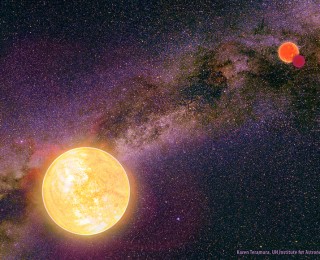
By looking for variations in the observed periods for eclipsing binary stars, astronomers have found evidence that a sizable fraction of these systems are actually systems of three or more stars.
by Erika Nesvold | Feb 7, 2013 | Daily Paper Summaries
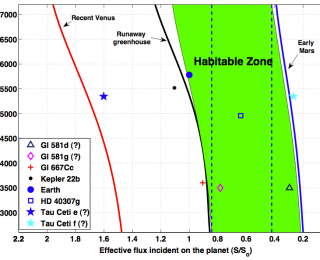
In our search for life on other planets, we begin by determining which exoplanets orbit in the habitable zone of their star. But where exactly is the habitable zone for a given star? The authors of this paper update a previous planetary climate model to predict where you should looking for your next extrasolar vacation home.
by Kim Phifer | Feb 5, 2013 | Daily Paper Summaries
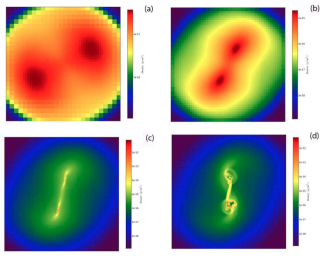
Boss & Keiser examine how magnetic fields with varying initial conditions affect star formation.
