by Shannon Hall | May 27, 2012 | Daily Paper Summaries
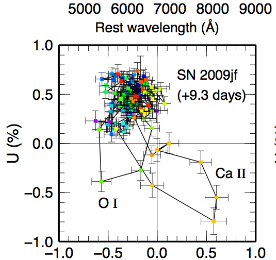
Recent research suggests that Supernovae are aspherical, but the question remains: is this asymmetry merely incidental or is it a vital clue to the explosion mechanism behind SNe? By observing stripped-envelope SNe (i.e. SNe without a H-rich layer) we may see deeper into the heart of the exploding star. Using spectropolarimetry we are able to note that these SNe are in fact aspherical, which may be the cause of the explosion mechanism itself.
by Adele Plunkett | May 25, 2012 | Daily Paper Summaries
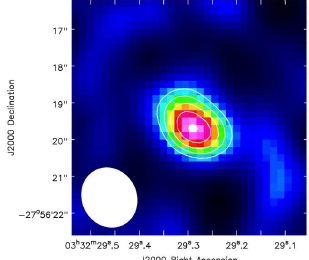
This paper presents ALMA observations of the first ever measurement of both ionized nitrogen and carbon for the galaxy “LESS J0332”, which is determined to be at a redshift of 4.76 and have a metallicity similar to that of our sun. This suggests that the galaxy at a much earlier time in the universe had already evolved quite a bit.
by Courtney Dressing | May 24, 2012 | Daily Paper Summaries
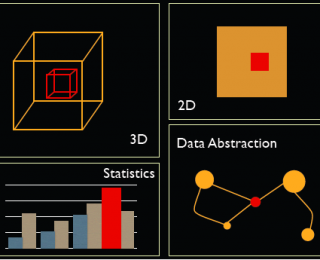
Astronomers love data, but how can we visualize multiple dimensions of data simultaneously? What should astronomers do to extract as much information as possible from our hard-earned data?
by Justin Vasel | May 24, 2012 | Daily Paper Summaries
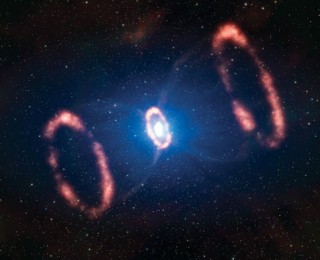
The SuperNova Early Warning System (SNEWS) uses neutrino detectors across the globe to predict when a supernova is about to become visible, providing astronomers the unprecedented opportunity to study the next supernova as it happens.
by Anna Rosen | May 23, 2012 | Daily Paper Summaries
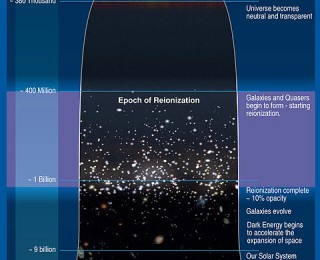
Can the ionizing radiation from massive run-away stars be a leading source of reionization in the early universe?
by Kirit Karkare | May 21, 2012 | Daily Paper Summaries
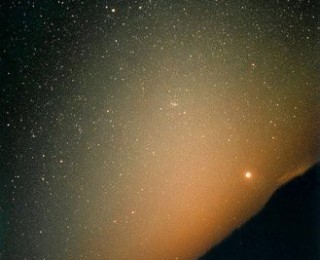
The zodiacal light may look beautiful, but it can get in the way of important observations. This paper suggests improvements to models of the dust cloud using observations from the Spitzer Space Telescope.
